
Understanding Traveler Behavior

Understanding Traveler Behavior
In the first of two posts, we explore Activity-Based Models (ABM) and traditional trip-based models, focusing on their use in predicting travel patterns. The case study involves the SR 167 Master Plan project in Seattle, Washington, revealing differences in results between ABMs and traditional 4-step models. For nuanced changes, such as introduction of a toll, ABMs may be better suited to capture diverse reactions.
Transportation infrastructure projects, often requiring significant investments, demand thorough analysis and justification. In the planning phase, choosing prediction methods becomes crucial. ABMs, gaining popularity over trip-based models, offer detailed information and deeper insights, aligning with the evolving focus on managing, not just growing, transportation networks.
This post serves as a continuation of our discussion on ABM applications in transportation equity analysis. Using the SR 167 Master Plan project as a case study, we compare outputs from the regional Puget Sound Regional Council trip-based model and the PSRC SoundCast ABM when modeling a tolling scenario.
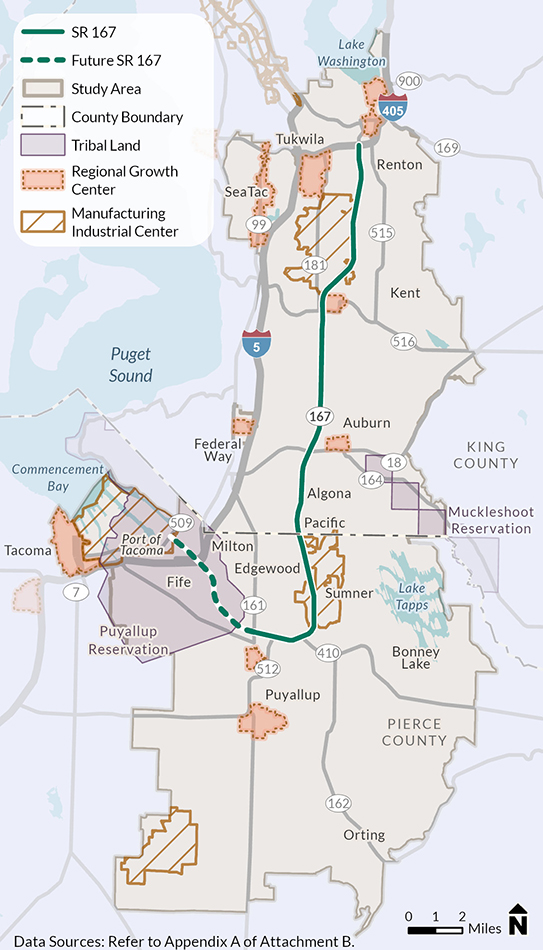
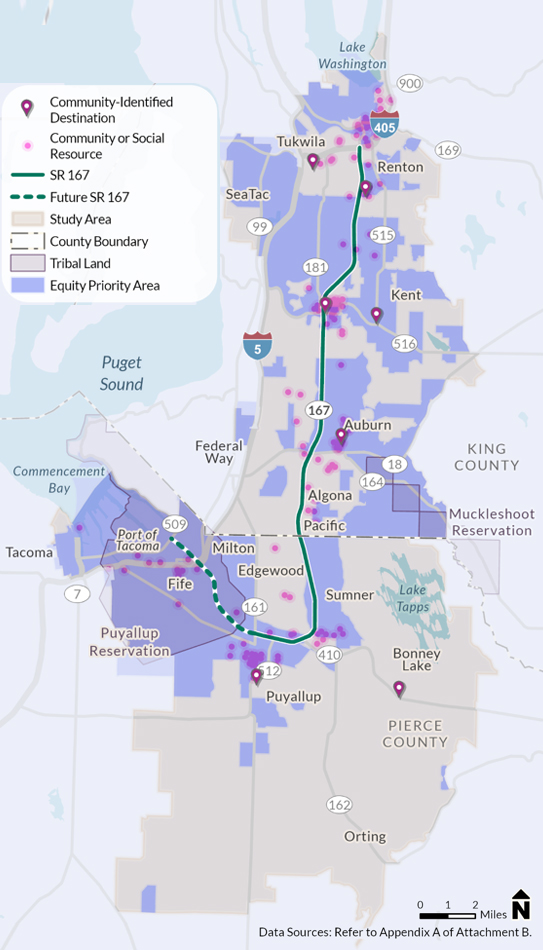
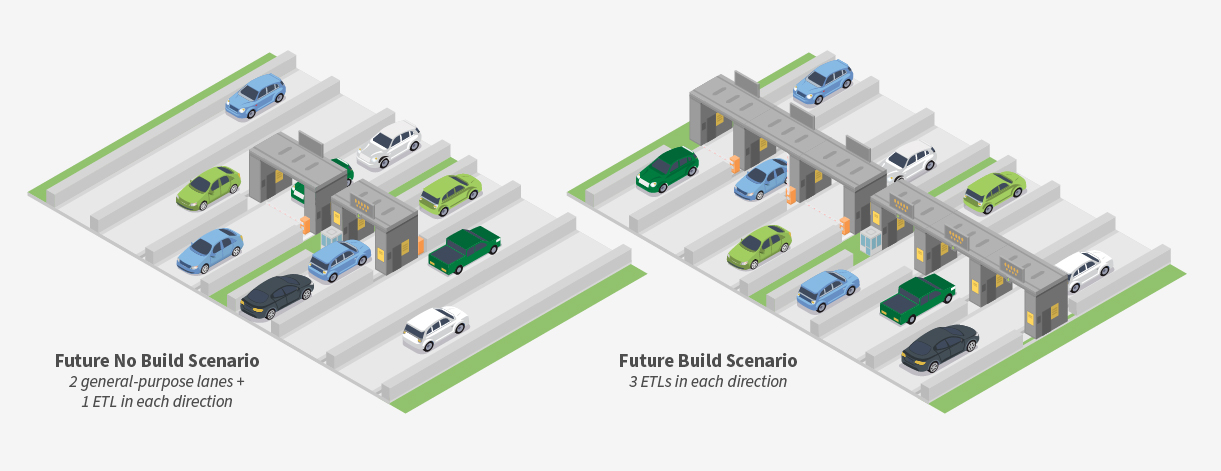
The SR 167 Master Plan aims to improve traffic flow along the corridor during peak hours through transportation investments and new technologies. SR 167 currently features two general-purpose lanes and one Express Toll Lane (ETL) in each direction. One proposed investment, as depicted in Figure 3, was to convert the existing general-purpose lanes into ETLs during peak periods, creating a fully tolled facility.
While this proposal was screened out of the Master Plan for further consideration, it served as a useful scenario to compare model performance on some key metrics – impact to parallel arterials, person throughput, transit ridership, and impact to equity priority areas.
ABMs are generally better for modeling driver responses to tolling, as they more accurately account for the distribution of travelers’ value of time, vital for modeling reactions to the introduction of pricing or changes to existing tolls. Trip-based models are often less nuanced in how they model tolling, as they lack the detailed inputs and processes to account for a person’s value of time. [1] One would assume that this difference in approach could lead to different results when testing the effect of the same scenarios in each model.
And indeed, we found that the trip-based model forecasted a much larger decrease in travel on SR 167 than the ABM predicted, with a much higher portion of trips instead shifted to parallel arterials.

Stepping back – while both models offer insights into future potential corridor operations, accounting for the value of time and money can help professionals and decision makers better use models to analyze, justify, and communicate the benefit of projects to the communities they represent.
Want to learn more? Explore the options below to facilitate informed discussions, make sound infrastructure decisions, and promote equitable transportation solutions.
Stay Informed:
Explore ABMs and the evolving world of transportation modeling in infrastructure decisions.
Reach Out:
Connect with one of this post’s contributors below to discuss the nuances of transportation models.
Stay Updated:
Find recommended transportation strategies and projects for the SR 167 study area on WSDOT’s project website.
You can also check out the second installment of this two-part blog series where we look at this case study with a focus on price elasticity and talk about how it can provide further insight on effective transportation strategies.
share this article
Contributors

Marissa Milam
SR167 (Technical) Lead
Email Me

Eric Womeldorff
Email Me

Chris Breiland
Email Me
Explore More
VMT Agency Decision Matrix
This guide helps agencies choose the right methods and tools to measure Vehicle Miles Traveled (VMT) for land use and transportation projects, supporting compliance with California’s SB 743.
Street Safety in an Autonomous Vehicle Future
Autonomous vehicles may have the potential to support core elements of the Safe System approach, which strives to eliminate fatal and serious transportation injuries. Fehr & Peers partnered with ITE to publish “Autonomous Vehicle Considerations under a Safe System Framework,” which explores potential AV benefits, risks, and considerations within the Safe System framework.

New Office in Sonoma County
Fehr & Peers is proud to announce the opening of our Petaluma office space! As we continue in our dedication to providing innovative transportation solutions that improve communities, our Petaluma location will allow us to better support our existing and future clients throughout Sonoma, Napa, Marin, Mendocino and Lake Counties.