
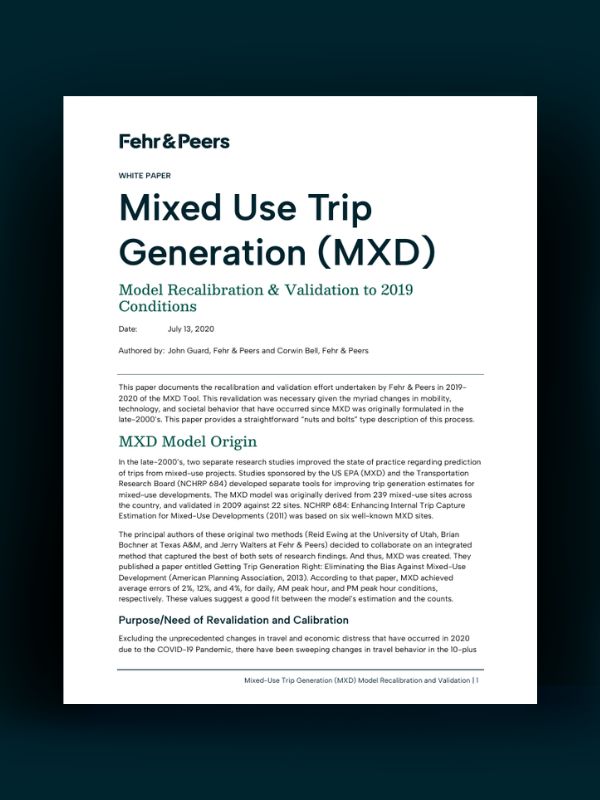
Estimating vehicle trips at mixed-use developments can be challenging. Most traditional trip generation rates are based on single-use suburban sites and don’t account for how people actually travel in mixed-use developments (MXD), where trips can happen internally or by walking, biking, or transit.
This white paper presents how we recalibrated and validated our MXD tool to reflect 2019 travel conditions. The update incorporates changes in travel behavior over the past decade, including the rise of ride-hailing services, e-commerce, telecommuting, and micromobility.
Using observed traffic data from mixed-use sites across the US, the updated MXD model produces more accurate estimates of daily and peak-hour vehicle trips, helping planners and communities better evaluate the transportation impacts of mixed-use developments.
Ready to read the white paper? Click the button below to access.
share this article
Contributor

John Gard
Principal
Email Me
Explore More
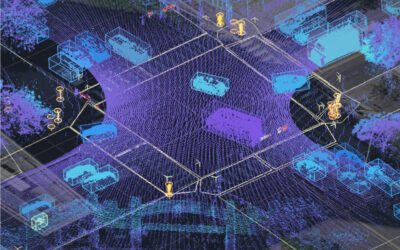
Understanding AI’s Role in Transportation Safety
AI is giving transportation safety practitioners new ways to analyze data, detect near misses, and respond to risk before crashes happen. Real-world examples from Bellevue, WA and San Bernardino, CA show where AI-supported technology is delivering value—and where human judgment remains essential for turning data into responsible safety decisions.
New NCHRP Toolkit Helps Agencies Build Safety Into Everyday Decisions
Making streets safer takes more than individual projects. Our new Safe System approach toolkit, developed through NCHRP Research Report 1181, helps agencies integrate safety into policies, budgets, design standards, and land use decisions. Explore practical tools, real-world case studies, and new IIHS Safe System success stories that show how agencies are turning safety into standard practice.

Announcing Safety Multipliers
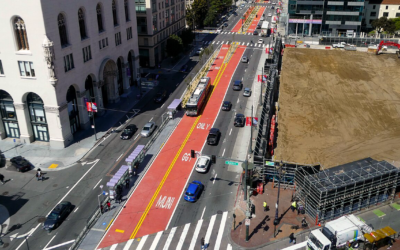
What do San Francisco’s Van Ness BRT, New York’s congestion pricing, and Arlington’s intersection program have in common? Each pulls all three Safe System levers at once. We call that pattern a safety multiplier.