
Stacking Benefits: The Role of Land Conservation in VMT Mitigation
Stacking Benefits: The Role of Land Conservation in VMT Mitigation
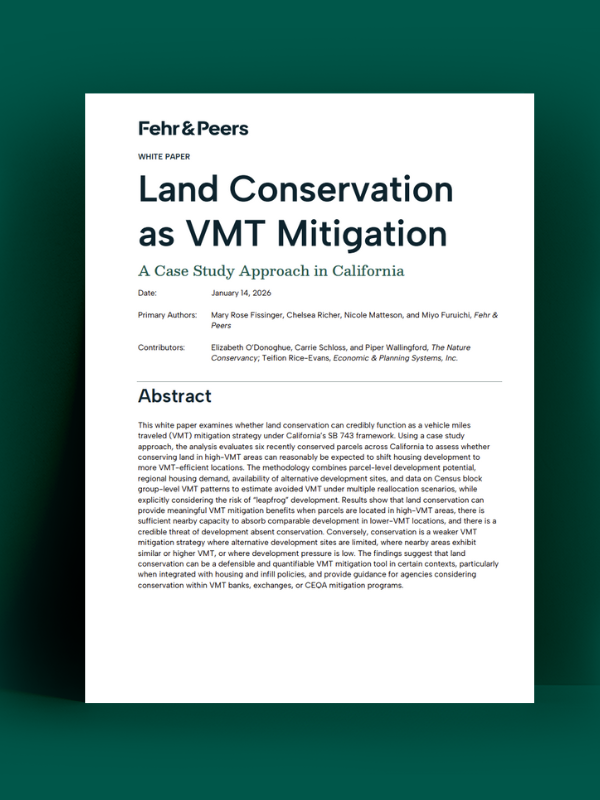
This work builds on our previous collaboration with The Nature Conservancy that explored how vehicle miles traveled (VMT) mitigation programs can help protect natural resources and wildlife in Western Riverside County.
This latest phase takes the analysis statewide, looking at how real-world factors like development pressure, nearby housing capacity, and the risk of “leapfrog” development affect the potential for VMT mitigation in different contexts.
The goal was to understand whether protecting and conserving land that might otherwise be developed can reduce driving, measure how much it reduces driving, and identify when this approach can count as a defensible mitigation strategy under CEQA and Senate Bill 743.
What we found was nuanced. Land conservation can help avoid or reduce VMT over time, but not always. There must be a realistic chance that the conserved land would have been developed, and that the development that would have occurred there could instead be built in a lower-VMT area. There’s still a lot to learn about how statewide policies promoting infill development will play out, and what that means for using land conservation as a VMT mitigation strategy.
Read the full white paper to learn where this approach works best, what questions to ask early, and how today’s land use decisions can shape travel patterns for years to come.
share this article
Contributors

Mary Rose Fissinger
Email Me

Chelsea Richer
Climate & Resilience Discipline Leader
AICP
Email Me

Nicole Matteson
Engineer/Planner
Email Me

Miyo Furuichi
Engineer/Planner
Email Me
Explore More
Street Safety in an Autonomous Vehicle Future
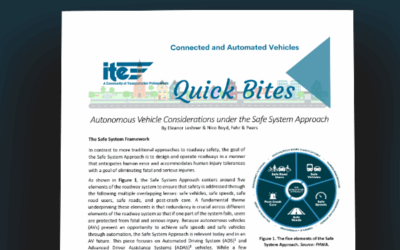
Autonomous vehicles may have the potential to support core elements of the Safe System approach, which strives to eliminate fatal and serious transportation injuries. Fehr & Peers partnered with ITE to publish “Autonomous Vehicle Considerations under a Safe System Framework,” which explores potential AV benefits, risks, and considerations within the Safe System framework.

New Office in Sonoma County
Fehr & Peers is proud to announce the opening of our Petaluma office space! As we continue in our dedication to providing innovative transportation solutions that improve communities, our Petaluma location will allow us to better support our existing and future clients throughout Sonoma, Napa, Marin, Mendocino and Lake Counties.
Growth in Micromobility
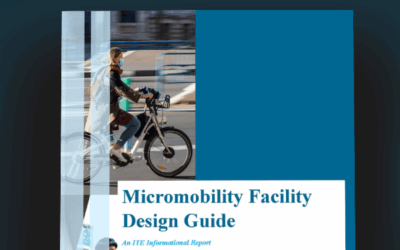
The Institute of Transportation Engineers (ITE) Pedestrian and Bicycle Standing Committee developed the Micromobility Facility Design Guide Informational Report, which summarizes potential design challenges micromobility users experience as they travel on typical roadways.