
Using VMT to Promote Sustainability
Using VMT to Promote Sustainability
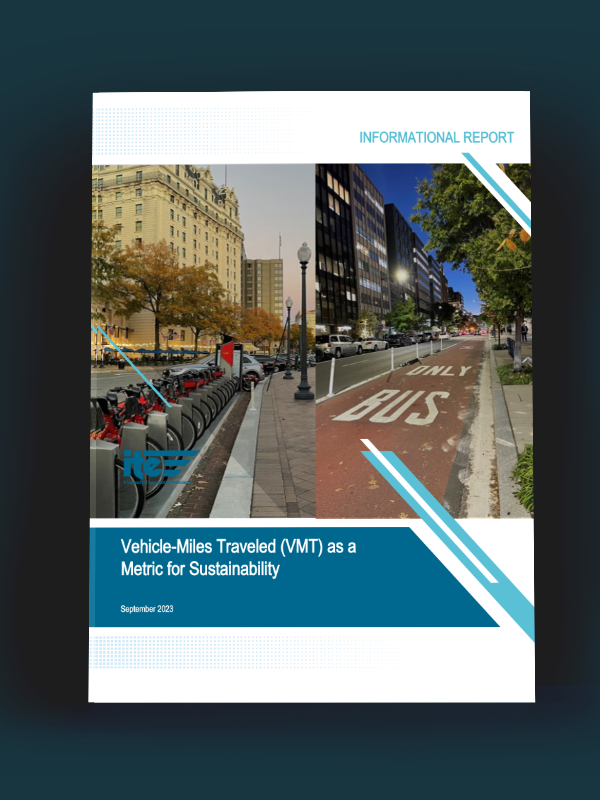
As planning strategies evolve from vehicle-centric to a multimodal, accessibility-focused approach, the focus is on moving people efficiently over vehicles. The new paradigm emphasizes sustainable transportation modes and underscores the significance of Vehicle Miles Traveled (VMT) as a crucial metric. VMT reduction benefits traffic flow, infrastructure costs, community well-being, pollution reduction, non-driver accessibility, and public health.
We’re excited to introduce ITE’s new technical brief, Vehicle-Miles Traveled (VMT) as a Metric for Sustainability. This resource, which includes contributions from our nationwide VMT expert Ron Milam, covers the shift from vehicle-based planning to accessibility-based planning, providing insights and case studies for transportation agencies and practitioners striving to enhance equity, safety, environmental sustainability, and community livability.
share this article
Explore More

Equity & Infrastructure Improvements
It’s not always clear which community members and roadway users are likely to benefit from large-scale infrastructure investments. Learn how activity-based models can help.
Fehr & Peers in Dallas, Texas
We are excited to announce our expansion to Texas! With proximity to downtown Dallas, establishing roots here allows us to continue to provide for and deepen our relationships with clients in the DFW Metroplex and beyond.
ITE Safety for Development Projects
Explore ITE’s new technical brief that describes a comprehensive way for public agencies to incorporate the Safe System approach in project reviews, to build proactive, multimodal safety considerations into transportation impact analysis reports.