
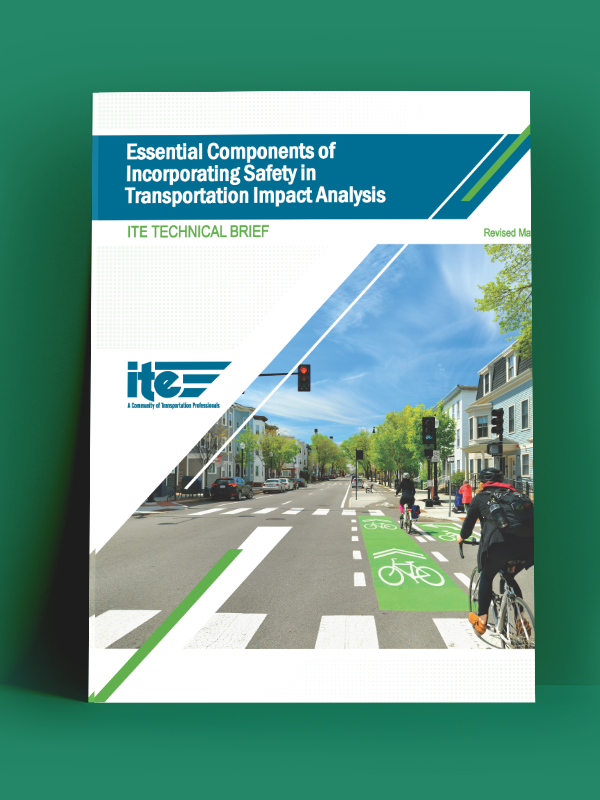
A commitment to Vision Zero requires institutionalizing a new way of thinking about safety, the Safe System approach, into everything we do. As transportation planners and engineers, one of our most frequent project types is a transportation impact assessment for new developments. How do we build land development projects that are not only accessible, but safely accessible, by every mode of transportation?
ITE’s new technical brief Essential Components of Incorporating Safety in Transportation Impact Analysis describes a comprehensive way for public agencies to incorporate the Safe System approach in project reviews. It can help transportation professionals to build proactive, multimodal safety considerations into transportation impact analysis reports. The brief describes eleven core elements with examples of impact methodology and a framework for selecting the methodology best suited for the jurisdiction and project. Mitigations and funding are also discussed, along with links to resources to further explore this topic.
Those who might be interested include:
• Agency practitioners and consultants seeking ways to institutionalize safety and fund safety enhancements, including those looking to implement existing safety plans
• Developers and consultants responding to development guidelines
• Professionals and students learning about impact analysis practices
We are proud to have served as the lead authors of this resource. Contact us to learn more about how Fehr & Peers can help your agency apply this guidance.
share this article
Explore More

Cathleen Sullivan Joins Fehr & Peers
Our new Principal Cathleen Sullivan brings a practical, people-centered approach to transit and multimodal planning, helping Bay Area agencies turn complex ideas into progress.

Get a First Look at the Generative AI Policy Starter Kit
We helped develop a new Generative AI Policy Starter Kit through ITE. Explore the Quick Bite and ITE Journal article now, and stay tuned for the full kit.
Intern Perspectives: A Summer in Transportation
What does a transportation internship actually look like? This summer, 25 interns across 14 of our offices gained hands-on experience with fieldwork, street design, GIS, data analysis, visual communication, client work, and community engagement. See what they learned, what surprised them, and how the experience shaped the way they think about careers in transportation.