
Using VMT to Promote Sustainability
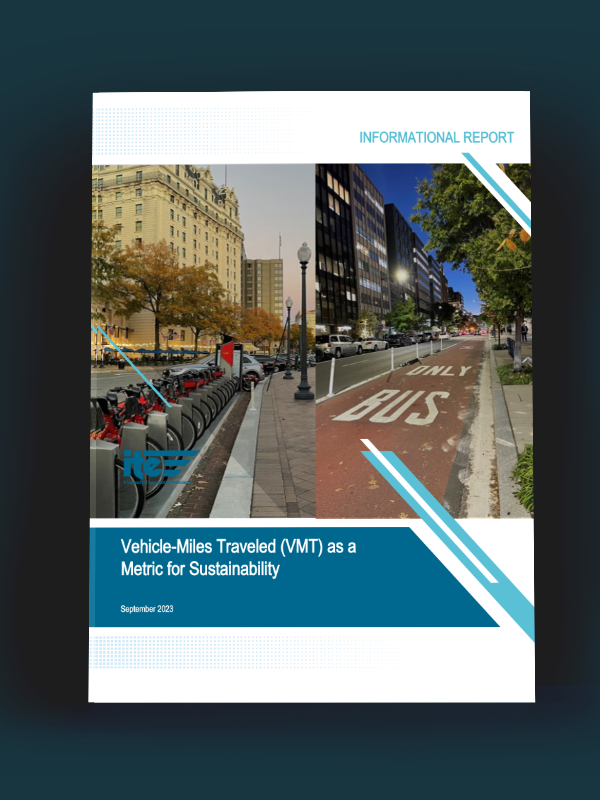
Using VMT to Promote Sustainability
As planning strategies evolve from vehicle-centric to a multimodal, accessibility-focused approach, the focus is on moving people efficiently over vehicles. The new paradigm emphasizes sustainable transportation modes and underscores the significance of Vehicle Miles Traveled (VMT) as a crucial metric. VMT reduction benefits traffic flow, infrastructure costs, community well-being, pollution reduction, non-driver accessibility, and public health.
We’re excited to introduce ITE’s new technical brief, Vehicle-Miles Traveled (VMT) as a Metric for Sustainability. This resource, which includes contributions from our nationwide VMT expert Ron Milam, covers the shift from vehicle-based planning to accessibility-based planning, providing insights and case studies for transportation agencies and practitioners striving to enhance equity, safety, environmental sustainability, and community livability.
share this article
Explore More

What Is Downtown DC For?
The DC decongestion pricing study landed years late in a city that looks nothing like the one it studied. What is the debate really about?
Coordinating the Curb, Not Just Reacting to It
Walnut Creek’s curbside management plan took them from reactive fixes to a more coordinated, goal-driven framework for their suburban downtown. Here’s what changed, and what other agencies can learn from it.
Rethinking Street Design for Safety and Emergency Access
This February 2026 ITE Journal article shows how connected street networks and cross-department collaboration can help communities balance everyday safety with reliable emergency access.