
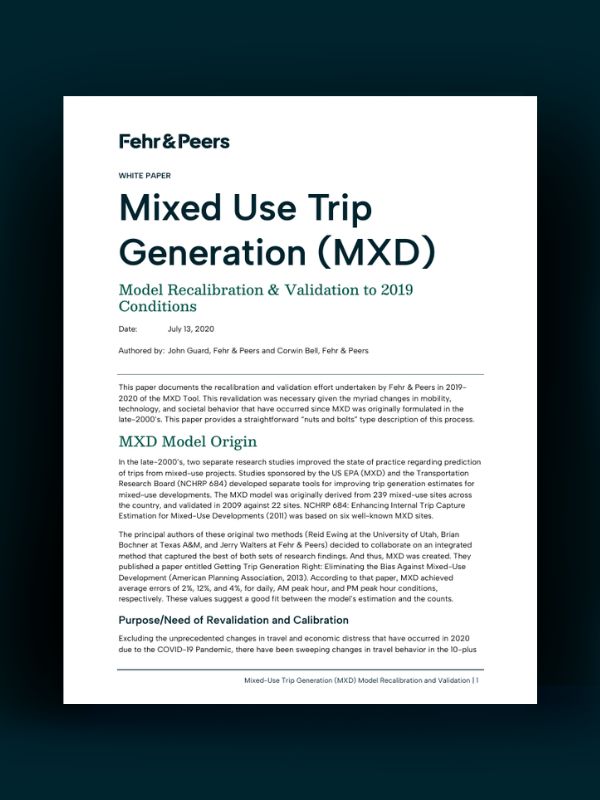
Estimating vehicle trips at mixed-use developments can be challenging. Most traditional trip generation rates are based on single-use suburban sites and don’t account for how people actually travel in mixed-use developments (MXD), where trips can happen internally or by walking, biking, or transit.
This white paper presents how we recalibrated and validated our MXD tool to reflect 2019 travel conditions. The update incorporates changes in travel behavior over the past decade, including the rise of ride-hailing services, e-commerce, telecommuting, and micromobility.
Using observed traffic data from mixed-use sites across the US, the updated MXD model produces more accurate estimates of daily and peak-hour vehicle trips, helping planners and communities better evaluate the transportation impacts of mixed-use developments.
Ready to read the white paper? Click the button below to access.
share this article
Contributor

John Gard
Principal
Email Me
Explore More
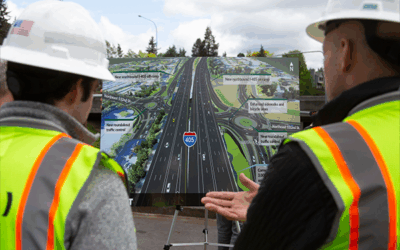
A New Way To Build Transportation Capacity
Learn how a coalition of jurisdictions and community groups in Washington State pioneered a large-scale multimodal transportation planning approach that has improved highway capacity over the last twenty years and continues to guide future investments.

Evacuation Travel Time Analysis
The ability for a community to evacuate quickly continues to be a top priority for agency staff in California. Learn about our Climate Group’s proactive research to address new CEQA requirements for producing evidence-based evacuation travel time analysis for land use projects.

Prioritizing People in Multimodal Design
Discover how one city is redesigning their streets to make experiencing destinations safer and more enjoyable, and how their process and design typology can be adapted to streets across the US.