
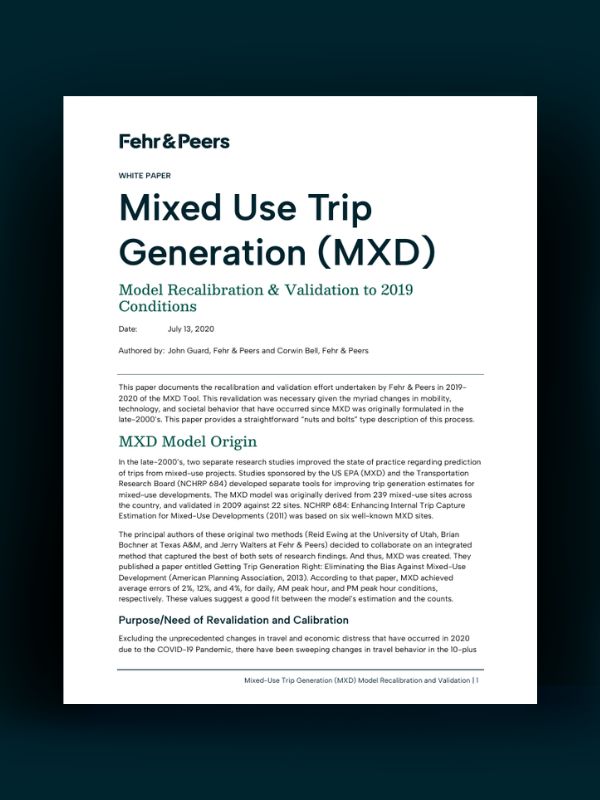
Estimating vehicle trips at mixed-use developments can be challenging. Most traditional trip generation rates are based on single-use suburban sites and don’t account for how people actually travel in mixed-use developments (MXD), where trips can happen internally or by walking, biking, or transit.
This white paper presents how we recalibrated and validated our MXD tool to reflect 2019 travel conditions. The update incorporates changes in travel behavior over the past decade, including the rise of ride-hailing services, e-commerce, telecommuting, and micromobility.
Using observed traffic data from mixed-use sites across the US, the updated MXD model produces more accurate estimates of daily and peak-hour vehicle trips, helping planners and communities better evaluate the transportation impacts of mixed-use developments.
Ready to read the white paper? Click the button below to access.
share this article
Contributor

John Gard
Principal
Email Me
Explore More

Quantifying VMT Reduction
How can transportation agencies reduce overall vehicle miles traveled and still generate revenue? In a recent study, we evaluated the impact of making transit free of charge compared to implementing a VMT tax and whether the costs for travelers is equitable.

Achieving Freight Greenhouse Gas Goals
Available guidance for agencies to gather an accurate picture of current freight activity is limited. Check out how this community defined their baseline in four steps to be able to evaluate freight zero emission zones as a strategy for meeting new climate and environmental policy goals.

How Vehicle Electrification Affects the Gas Tax
With electric vehicle sales increasing, how durable is our ability to build and maintain highway and transit infrastructure through current gas tax measures? Explore the full scope of promoting a cleaner and more resilient transportation system.