
Evacuation Impact Assessment Checklist
A sharper way to qualitatively analyze evacuation under CEQA
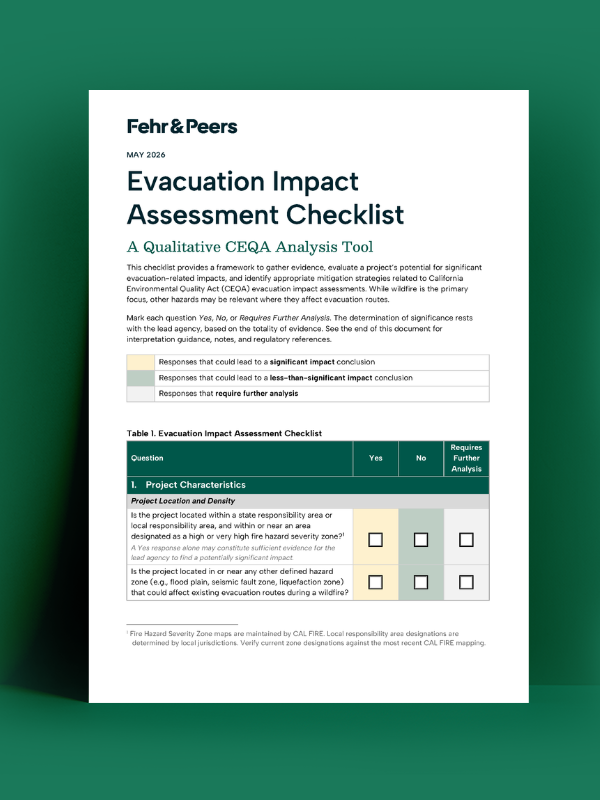
Evacuation Impact Assessment Checklist
A sharper way to qualitatively analyze evacuation under CEQA
When wildfire forces a community to evacuate, decisions made during project review can shape how quickly and safely people can get out. Recent California court decisions have increased scrutiny of how lead agencies address evacuation, and the California State Attorney General’s October 2022 guidance emphasizes evaluating evacuation early, when project design, density, and siting can still change. If you’re scoping a CEQA review today, the expectations are higher than they were a few years ago, and the path to meeting them is not always obvious.
We built the Evacuation Impact Assessment Checklist to help.
The checklist is a qualitative evacuation impact assessment tool that organizes evacuation analysis into three categories: project characteristics that may affect wildfire risk or evacuation capacity, including social vulnerability factors that can affect how people receive and act on warnings; the project and jurisdiction’s emergency access, egress, and evacuation preparedness; and the project’s potential impact on evacuation for the existing community. Questions are drawn from the CEQA statute, the Attorney General’s guidance, and recent court decisions. Wildfire is the primary focus, but the checklist can also be applied to other hazards that affect evacuation routes.
Used early, the checklist provides a clearer structure for documenting evidence, identifying where more information is needed, and determining whether additional analysis may be warranted.
share this article
Connect with our Contributors

Ron Milam
Director of Evolving the Status Quo
Email Me

Chelsea Richer
Climate & Resilience Discipline Leader
Email Me

Ian Barnes
Principal
Email Me


Explore More

Get a First Look at the Generative AI Policy Starter Kit
We helped develop a new Generative AI Policy Starter Kit through ITE. Explore the Quick Bite and ITE Journal article now, and stay tuned for the full kit.
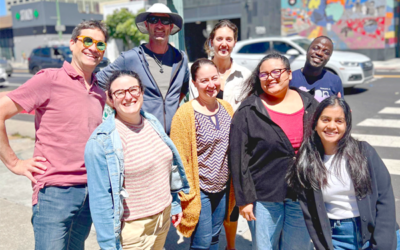
Intern Perspectives: A Summer in Transportation
What does a transportation internship actually look like? This summer, 25 interns across 14 of our offices gained hands-on experience with fieldwork, street design, GIS, data analysis, visual communication, client work, and community engagement. See what they learned, what surprised them, and how the experience shaped the way they think about careers in transportation.
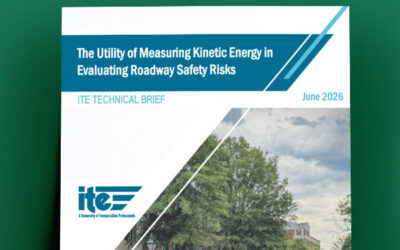
Looking at Street Safety Through the Lens of Kinetic Energy
This ITE Technical brief explores how kinetic energy can add another dimension to roadway safety analysis, helping practitioners consider where conditions for serious harm may exist even before severe crash patterns emerge.