
E-Bike Safety Takes More Than Regulation
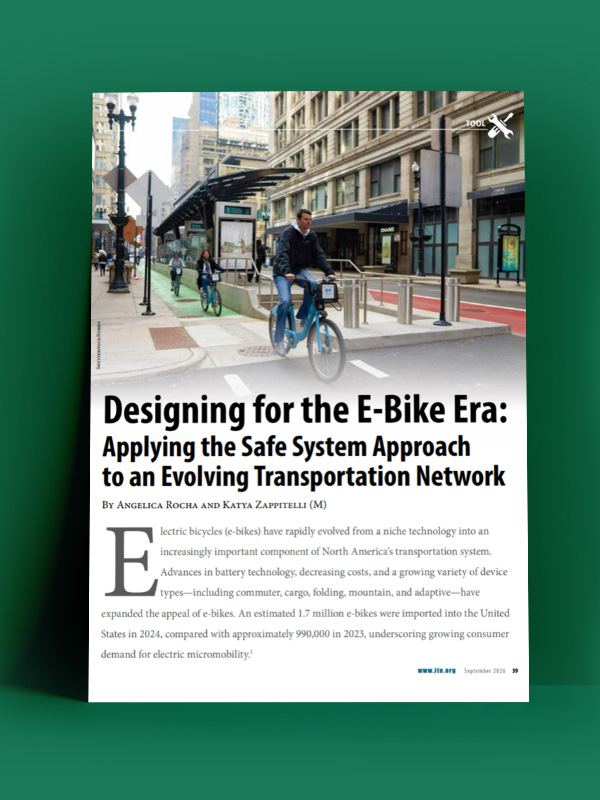
E-bikes are changing how people travel in our communities. Research suggests nearly half of e-bike commute trips replace car trips. Those replaced trips average 9.3 miles, more than three times the length of the typical bike trip in the US. Together, these findings point to a real opportunity: e-bikes can reduce vehicle miles traveled (VMT) by shifting more trips from cars to bicycles, including longer-distance trips that might otherwise be difficult to make on a conventional bike.
But as e-bike use grows for riders of all ages, much of the conversation has focused on regulating the devices themselves.
In a September 2026 ITE Journal article, “Designing for the E-Bike Era: Applying the Safe System Approach to an Evolving Transportation Network,” the authors examine how federal, state, and local regulations govern e-bikes and why regulation alone cannot eliminate transportation risk. Applying the Safe System Approach means recognizing that people make mistakes and it is our responsibility to design transportation systems that anticipate human error and reduce the likelihood and severity of crashes.
This is the premise behind our Safety Multipliers work: combining interventions that reduce exposure, severity, and likelihood to achieve greater safety outcomes than any one strategy delivers alone.
The article compares three approaches jurisdictions can take to e-bike safety:
- Pairing device regulations with investments in a connected, low-stress network
- Regulating devices without improving the network
- Banning e-bikes altogether
Each approach has different outcomes. Adopting policy that only focuses on regulating devices may leave the conditions that make riding uncomfortable or unsafe unchanged. Restricting e-bikes has its own downside. Since research shows they can replace car trips, a ban may mean missing a chance to reduce transportation risk more broadly.
E-bikes offer communities an opportunity to expand mobility and reduce automobile travel. But that depends on more than deciding which devices belong on the road. Communities also need low-stress networks and policies that support safer travel for everyone.
Contact us to discuss how these approaches could inform e-bike safety decisions in your community.
share this article
Connect with our Contributor

Explore More
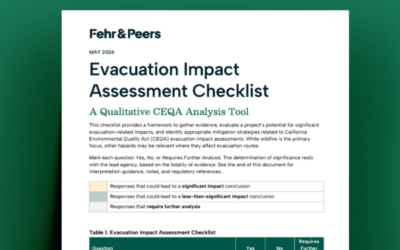
Evacuation Impact Assessment Checklist
Recent California decisions and the Attorney General’s 2022 guidance have raised expectations for how CEQA documents address evacuation. Our Evacuation Impact Assessment Checklist is a qualitative analysis tool that helps teams organize evidence, screen for potential impacts, and reach a defensible conclusion faster, so time and effort can shift from extensive quantification to identifying mitigation and evacuation improvements.

Rebecca Sanders Joins Fehr & Peers
Welcome Rebecca Sanders to our team. With nearly 20 years of safety research and consulting experience, Rebecca helps agencies identify risk earlier, prioritize the right countermeasures, and advance a Safe System approach for people walking, biking, and using micromobility.

Help Shape a Generative AI Policy Starter Kit for Transportation Organizations
We’re developing a Generative AI Policy Starter Kit with ITE’s AI Great Ideas Group. If you’re creating AI guidance now, share one question or sample policy snippet to help shape the resource.