SB 743 White Paper
SB 743 requires evaluating transportation impacts using VMT instead of Level of Service (LOS).

SB 743 requires evaluating transportation impacts using VMT instead of Level of Service (LOS).

Strategies like transit-oriented development, increasing residential density, and improving street connectivity can significantly reduce VMT and GHG emissions, with some measures achieving reductions of up to 31%.
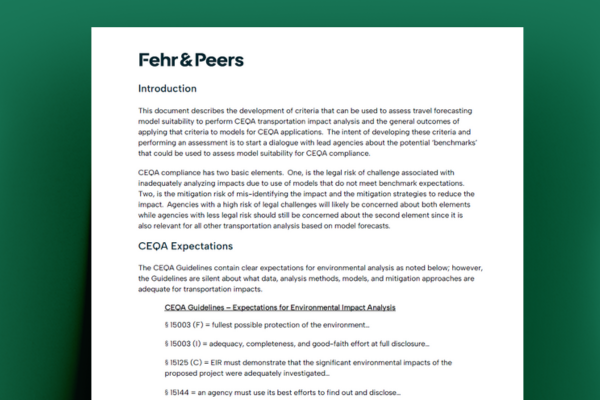
Agencies should evaluate their models to ensure they provide reliable forecasts and meet CEQA standards for environmental impact analyses.
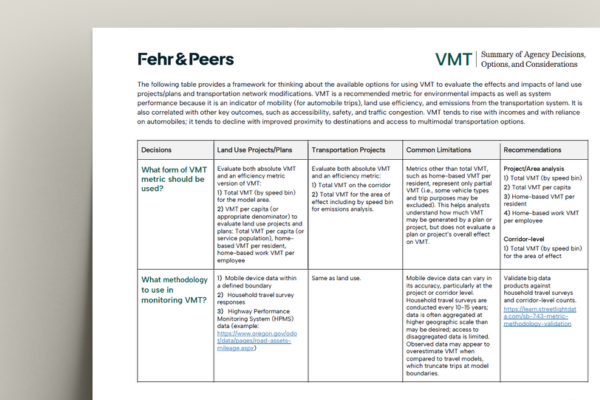
This guide helps agencies choose the right methods and tools to measure Vehicle Miles Traveled (VMT) for land use and transportation projects, supporting compliance with California’s SB 743.
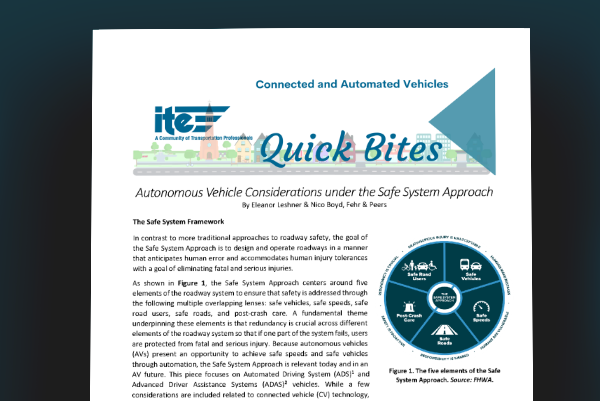
Autonomous vehicles may have the potential to support core elements of the Safe System approach, which strives to eliminate fatal and serious transportation injuries. Fehr & Peers partnered with ITE to publish “Autonomous Vehicle Considerations under a Safe System Framework,” which explores potential AV benefits, risks, and considerations within the Safe System framework.
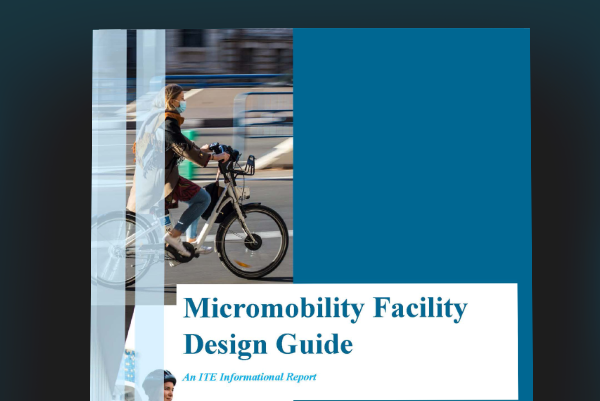
The Institute of Transportation Engineers (ITE) Pedestrian and Bicycle Standing Committee developed the Micromobility Facility Design Guide Informational Report, which summarizes potential design challenges micromobility users experience as they travel on typical roadways.