

Are project site TDM mitigation strategies reliable?
Since implementation of SB 743 in 2020, lead agencies using VMT have had questions emerge about VMT mitigation. One of these questions asks about the reliability of project site transportation demand management (TDM) mitigation strategies, such as those contained in Quantifying Greenhouse Gas Mitigation Measures (CAPCOA, 2021). The simple answer is that the effectiveness of these strategies depends on the performance of building tenants that can change over time. Ensuring effectiveness requires ongoing monitoring and strategy adjustment.

What is the concept of VMT mitigation banks and exchanges?
This answer has led to growing interest in program-based approaches to mitigation that can improve mitigation certainty. In 2019, U.C. Berkeley released a white paper describing the new concept of VMT mitigation banks and exchanges. Fehr & Peers, in collaboration with WRCOG, recently released a complement to the U.C. Berkeley paper that directly compares VMT mitigation banks and exchanges to traditional impact fee programs for deeper understanding. Further, the new white paper also contains specifics on potential legal requirements, and outlines the creation and implementation steps for each type of program with procedural flow charts. Program examples and implementation risks are also provided, making the paper an information-rich source for lead agencies seeking to successfully navigate the complexity of VMT mitigation strategies. Read the full white paper below.

share this article
Explore More
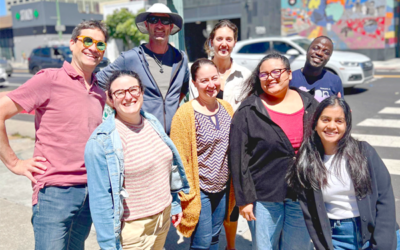
Intern Perspectives: A Summer in Transportation
What does a transportation internship actually look like? This summer, 25 interns across 14 of our offices gained hands-on experience with fieldwork, street design, GIS, data analysis, visual communication, client work, and community engagement. See what they learned, what surprised them, and how the experience shaped the way they think about careers in transportation.
Looking at Street Safety Through the Lens of Kinetic Energy
This ITE Technical brief explores how kinetic energy can add another dimension to roadway safety analysis, helping practitioners consider where conditions for serious harm may exist even before severe crash patterns emerge.
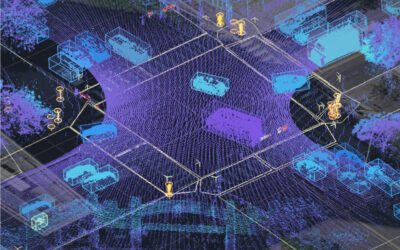
Understanding AI’s Role in Transportation Safety
AI is giving transportation safety practitioners new ways to analyze data, detect near misses, and respond to risk before crashes happen. Real-world examples from Bellevue, WA and San Bernardino, CA show where AI-supported technology is delivering value—and where human judgment remains essential for turning data into responsible safety decisions.