
Using VMT to Promote Sustainability
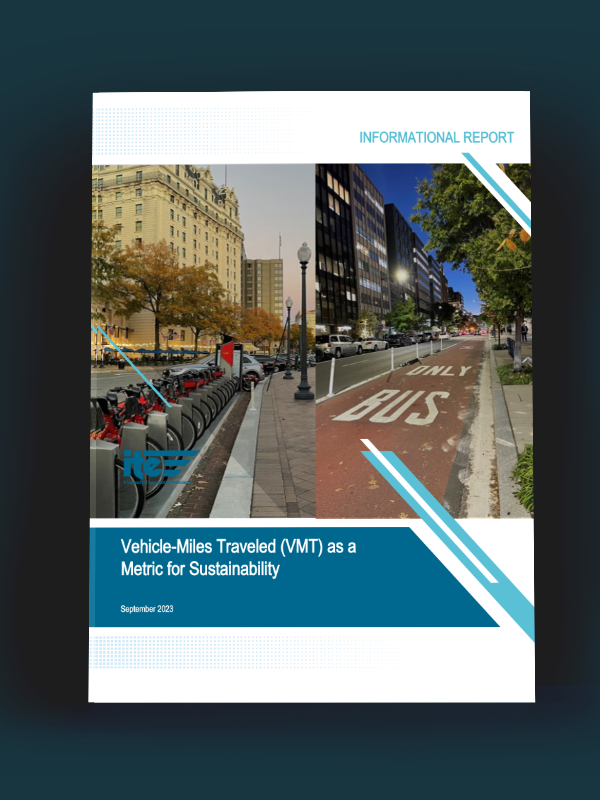
Using VMT to Promote Sustainability
As planning strategies evolve from vehicle-centric to a multimodal, accessibility-focused approach, the focus is on moving people efficiently over vehicles. The new paradigm emphasizes sustainable transportation modes and underscores the significance of Vehicle Miles Traveled (VMT) as a crucial metric. VMT reduction benefits traffic flow, infrastructure costs, community well-being, pollution reduction, non-driver accessibility, and public health.
We’re excited to introduce ITE’s new technical brief, Vehicle-Miles Traveled (VMT) as a Metric for Sustainability. This resource, which includes contributions from our nationwide VMT expert Ron Milam, covers the shift from vehicle-based planning to accessibility-based planning, providing insights and case studies for transportation agencies and practitioners striving to enhance equity, safety, environmental sustainability, and community livability.
share this article
Explore More

Jason Miller Joins Fehr & Peers
We’re thrilled to welcome Jason Miller to the team. With a strong background in transit and a holistic approach to projects, we’re excited to bring his local focus and expertise to the Denver and Front Range communities we serve.
Safeguarding Safety for Road Users Now While Planning for an Automated Future
Although there is much uncertainty regarding how autonomous vehicles (AVs) might transform cities and influence roadway safety, our recent ITE Journal article “Safeguarding Safety for Road Users Now While Planning for an Automated Future” published alongside the Eno Center for Transportation explores different safety strategies that are important to consider both today and in an AV future.
SB 743 and VMT FAQs
A guide for agencies on implementing SB 743’s requirement to assess transportation impacts based on VMT instead of traffic delay, aligning with California’s environmental objectives.