


A Wide Range of Industry Experience
For 12 years of his career, Jason worked in service supporting the Sun Valley, Idaho region as the Executive Director of Mountain Rides Transportation Authority. The position offered him the great opportunity to bring together four different transportation entities and form them into one regional multimodal transportation authority.
Through that endeavor, he oversaw planning, development, funding, and implementation of a wide variety of transportation programs (fixed route bus, vanpool, safe routes to school, capital projects, infrastructure development, complete streets, etc.). Those experiences provided Jason with a valuable depth of knowledge in planning with an eye toward funding and implementation challenges; helping agencies and municipalities identify potential barriers and plan for successfully navigating them. Over the last two years, Jason has worked in the consulting sector, taking on some unique and challenging projects. In a comprehensive operational analysis for reimagining bus service for Citibus in Lubbock, Texas, he worked to improve transit travel time, speed, availability, and reliability in an area with a high level of transit-dependent riders by employing feasible solutions, such as express buses and microtransit. Jason also managed plans and strategies for bringing an entirely new transit network to Sedona, Arizona, which included interactions around recreation areas, parking analysis, and reducing traffic.
Jason was drawn to Fehr & Peers through our focus on research and development, and how we apply technology and innovation to transportation challenges. Our firm also shares his own dedication to a local focus and partnerships with clients to achieve transportation goals and establish long-term relationships, providing the valuable opportunity to see changes and improvements evolve over time alongside our clients. Jason’s passion for finding implementable transportation solutions that reduce emissions while building stronger, more connected communities is a driving inspiration for him. We’re looking forward to his ideas, expertise, and contributions through client service as well as our own research and development programs.
In these current times of adaption and uncertainty, Jason is diving into partnerships with clients remotely to apply his specialized experience and holistic approach to helping communities navigate challenges and plan for transit futures.
Learn more by contacting one of our industry experts.
share this article
Explore More

The Generative AI Policy Starter Kit is Here
We helped develop a new Generative AI Policy Starter Kit for agencies, firms, and other organizations developing or refining their own AI guidance. Explore it through a Quick Bite, ITE Journal article, and online resource.
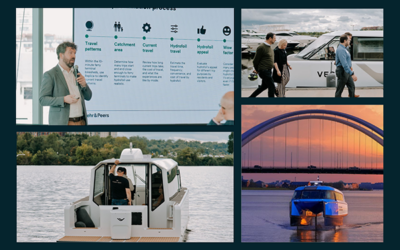
What Hydrofoil Service Could Look Like in Washington, DC
Could electric hydrofoils offer a faster way to travel between waterfront neighborhoods in Washington, DC? Our feasibility study found potential ridership demand and tested how routes, fares, and service frequency could shape a future pilot. The approach also offers a way for other communities to evaluate emerging transportation ideas before committing significant resources.
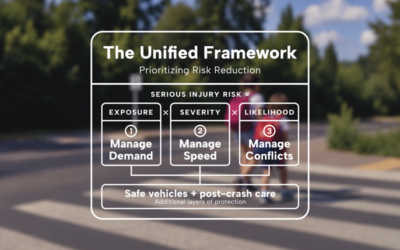
A Unified Framework for Roadway Safety
How can transportation professionals determine which safety strategies to prioritize? The Unified Framework for Safe System Implementation brings decades of safety research together to help agencies make more informed decisions. By connecting exposure, severity, and crash likelihood to different roadway contexts, the framework offers a practical way to prioritize strategies across planning, policy, design, and operations.