
Using VMT to Promote Sustainability
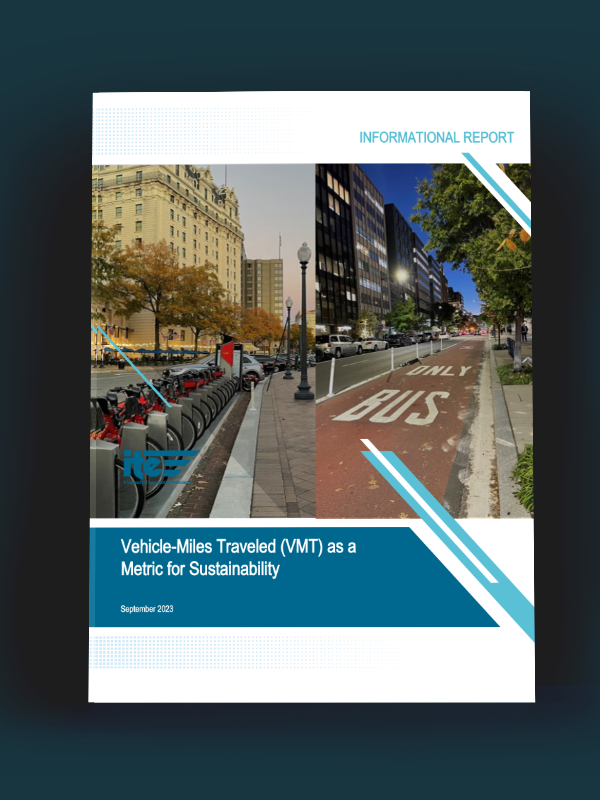
Using VMT to Promote Sustainability
As planning strategies evolve from vehicle-centric to a multimodal, accessibility-focused approach, the focus is on moving people efficiently over vehicles. The new paradigm emphasizes sustainable transportation modes and underscores the significance of Vehicle Miles Traveled (VMT) as a crucial metric. VMT reduction benefits traffic flow, infrastructure costs, community well-being, pollution reduction, non-driver accessibility, and public health.
We’re excited to introduce ITE’s new technical brief, Vehicle-Miles Traveled (VMT) as a Metric for Sustainability. This resource, which includes contributions from our nationwide VMT expert Ron Milam, covers the shift from vehicle-based planning to accessibility-based planning, providing insights and case studies for transportation agencies and practitioners striving to enhance equity, safety, environmental sustainability, and community livability.
share this article
Explore More
Fehr & Peers Expands to Long Beach
We are thrilled to announce the opening of our Long Beach Office! Our new office will allow us to continue to grow, better serving our existing and new clients.
A New Travel Efficiency Metric, Seat Utilization: Part 2 of 3
Transportation analysis practice would benefit from new metrics measuring efficiency and space utilization. Learn about the travel efficiency metric proposed by Uber.
A New Focus on Climate & Congestion, Seat Utilization: Part 1 of 3
Demand management includes a range of strategies from how roadways are operated to behavioral incentives that influence when and how much people travel by mode.