
Using VMT to Promote Sustainability
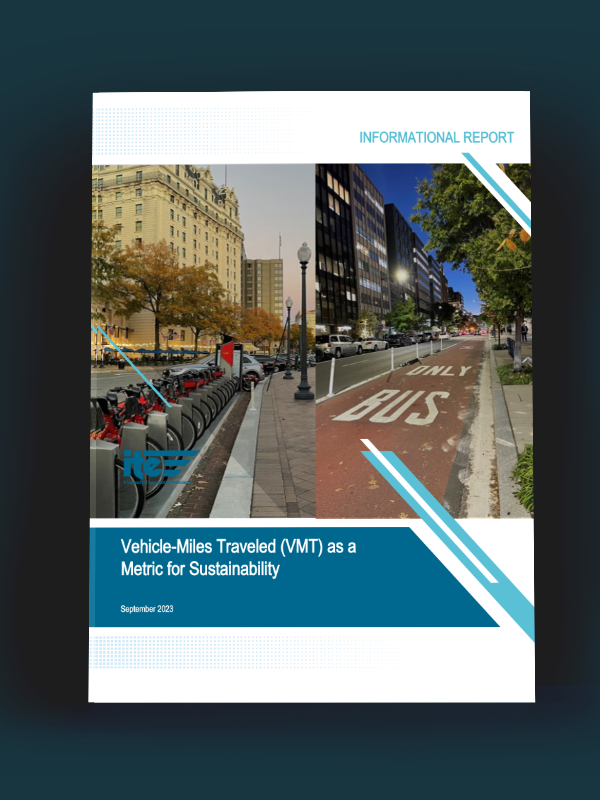
Using VMT to Promote Sustainability
As planning strategies evolve from vehicle-centric to a multimodal, accessibility-focused approach, the focus is on moving people efficiently over vehicles. The new paradigm emphasizes sustainable transportation modes and underscores the significance of Vehicle Miles Traveled (VMT) as a crucial metric. VMT reduction benefits traffic flow, infrastructure costs, community well-being, pollution reduction, non-driver accessibility, and public health.
We’re excited to introduce ITE’s new technical brief, Vehicle-Miles Traveled (VMT) as a Metric for Sustainability. This resource, which includes contributions from our nationwide VMT expert Ron Milam, covers the shift from vehicle-based planning to accessibility-based planning, providing insights and case studies for transportation agencies and practitioners striving to enhance equity, safety, environmental sustainability, and community livability.
share this article
Explore More
Announcing Our CEO Transition
Fehr & Peers is pleased to announce a CEO transition. Chris Mitchell assumes the role this month, with 20 years of firm leadership. He succeeds Matt Henry, who served 15+ years as CEO. We’re grateful for our success under Matt’s leadership, and are excited for the next phase.
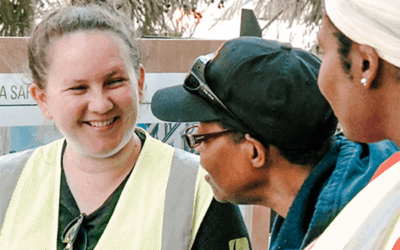
Partnering from Concept to Construction
With a passion for bringing transportation concepts into reality, we partner with our clients on many projects from initial plans and prioritization through to construction. Learn how we worked to integrate complete streets solutions in Honolulu, Hawaii from concept all the way through implementation.
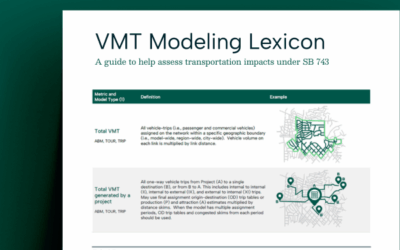
Understanding VMT Metrics: Explore Our Modeling Lexicon
CEQA’s July 1 deadline is swiftly approaching, making it increasingly important to be able to understand and navigate all types of VMT calculations. Our new quick-reference VMT lexicon makes that easier. Explore it now here.