
Using VMT to Promote Sustainability
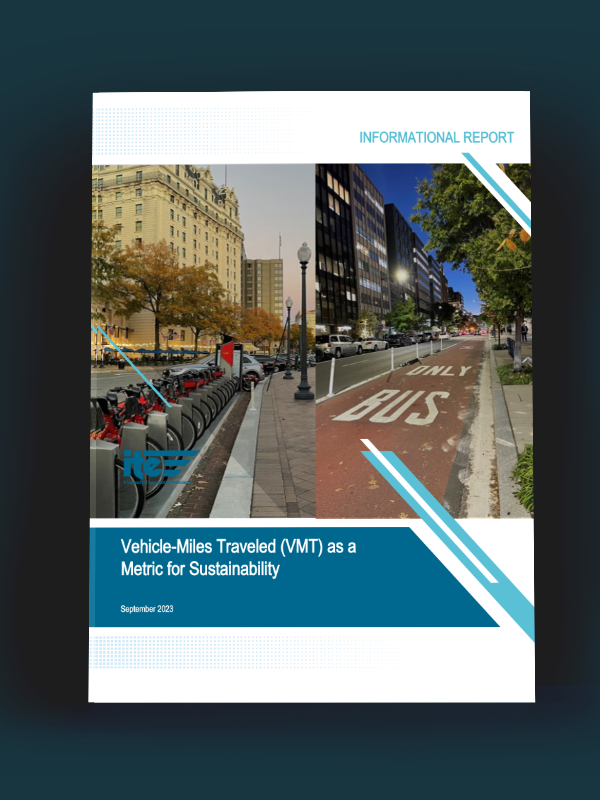
Using VMT to Promote Sustainability
As planning strategies evolve from vehicle-centric to a multimodal, accessibility-focused approach, the focus is on moving people efficiently over vehicles. The new paradigm emphasizes sustainable transportation modes and underscores the significance of Vehicle Miles Traveled (VMT) as a crucial metric. VMT reduction benefits traffic flow, infrastructure costs, community well-being, pollution reduction, non-driver accessibility, and public health.
We’re excited to introduce ITE’s new technical brief, Vehicle-Miles Traveled (VMT) as a Metric for Sustainability. This resource, which includes contributions from our nationwide VMT expert Ron Milam, covers the shift from vehicle-based planning to accessibility-based planning, providing insights and case studies for transportation agencies and practitioners striving to enhance equity, safety, environmental sustainability, and community livability.
share this article
Explore More

Leveraging Oregon Metro’s TSMO Strategy to Advance Regional Equity
Recipient of a “Diversity, Equity, and Inclusion Award” from the National Operations Center of Excellence, read how Oregon Metro developed a first-of-its-kind transportation systems management and operations (TSMO) strategy that focuses on the importance of evaluating the needs of an entire community.
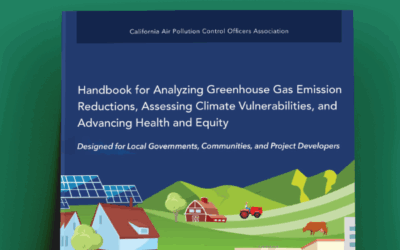
Quantifying Greenhouse Gas (and VMT) Mitigation Measures
We are excited to share the release of an update to the CAPCOA Quantifying Greenhouse Gas Mitigation Measures. Over the past decade, practitioners have relied heavily on this key reference document for developing VMT and emissions mitigation measures.

Evolving Standard Validation Practices for Traffic Data
In part one of a two-part series on traffic volume estimation and StreetLight validation, we examine key questions to understand the possible variations for two industry standard methods.