
Using VMT to Promote Sustainability
Using VMT to Promote Sustainability
As planning strategies evolve from vehicle-centric to a multimodal, accessibility-focused approach, the focus is on moving people efficiently over vehicles. The new paradigm emphasizes sustainable transportation modes and underscores the significance of Vehicle Miles Traveled (VMT) as a crucial metric. VMT reduction benefits traffic flow, infrastructure costs, community well-being, pollution reduction, non-driver accessibility, and public health.
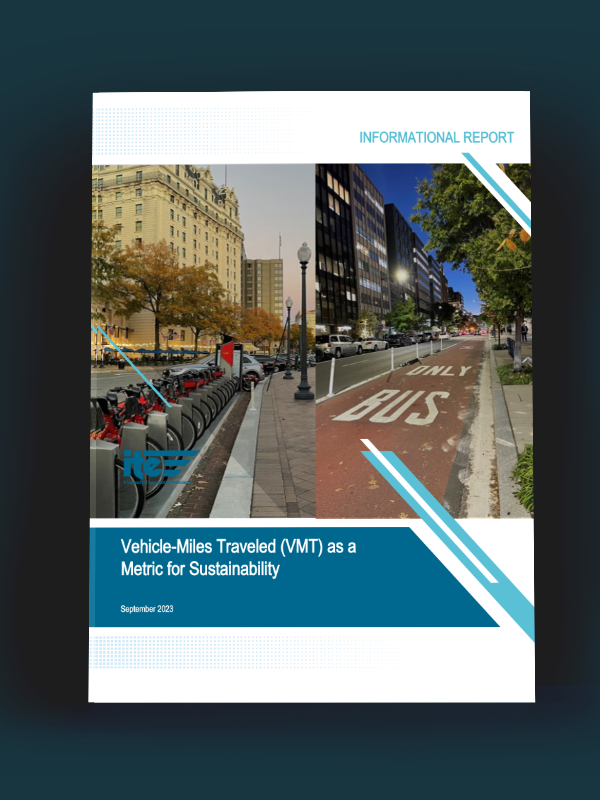
We’re excited to introduce ITE’s new technical brief, Vehicle-Miles Traveled (VMT) as a Metric for Sustainability. This resource, which includes contributions from our nationwide VMT expert Ron Milam, covers the shift from vehicle-based planning to accessibility-based planning, providing insights and case studies for transportation agencies and practitioners striving to enhance equity, safety, environmental sustainability, and community livability.
share this article
Explore More

SB 743 Overview
This overview details the advantages of using location-based services (LBS) data over traditional travel demand models, outlines the methodology for calculating VMT, and offers definitions for key metrics segmented by trip purpose and residence classification.

Introducing Five New Shareholders
Through hard work, dedication, and passion for their work, we congratulate the newest shareholders of Fehr & Peers.

Visualizing VMT Per Capita
Our new VMT+ Tool provides a combination of resources to visualize VMT per capita at the Census Block Group level throughout California.