
Using VMT to Promote Sustainability
Using VMT to Promote Sustainability
As planning strategies evolve from vehicle-centric to a multimodal, accessibility-focused approach, the focus is on moving people efficiently over vehicles. The new paradigm emphasizes sustainable transportation modes and underscores the significance of Vehicle Miles Traveled (VMT) as a crucial metric. VMT reduction benefits traffic flow, infrastructure costs, community well-being, pollution reduction, non-driver accessibility, and public health.
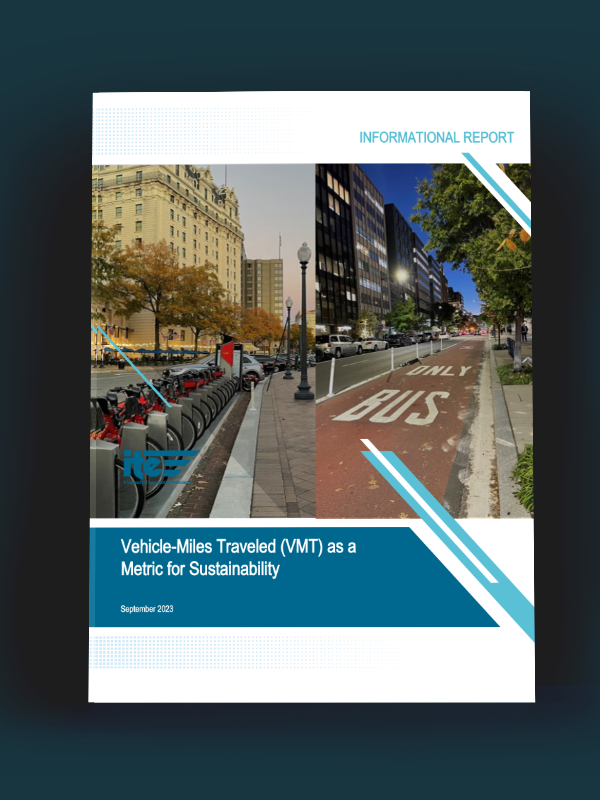
We’re excited to introduce ITE’s new technical brief, Vehicle-Miles Traveled (VMT) as a Metric for Sustainability. This resource, which includes contributions from our nationwide VMT expert Ron Milam, covers the shift from vehicle-based planning to accessibility-based planning, providing insights and case studies for transportation agencies and practitioners striving to enhance equity, safety, environmental sustainability, and community livability.
share this article
Explore More

Pushing the Envelope on Parking Studies
Circling for parking is a universal experience that few of us enjoy. See how one community is expanding on a typical parking study to dial in stronger recommendations for accessibility and safety.

Understanding Traveler Behavior Pt. 1
Discover how Activity-Based Models and transportation economics can play a key role in shaping transportation infrastructure decisions.

2024 New Shareholders
Congratulations to the newest Fehr & Peers shareholders! Their dedication and passion is a testament to their hard work.