

The modeling lexicon breaks down each metric by name, and provides both the model type used to create it and a definition description for full explanation. Designed as a quick-reference chart, the lexicon provides important information and clarification across all the different VMT metrics, assisting the user in effectively navigating VMT calculations of all types.
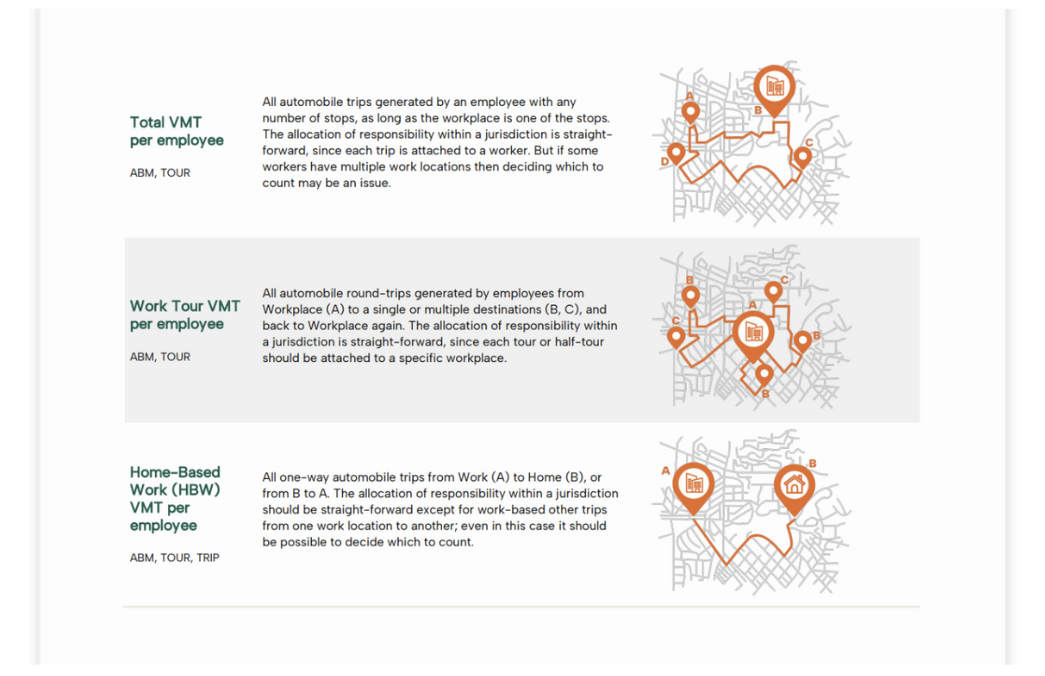
Using Our Lexicon Reference
We invite you to explore our VMT Modeling Lexicon, and we are open to comments and input for enhancements to it as well. The lexicon is intended as a helpful reference for unpacking the complexities of VMT analysis and as a road map for accurate calculations.
Are you interested in learning more about VMT metrics, modeling, or California Senate Bill 743 implementation and planning?
share this article
Explore More

Rethinking Street Design for Safety and Emergency Access
This February 2026 ITE Journal article shows how connected street networks and cross-department collaboration can help communities balance everyday safety with reliable emergency access.

Deepening Our Commitment to Safer Streets Nationwide
We’re excited to share that Safe Streets Research + Consulting is now part of Fehr & Peers.

Evolution of Quick-Build Bikeways
Quick-build projects have come a long way from their paint-and-plastic beginnings. Our Toolbox gives public agencies a practical way to compare quick-build materials for bikeways that balance budgets, timelines, durability, and aesthetics.