

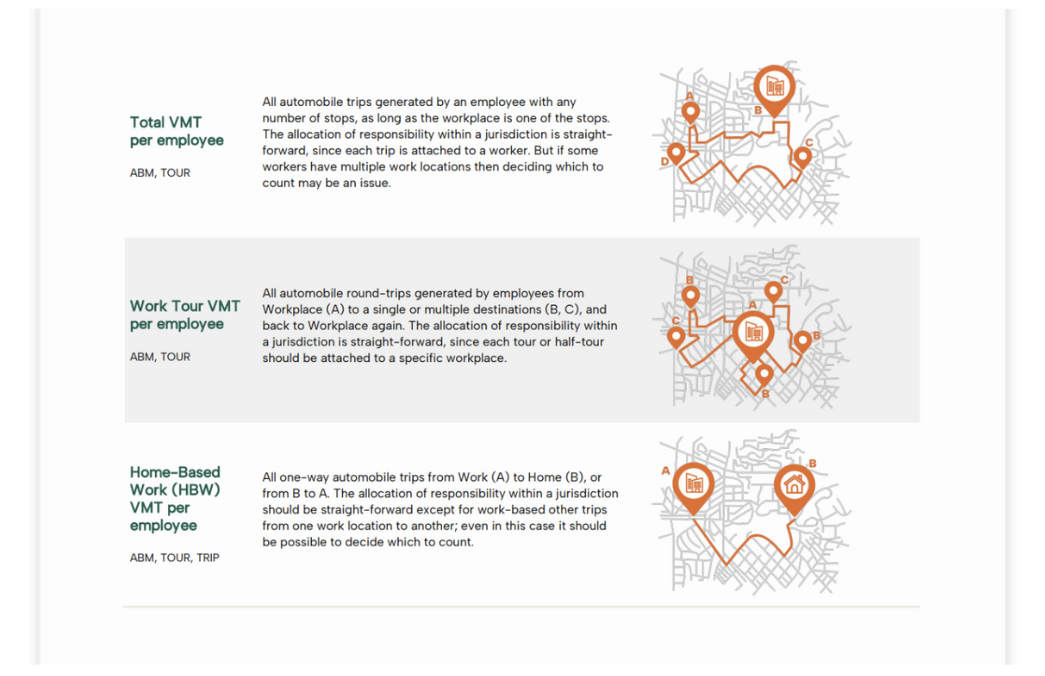
The modeling lexicon breaks down each metric by name, and provides both the model type used to create it and a definition description for full explanation. Designed as a quick-reference chart, the lexicon provides important information and clarification across all the different VMT metrics, assisting the user in effectively navigating VMT calculations of all types.
Using Our Lexicon Reference
We invite you to explore our VMT Modeling Lexicon, and we are open to comments and input for enhancements to it as well. The lexicon is intended as a helpful reference for unpacking the complexities of VMT analysis and as a road map for accurate calculations.
Are you interested in learning more about VMT metrics, modeling, or California Senate Bill 743 implementation and planning?
share this article
Explore More

Safer Today, Stronger Tomorrow
What happens when the safety goals for now and the goals for the future are in conflict? A people-focused Safe System approach considers vulnerabilities today and in the future. Recently adopted as a priority by agencies such as FHWA, Caltrans, the City of Philadelphia, and the Washington State Department of Transportation, safe system is a traffic safety framework emphasizing shared responsibility and a proactive approach where death and serious injury are recognized as unacceptable costs of travel on our roads.

2020 Staff Certifications
With 2020 drawing to a close, we recognize our team’s professional industry achievements amidst the year’s uniquely challenging circumstances.
SB 743 Agency Decision Matrix
This guide helps California agencies make informed decisions on how to measure and assess Vehicle Miles Traveled (VMT) for land use and transportation projects, ensuring compliance with SB 743.