
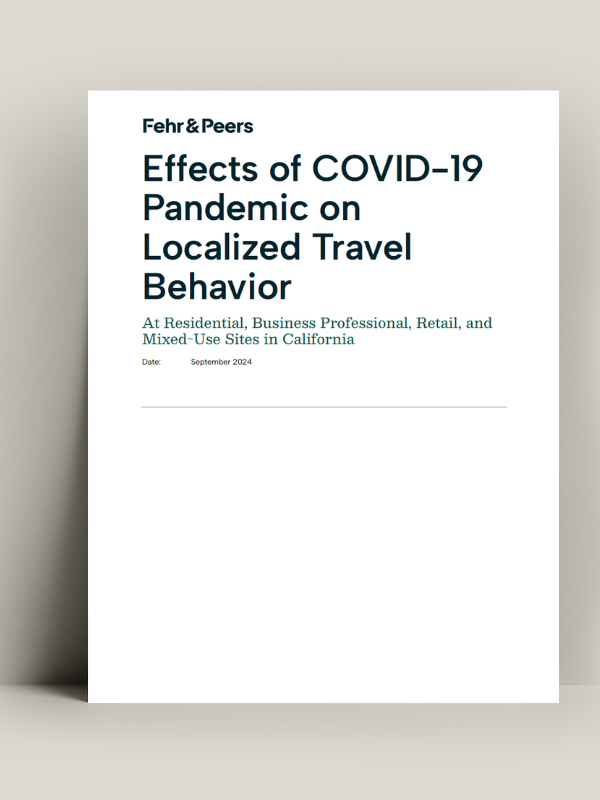
Since the onset of the COVID-19 pandemic, one question we frequently hear from our clients is: How has local travel behavior changed? To help provide answers, we embarked on a self-funded research effort, collecting pre-COVID and 2022/2023 traffic data at residential, retail, and mixed-use sites across California. We also conducted multi-day surveys at large office parks, one of the land uses most affected by the pandemic.
Our findings reveal significant shifts in travel patterns, especially at office buildings, where trip generation rates have dropped well below the rates set by ITE’s 2021 Trip Generation Manual, which consists entirely of pre-COVID data. These insights could have important implications for transportation planning, from travel demand models to infrastructure forecasting and fee programs.
For a deeper look at the data and what it means for future planning, check out our full white paper. Questions? Feel free to reach out to the report’s primary author, John Gard, PE, RSP1.
Contributors

John Gard
Email Me

Brian Wolfe
Email Me
Explore More
Model Assessment Criteria for CEQA
Agencies should evaluate their models to ensure they provide reliable forecasts and meet CEQA standards for environmental impact analyses.
VMT Agency Decision Matrix
This guide helps agencies choose the right methods and tools to measure Vehicle Miles Traveled (VMT) for land use and transportation projects, supporting compliance with California’s SB 743.
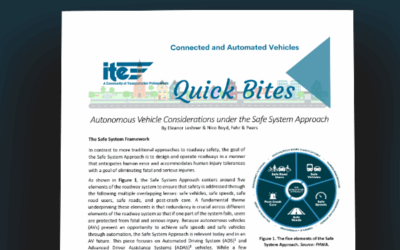
Street Safety in an Autonomous Vehicle Future
Autonomous vehicles may have the potential to support core elements of the Safe System approach, which strives to eliminate fatal and serious transportation injuries. Fehr & Peers partnered with ITE to publish “Autonomous Vehicle Considerations under a Safe System Framework,” which explores potential AV benefits, risks, and considerations within the Safe System framework.