
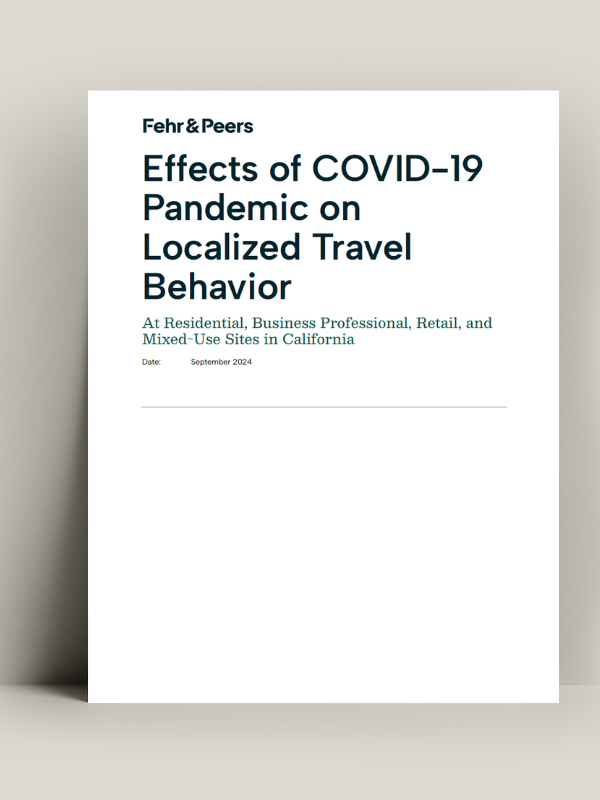
Since the onset of the COVID-19 pandemic, one question we frequently hear from our clients is: How has local travel behavior changed? To help provide answers, we embarked on a self-funded research effort, collecting pre-COVID and 2022/2023 traffic data at residential, retail, and mixed-use sites across California. We also conducted multi-day surveys at large office parks, one of the land uses most affected by the pandemic.
Our findings reveal significant shifts in travel patterns, especially at office buildings, where trip generation rates have dropped well below the rates set by ITE’s 2021 Trip Generation Manual, which consists entirely of pre-COVID data. These insights could have important implications for transportation planning, from travel demand models to infrastructure forecasting and fee programs.
For a deeper look at the data and what it means for future planning, check out our full white paper. Questions? Feel free to reach out to the report’s primary author, John Gard, PE, RSP1.
Contributors

John Gard
Email Me

Brian Wolfe
Email Me
Explore More

Bans & The Truck Parking Crisis
Learn about the collaborative efforts underway to ensure 1.4 million commercial truck drivers are granted safe and secure stops along their routes.
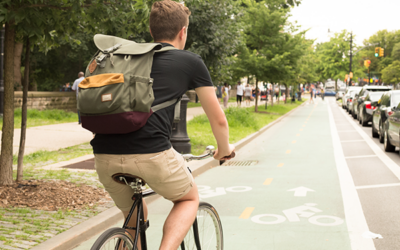
How Does VMT Move the Needle on Decarbonization?
Decarbonizing transportation requires more than cleaner vehicles—it also means driving less. This post explores how reducing vehicle miles traveled (VMT) supports climate action goals, what strategies are most effective, and where planners can make the biggest impact.
The Road Less Traveled
Learn about our solutions that provide simple, effective, and scalable options to bridge the gap between expectations and resource constraints in rural transportation planning.