
A New Focus on Climate & Congestion

A New Focus on Climate & Congestion

You want to travel freely.
Today, less than 35% of vehicle seats are filled on urban freeways during peak hours even though demand overwhelms available capacity. As public infrastructure, this level of efficiency raises questions about whether the roadway space is being wisely used. It also raises questions about how performance is traditionally measured.

Everyone wants to travel freely.
Freeways are often described as having problems when they are congested due to slow speeds instead of having too many unfilled seats. To some degree, this outcome is a result of cultural preferences for driving personal vehicles. This preference rates high on personal freedom, comfort, and convenience, but low on efficient use of the limited public roadway supply. If greater efficiency of the roadway network is desirable (i.e., more seats occupied) to improve travel reliability and reduce adverse travel effects such as delay, wasted fuel and air pollution, then demand management is essential.

Managing travel demand helps.
Demand management can include a range of strategies from how roadways are operated and controlled to behavioral incentives that influence when and how much people travel and by what modes. These strategies often require some tradeoffs between personal travel freedom and greater network efficiency or utilization. How to balance these tradeoffs is the essential question facing the public agencies that operate our roads.
share this article
Explore More
Still Getting Trip Generation Right: Revalidating MXD+
State-of-the-practice analytical methods should be employed when estimating the trip generation of mixed-use projects. In the latest issue of the American Planning Association’s PAS Memo, John Gard and Corwin Bell of Fehr & Peers describe the advantages, analysis techniques, and use of MXD+ through actual site case studies.

Evolving Visual Communications in a Dynamic World
Partnering with our client, we took on new visual communications strategies through the lens of equitable engagement to elevate participation and build energy around safety improvements.
Infrastructure Projects & Greenhouse Gas Emissions
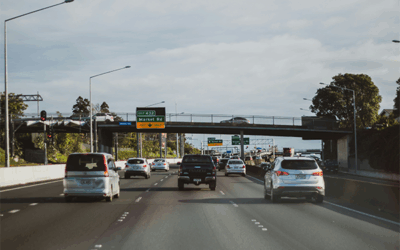
Can freeway infrastructure projects have a greenhouse gas emission benefit by improving travel speeds and reducing tailpipe emissions? Explore the corridor level results of three project case studies using different modeling approaches.