
Re-envisioning Long-Range Transportation Plans
Re-envisioning Long-Range Transportation Plans
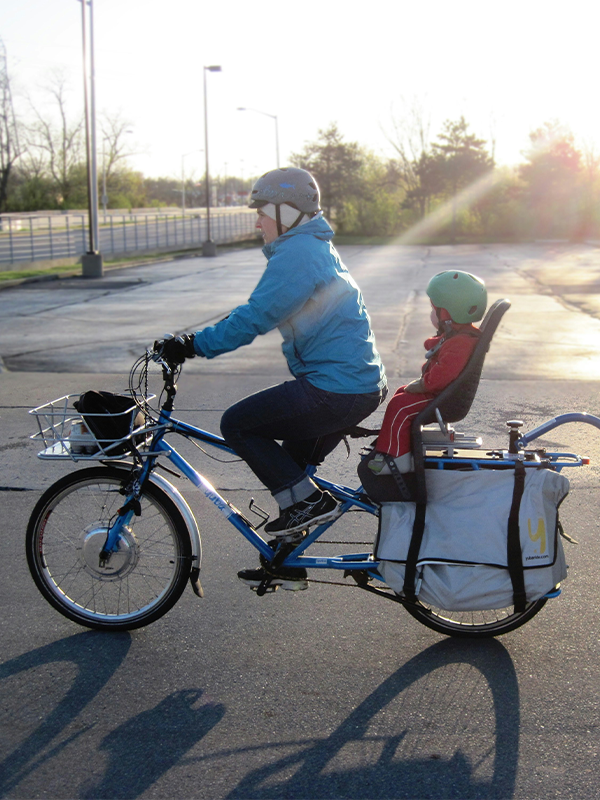
Routinely, agencies at the state and local levels are actively updating these plans to respond to statutory deadlines or fundamental needs of a community’s infrastructure. As they do so, many have been shifting their focus from a more traditional emphasis on vehicle capacity and roadway expansion to planning systems that are oriented around people. This includes setting goals related to improving conditions for walking and biking, making transportation safer for all, removing barriers to equitable access, and minimizing the impact of the transportation sector on climate change.
How do we apply our knowledge and expertise to adapt these plans to be relevant to current challenges? How do we create plans that are forward compatible – setting the table for the latest advancements in vehicle technologies, rideshare and public transportation services? How do we ensure that today’s plans better serve everyone by providing more equitable access to all major destinations?
Below are four examples from the Pacific Northwest of communities that have created innovative transportation plans:
Tigard, Oregon
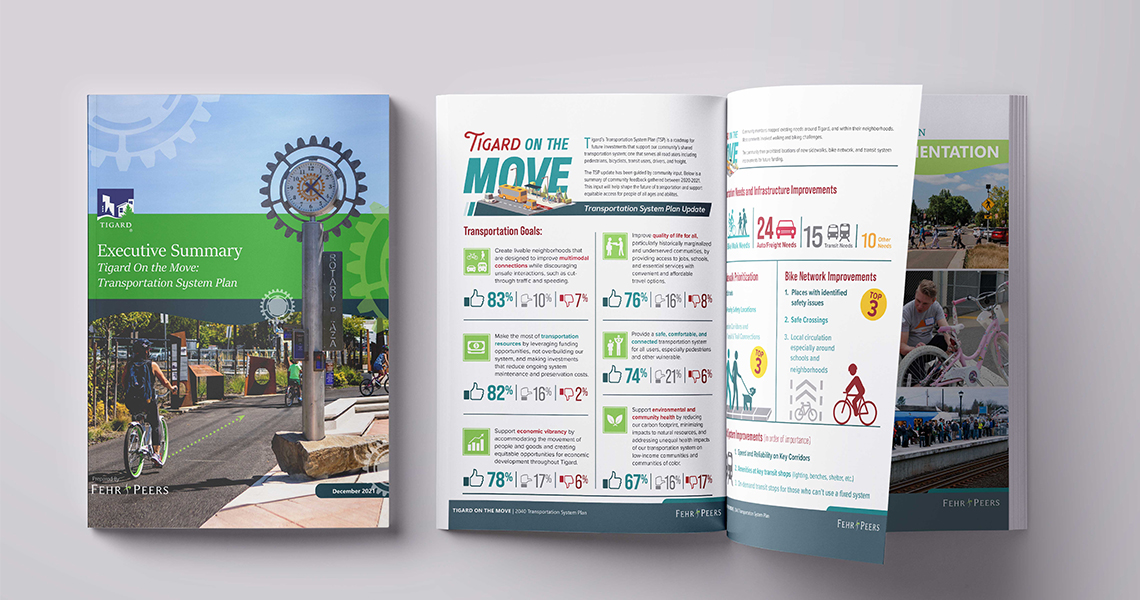
With key themes like “completing our streets to serve everyone” and “breaking barriers with Oregon-217 crossings” the Tigard TSP shifted the city’s focus from widened roadways to more connected, accessible streets. This TSP is literally paving the way for a renewed capital focus and much more multimodal system development charge program. Learn more.
Kent, Washington
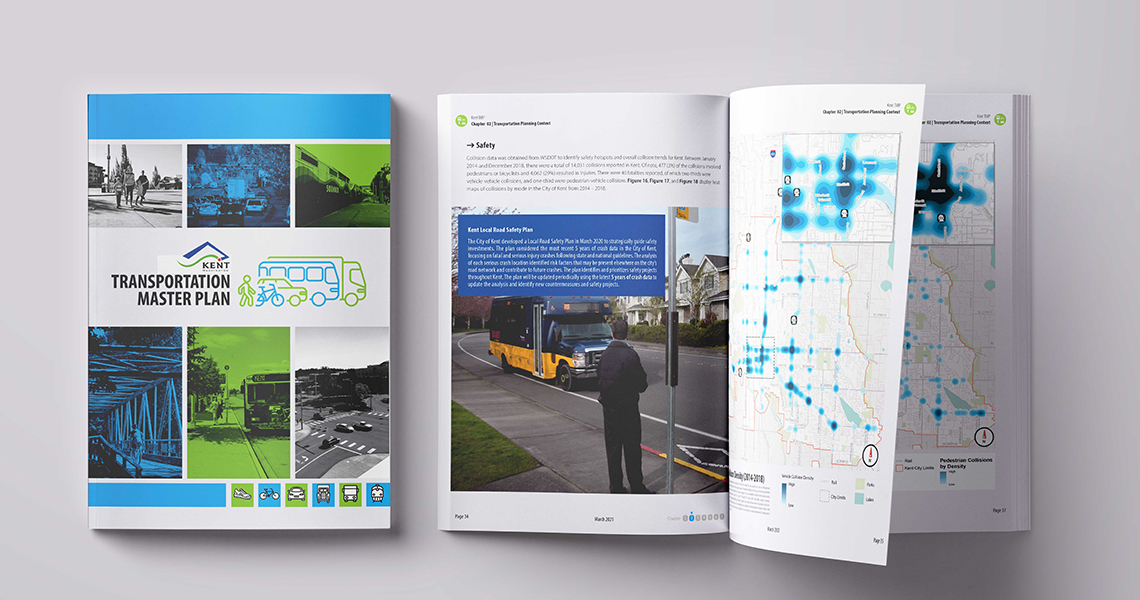
Developed during the COVID-19 pandemic, the City of Kent kept its foot on the accelerator in developing an inclusive, equity-first TMP that shifts capital investment decisions to explicitly consider how traditionally underserved communities would benefit, to meaningfully involve these community members, and track progress towards the City’s equity goals over time. Learn more.
Issaquah, Washington
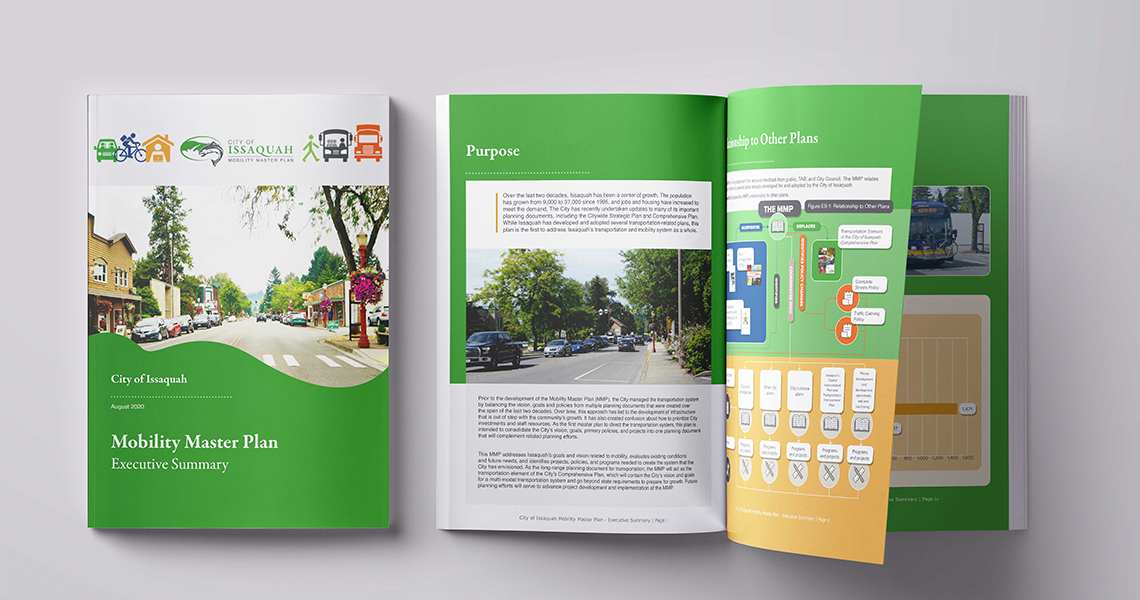
In 2020, the city used its Mobility Master Plan as a platform to dramatically shift the way it evaluates and prioritizes projects and, as a result, has revised its transportation trajectory. While historically a sleepy suburb of Seattle, Issaquah is proactively planning for change, including embracing transformation in Central Issaquah with the promise of a robust transportation system that integrates light rail, electrification, and flexible, shared modes. Learn more.
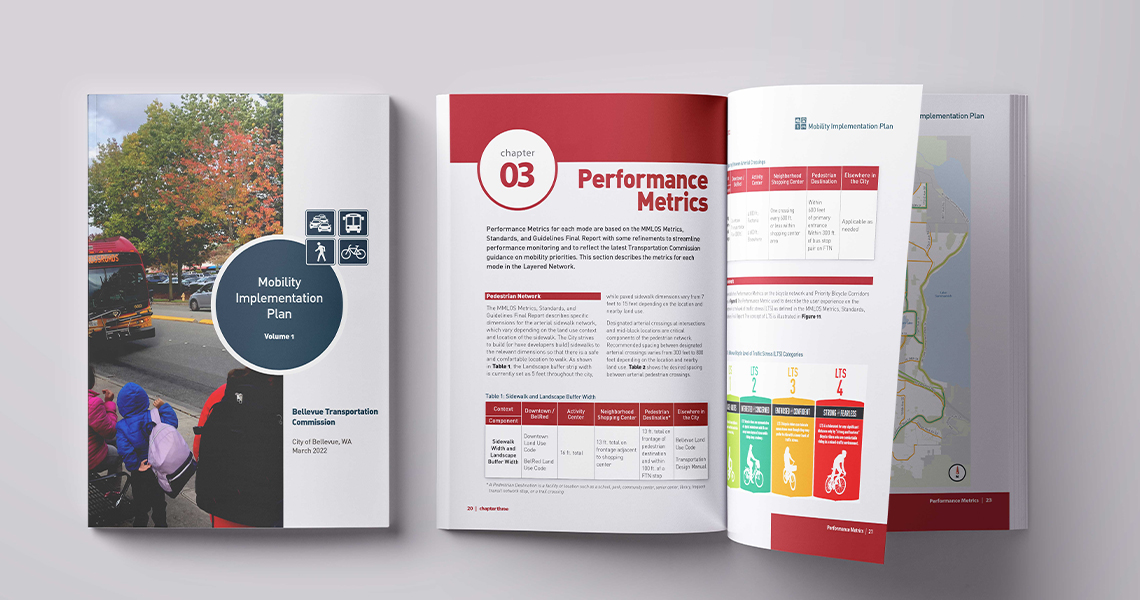
Bellevue, Washington
What you measure is what you get, and, in response, Bellevue is measuring its transportation system differently. Using its Mobility Implementation Plan to shift from vehicle-oriented metrics like intersection level of service to multimodal metrics like comfort, safety, and system completeness, Bellevue is creating a more inclusive vision for transportation that will benefit its changing community for decades to come. Learn more.
“Amazing. Fehr & Peers is able to pivot and respond, no matter what comes up.”
City of Kent
City of Issaquah
Interested in talking more about long-range transportation planning?
share this article
Explore More

Leveraging Oregon Metro’s TSMO Strategy to Advance Regional Equity
Recipient of a “Diversity, Equity, and Inclusion Award” from the National Operations Center of Excellence, read how Oregon Metro developed a first-of-its-kind transportation systems management and operations (TSMO) strategy that focuses on the importance of evaluating the needs of an entire community.
Quantifying Greenhouse Gas (and VMT) Mitigation Measures
We are excited to share the release of an update to the CAPCOA Quantifying Greenhouse Gas Mitigation Measures. Over the past decade, practitioners have relied heavily on this key reference document for developing VMT and emissions mitigation measures.

Evolving Standard Validation Practices for Traffic Data
In part one of a two-part series on traffic volume estimation and StreetLight validation, we examine key questions to understand the possible variations for two industry standard methods.