
Post-COVID Pandemic National Travel Changes
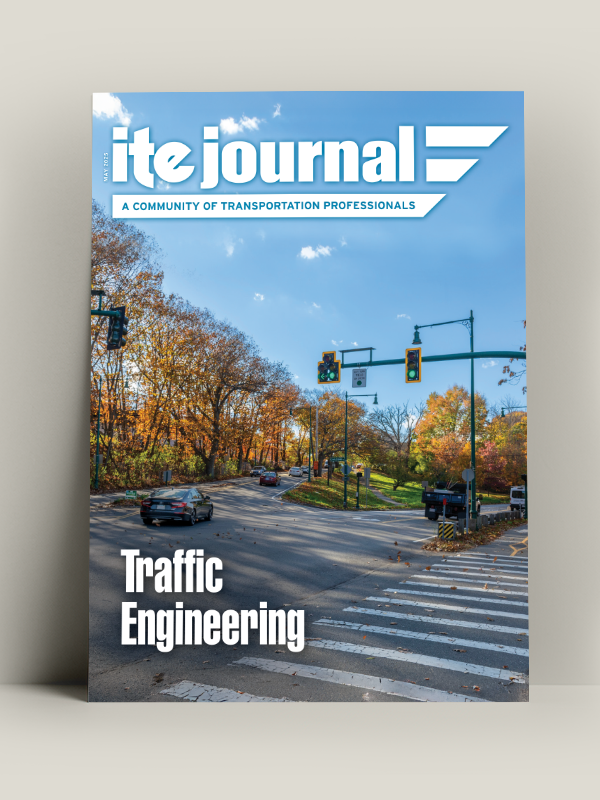
Post-COVID Pandemic National Travel Changes
Travel behavior in the US has changed more in the past few years than at any time in living memory.
While some travel patterns have returned to normal since the COVID-19 pandemic, others have not. Traffic volumes, transit ridership, and broader commuting habits still differ significantly from pre-pandemic levels.
In 2024, the Institute of Transportation Engineers (ITE) formed a task force to analyze this shift. Ian Barnes of Fehr & Peers contributed to that research and co-wrote an article for ITE Journal sharing the group’s findings.
Read the full article to learn more about this ongoing research, and contact us to explore how it could apply to your projects.
share this article
Contributor

Ian Barnes
Explore More

New NCHRP Guide Helps Planners Get Ahead of Truck Parking
Truck parking shortages create safety, operational, and community challenges near freight facilities. A new NCHRP guide offers planning strategies, model regulations, case studies, and implementation tools to help communities address truck parking before issues spill onto local streets.
MXD Gets Its Biggest Update Yet
Our Mixed-Use Development (MXD) tool just got its biggest update in more than a decade. Built on expanded national research and updated ITE trip rates, the 2026 release delivers more accurate, context-sensitive trip estimates for mixed-use places, including validation using post-COVID field counts.
A Design Win for Seattle Sidewalks
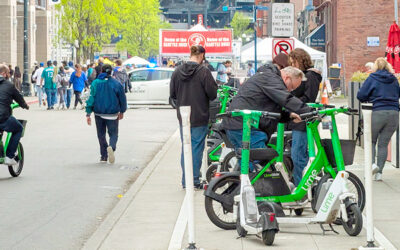
Micromobility is growing, but when scooters and bikes have nowhere obvious to park, sidewalks suffer. Seattle tackled this with quick-build corrals, using simple outlines to guide parking right away, then upgrading to durable markings and in-street designs. See how we helped screen sites, refine locations in the field, and scale for daily use and major events.