
Planning for the Future of E-Micromobility

Planning for the Future of E-Micromobility
E-bikes and e-scooters have encouraged many people to change the way they travel, with children and older riders alike embracing two-wheeled devices.
But these “e-micromobility” travel options also bring new challenges. Jurisdictions across the US struggle with inconsistent regulations, greater safety risks for riders, and constrained bike facilities that aren’t well suited to higher-speed devices.
Rapid growth only compounds these challenges. E-bike sales in the US nearly quadrupled from 2019 to 2022 alone, and they continue to grow in popularity.
Exploring Solutions to Common Challenges
We’ve been analyzing the evolution of e-micromobility for a while now. And in all of the areas we serve, similar questions and concerns arise:
- Confusion around the different device classifications
- Concerns about youth inexperience regarding rules of the road
- Risks from speed differences on shared-use paths and bike facilities
ITE Quick Bite Report
Considerations for E-Bikes in Policy, Planning, and Design gives agencies clear guidance on e-bike regulations and classifications, offers recommendations for incorporating e-bikes into transportation plans, and outlines design considerations for bikeways that accommodate a wider range of speeds, devices, and rider needs.
E-Micromobility White Paper
We helped MetroPlan Orlando develop E-Micromobility: A Primer for Florida Transportation Professionals and Policymakers. This white paper offers policy and planning recommendations from Florida and across the nation to help agencies prepare for the continued growth of e-micromobility.
We are constantly exploring ways to help our clients adjust to change, with the shared goal of safety and mobility for all. Contact us if you need help preparing for the future of e-micromobility!
share this article
Contributors

Natalie Chyba, PE
Senior Associate
Email Me

Angelica Rocha, AICP
Senior Transportation Planner
Email Me
Explore More
Announcing Our CEO Transition
Fehr & Peers is pleased to announce a CEO transition. Chris Mitchell assumes the role this month, with 20 years of firm leadership. He succeeds Matt Henry, who served 15+ years as CEO. We’re grateful for our success under Matt’s leadership, and are excited for the next phase.
Partnering from Concept to Construction
With a passion for bringing transportation concepts into reality, we partner with our clients on many projects from initial plans and prioritization through to construction. Learn how we worked to integrate complete streets solutions in Honolulu, Hawaii from concept all the way through implementation.
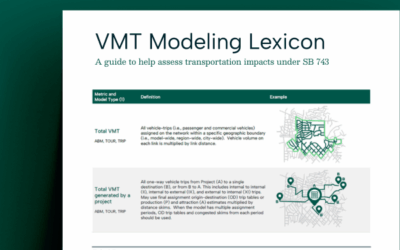
Understanding VMT Metrics: Explore Our Modeling Lexicon
CEQA’s July 1 deadline is swiftly approaching, making it increasingly important to be able to understand and navigate all types of VMT calculations. Our new quick-reference VMT lexicon makes that easier. Explore it now here.