
New NCHRP Guide Helps Planners Get Ahead of Truck Parking
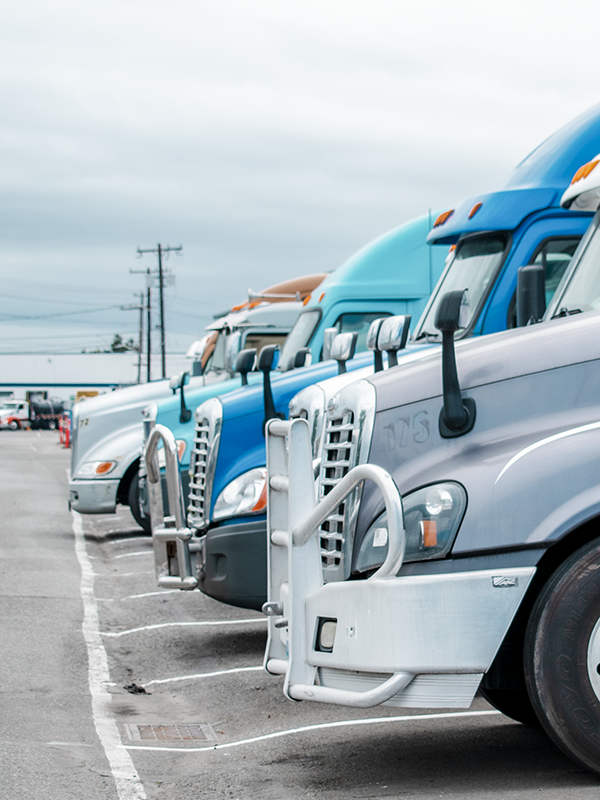
Imagine you’re a truck driver. You made good time and you’re arriving an hour early for your next delivery. While there’s space for you, the facility won’t allow you to arrive until your scheduled time. So you wait down the road at an already crowded truck stop, competing for space with long-haul drivers trying to get their required rest. And while you wait, the drivers you’re displacing have nowhere safe to sleep.
This kind of situation shows up repeatedly in communities that have approved warehouses or distribution centers without requirements for where trucks stage, queue, or rest nearby. One in 16 US workers is employed in trucking, per Bureau of Labor Statistics data, and available parking has not kept pace—an estimated 11 drivers compete for every available space. Zoning codes were often written before e-commerce transformed freight demand, and state regulations frequently do not give cities the tools they need. The costs of building truck parking can be prohibitive. The result is a system gap that planners are left managing on the ground.
51% of drivers rarely or never find parking at the facilities they serve.
38% frequently park in areas not designed for trucks.
Less than 1% of local agencies require freight facilities to provide truck parking.
Source: NCHRP Research Report 1175
To help communities move from reacting to planning, our team led the development of the Guide for Local Truck Parking Regulations through the National Cooperative Highway Research Program (NCHRP). It is built for planners and public works teams, with practical tools and regulations they can adapt to local conditions.
The resource addresses the full range of situations that generate parking demand, from staging near freight facilities and queuing at ports to driver rest and off-duty parking. It recognizes that long-haul, short-haul, and drayage drivers each face distinct challenges, and that good local policy has to account for all of them, including the basic human needs drivers have.
For each situation, it offers concrete tools: model ordinances, zoning code language, design standards, and guidance on integrating truck parking into general plans, setting time limits, handling shared loading facilities, and identifying funding.
The full research foundation, including literature review, regulatory scan, and stakeholder engagement, is documented in NCHRP Research Report 1175 for readers who want to go deeper.
Working through a truck parking challenge in your community? We would be glad to talk through it.
share this article
Connect with our Contributors

Jolene Hayes
Principal
AICP
Email Me

Tino Jonga
Freight Practice Leader
PE, PTOE
Email Me

Krystle Li
Creative Designer
Email Me

Brian Wolfe
Engineer/Planner
Email Me
Explore More

Understanding AI’s Role in Transportation Safety
AI is giving transportation safety practitioners new ways to analyze data, detect near misses, and respond to risk before crashes happen. Real-world examples from Bellevue, WA and San Bernardino, CA show where AI-supported technology is delivering value—and where human judgment remains essential for turning data into responsible safety decisions.
New NCHRP Toolkit Helps Agencies Build Safety Into Everyday Decisions
Making streets safer takes more than individual projects. Our new Safe System approach toolkit, developed through NCHRP Research Report 1181, helps agencies integrate safety into policies, budgets, design standards, and land use decisions. Explore practical tools, real-world case studies, and new IIHS Safe System success stories that show how agencies are turning safety into standard practice.

Announcing Safety Multipliers
What do San Francisco’s Van Ness BRT, New York’s congestion pricing, and Arlington’s intersection program have in common? Each pulls all three Safe System levers at once. We call that pattern a safety multiplier.