
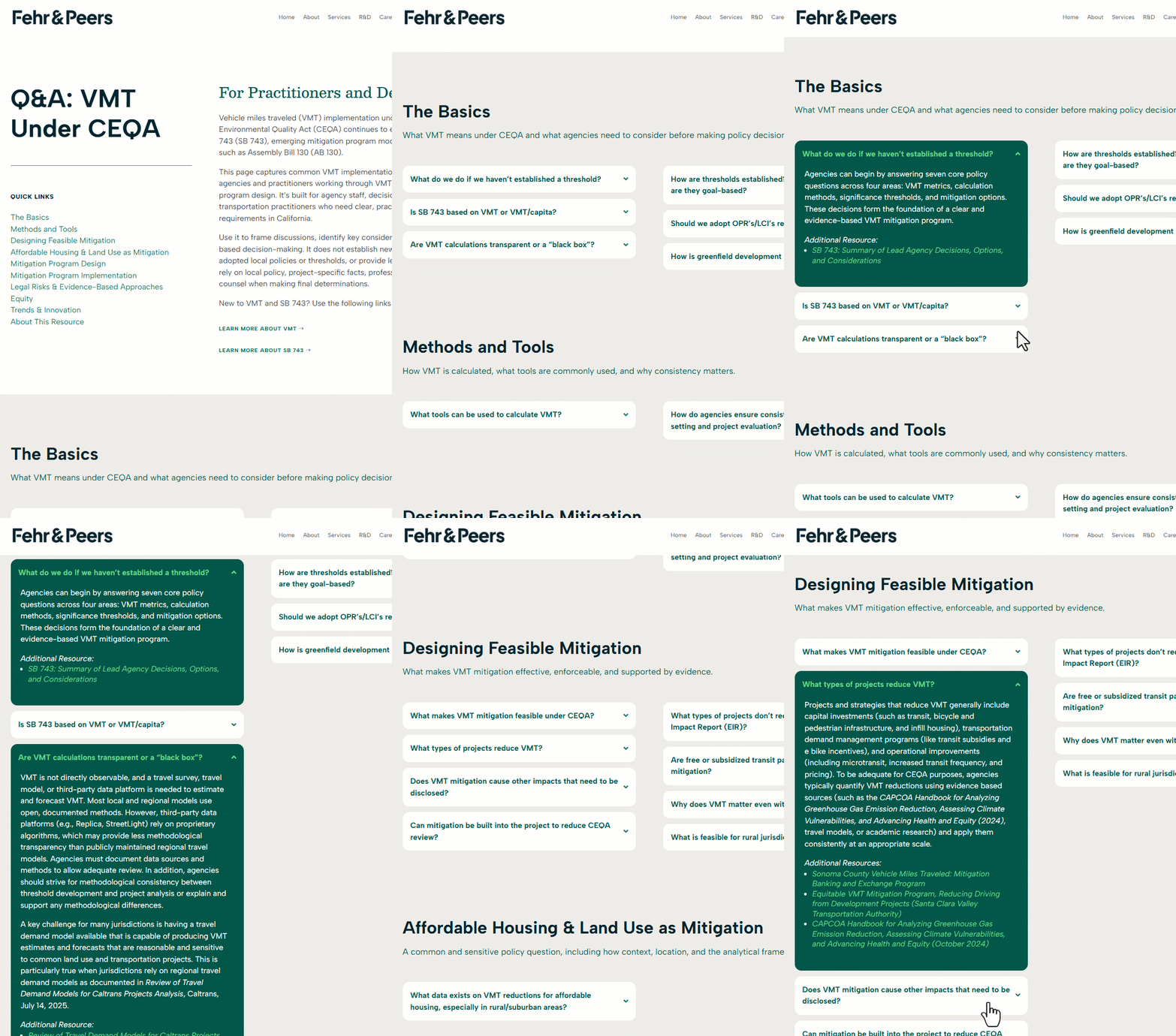
Vehicle miles traveled, or VMT, remains one of the more nuanced parts of transportation analysis under the California Environmental Quality Act (CEQA). Since Senate Bill 743 (SB 743) changed how transportation impacts are evaluated, agencies across California have been working through what VMT means in practice, including how it is measured, what makes mitigation feasible, and what evidence supports a defensible approach.
That work is still evolving. Assembly Bill 130 (AB 130), new mitigation program models, and emerging state and local practices are adding new layers to an already complex topic.
We heard many of these questions directly during our California American Planning Association conference session, VMT Mitigation Roundtable: From Basics to Breakthroughs, held in Monterey in October last year. The conversation reinforced something we see often: VMT rarely has one-size-fits-all answers. Practitioners need a clearer way to frame the issues, understand tradeoffs, and apply the right evidence to local decisions.
To help, we created Q&A: VMT Under CEQA, a practical reference for agency staff, decision makers, and CEQA and transportation practitioners working on VMT analysis and mitigation in California. The resource brings together questions we’ve heard through our work, conference discussions, existing guidance, agency practice, practitioner knowledge, research, and technical references.
This Q&A covers common topics including foundations and methods, mitigation program design, implementation, administration, and legal and strategic considerations. It is designed to help users find clear answers, understand where judgment is needed, and identify additional resources where examples or supporting evidence may be useful.
Still have questions about how CEQA applies to your VMT analysis or mitigation strategy? We’d be glad to help you work through what comes next.
share this article
Connect with our Contributors

Daniel Rubins
Senior Associate
Email Me

Rey Hosseinzade
Engineer/Planner
PhD
Email Me

Ron Milam
Director of Evolving the Status Quo
AICP, PTP
Email Me

Sonia Anthoine
Senior Transportation Planner
Email Me
Explore More

Land Conservation and VMT Reduction Analysis

Focusing on VMT Metrics Through a Microscope
Understanding Post-Pandemic Travel
Clients often ask how travel behavior has shifted since COVID-19. Our self-funded study reveals significant changes, especially at office buildings. These findings could shape future transportation planning. Read the full white paper here.