
Leveraging Oregon Metro’s TSMO Strategy to Advance Regional Equity
Leveraging Oregon Metro’s TSMO Strategy to Advance Regional Equity
The last two years illustrated how a rapidly changing environment can create challenges for agencies in managing their transportation systems. Drastic changes in working from home, natural disasters, and changes in technology have all been disruptors to the status quo. Through it all, transportation equity and social justice also rose to the forefront.
The Portland Metro Region recognized these challenges and saw its 2021 TSMO Strategy Update as an opportunity to improve transportation equity and create agility across the region. Transportation Systems Management and Operations (TSMO) strategies strive to manage and operate transportation systems as efficiently and effectively as possible. Rather than focusing on expanding systems, TSMO aims to get the most out of the existing transportation system by managing demand, improving business practices and collaboration across jurisdictional boundaries, and using technology to measure and manage transportation operations and track progress toward regional goals.
Oregon Metro chose to employ an innovative approach to the new TSMO strategy by focusing on developing an efficient transportation system for all users. Metro’s TSMO project manager, Caleb Winter, made it clear from the start that equity would be at the root of this plan update.
The Innovative Approach
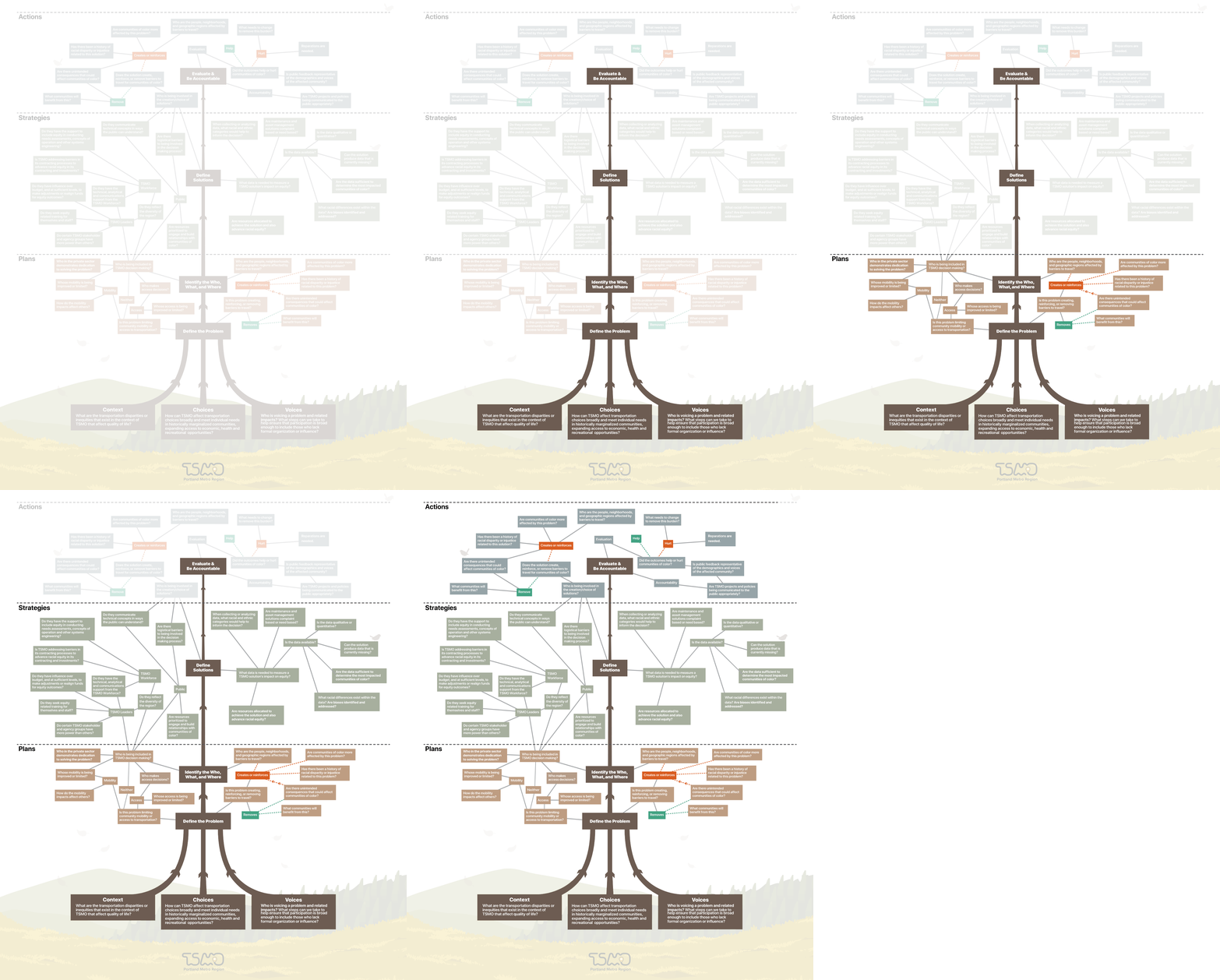
From that root in equity grew a new and unique idea in the process: an equity tree. The first task in the project’s scope of work was to create an equity decision tree, later coined the “Equity Tree,” which would guide decision-making throughout the project. The tree was envisioned more metaphorically than as a strict path to follow when making decisions. It became a symbol for the region’s desire to grow equity throughout the region, like the Douglas Fir tree the region is known for. The roots provide questions to help define the source of the inequity, determine how to develop strategies and solutions to address it, and create accountable actions. At the top of the tree sit discussion points to evaluate intended and unintended effects of the solutions and redefine the problem statements to begin the process again. The Equity Tree serves as a discussion guide to be referred to throughout the ongoing life of the TSMO strategy.
The Resulting Benefits
The Equity Tree helped ensure equity considerations were incorporated throughout the TSMO plan update. Starting at the beginning with the vision statement, the stakeholders used the Equity Tree to focus the conversation on creating a final vision statement explicitly defining TSMO’s role in eliminating disparities experienced by black, indigenous (and) people of color, and people with lower incomes while also including the traditional outcomes found in a TSMO strategy (reliability, collaboration, and connectedness).
Collaborate to provide reliable, agile, and connected travel choices so that all users are free from harm, and to eliminate the disparities experienced by black, indigenous (and) people of color, and people with lower incomes.
-TSMO Strategy Update Vision
Equity considerations were woven into the development of the performance metrics, so that the region can change how it measures progress toward an efficient system for all users. For example, while the strategy maintained the total crashes metrics to be consistent with other regional safety plans, it also introduced additional exploratory metrics, such as crash demographics, to better measure who is impacted by crashes in the region.
EXPLORATORY METRICS
CRASH DEMOGRAPHICS
Current crash demographics are not readily available. This metric would improve the region’s understanding of the disproportional impacts of crashes and how to correct them.
CRASH RISK
Crash analysis is currently conducted using historical data and is therefore reactive. Technology and data sources are available to identify locations of increased crash risk before crashes occur.

Metro Project Manager Caleb Winter shared sentiments about the appreciation for the way in which this project approach helped them keep sight of regional policies as they moved into detailing the planned actions. The strong connections to equity provided the best example he could think of where TSMO has less of a history than other areas of transportation in responding with something constructive and beneficial. They now have a well-charted course for that, and weaving equity and TSMO together provided the path for making a difference in the region for all travelers.
The strategy update was passed by a unanimous vote of acceptance by technical and elected officials and is slated to be adopted by the end of this year. The full Oregon Metro Regional TSMO Strategy and the Equity Tree may be reviewed through Metro’s website.
share this article
Explore More

What Seattle’s Travel Trends Reveal About Post-Pandemic Mobility
The 2023 Puget Sound travel study revealed notable changes in how people get around. Our team identified emerging trends that may hold lessons for other regions.

The Ws of Safety: Treating the System, Not the Symptom
Our safety experts propose a Ws framework (who, what, when, where, and why) to strengthen the Safe System Approach and achieve Vision Zero 2.0.
FP Induced Vehicle Travel Analysis Technical Guidance
This guidance aids agencies in complying with California’s SB 743 by offering tools to quantify VMT impacts and evaluate mitigation strategies.