
Inside Our Summer Intern Program
Inside Our Summer Intern Program
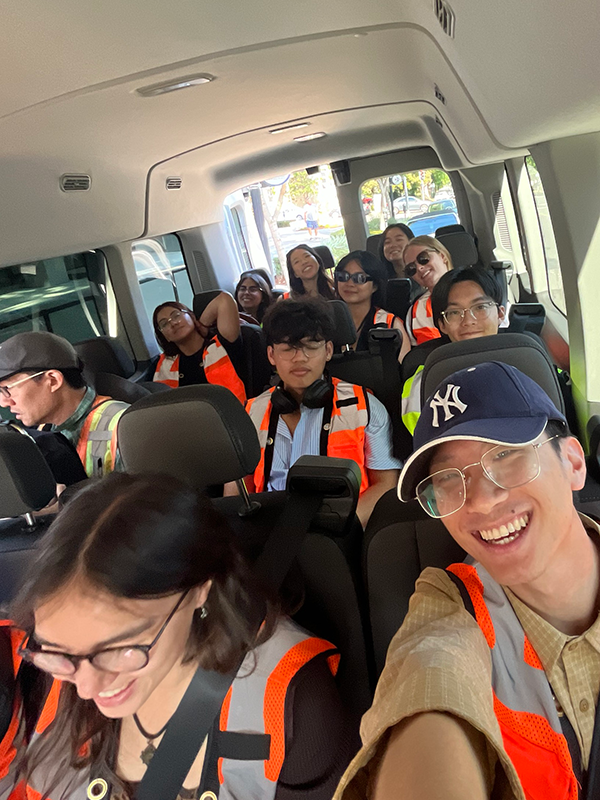
At our company, we’re passionate about transportation and seek like-minded individuals who share our desire to improve the ways people experience transportation across communities. Our internship program is designed to put passion into action from day one. Interns don’t fetch coffee—they dive into impactful projects, collaborating closely with experts in the field.
Here’s a glimpse of the types of projects our interns worked on:
- Active Transportation: Enhancing pedestrian and cycling infrastructure.
- VMT Impacts: Analyzing Vehicle Miles Traveled to reduce environmental footprints.
- Equity in Transportation: Ensuring fair and accessible transportation for all communities.
Collaborative Learning Beyond Our Walls
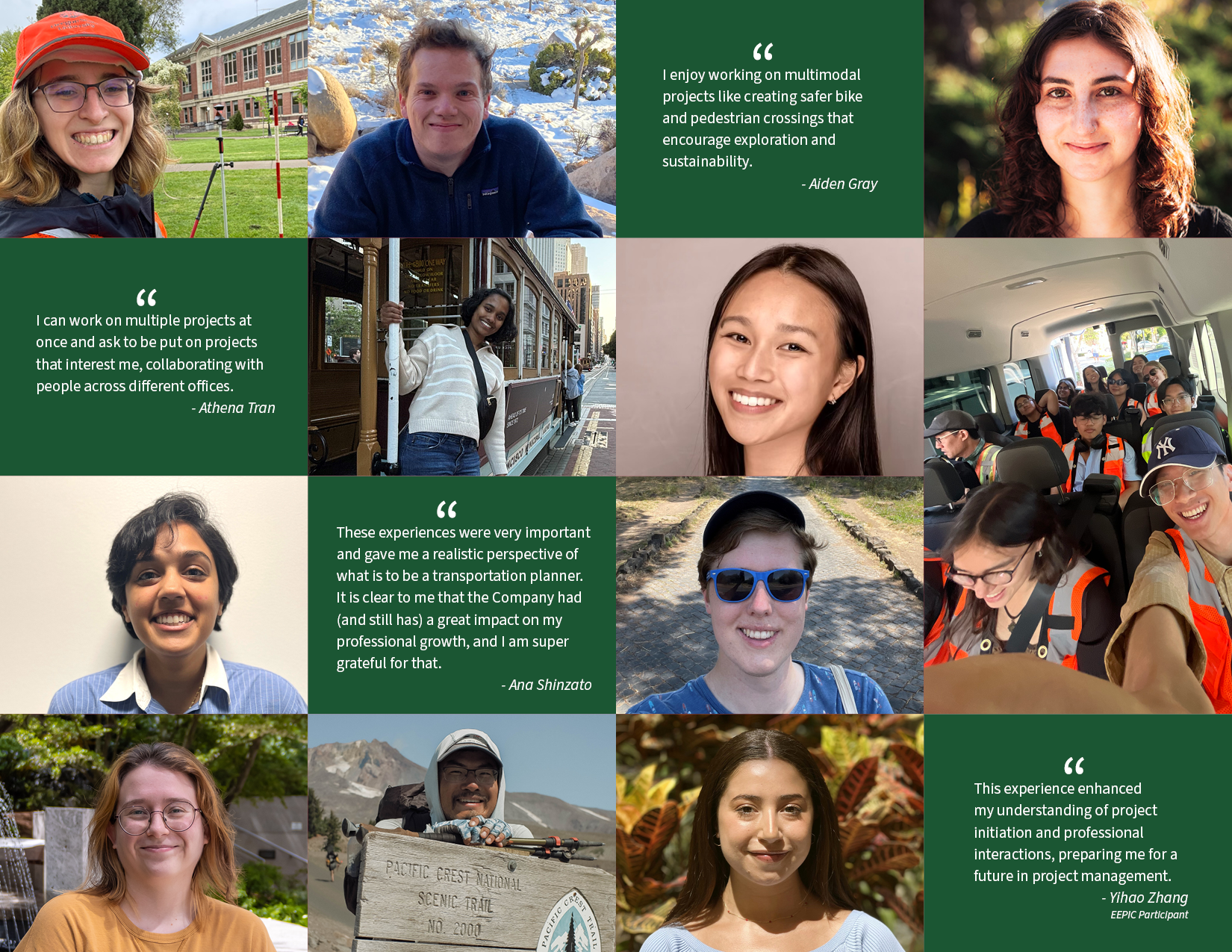
In addition to our in-house program, this year Fehr & Peers participated in the Environmental, Engineering, and Planning Internship and Charrette (EEPIC) program. EEPIC provides students from underrepresented communities the chance to participate in a two-week charrette focused on an actual project proposed by a local agency. In collaboration with Ascent, Dudek, Environmental Science Associates, PlaceWorks, and Rincon Consultants, Inc., we created opportunities for two of our interns, alongside their interns, to dive into policy, sustainability, design, collaboration, equity, and engagement, shaping the future of Elk Grove, California.
Voices From Our Interns
- Cal Poly, SLO
- California State University, East Bay
- California State University, San Bernardino
- Florida International University
- George Washington University
- Oregon State University
- Rice University
- UC Berkeley
- UC Davis
- UCLA
- UC Irvine
- University of Michigan
- University of Washington, Seattle
- University of North Carolina, Chapel Hill
- Virginia Polytechnic Institute and State University
share this article
Explore More
E-Bike Safety Takes More Than Regulation
E-bikes can replace longer car trips and reduce vehicle miles traveled, but regulating devices alone won’t make riding safer. A September 2026 ITE Journal article applies the Safe System Approach to show why communities need both connected, low-stress networks and effective policies.
The Generative AI Policy Starter Kit is Here
We helped develop a new Generative AI Policy Starter Kit for agencies, firms, and other organizations developing or refining their own AI guidance. Explore it through a Quick Bite, ITE Journal article, and online resource.
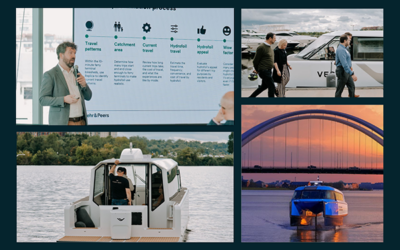
What Hydrofoil Service Could Look Like in Washington, DC
Could electric hydrofoils offer a faster way to travel between waterfront neighborhoods in Washington, DC? Our feasibility study found potential ridership demand and tested how routes, fares, and service frequency could shape a future pilot. The approach also offers a way for other communities to evaluate emerging transportation ideas before committing significant resources.