
Highway Traffic Forecasting
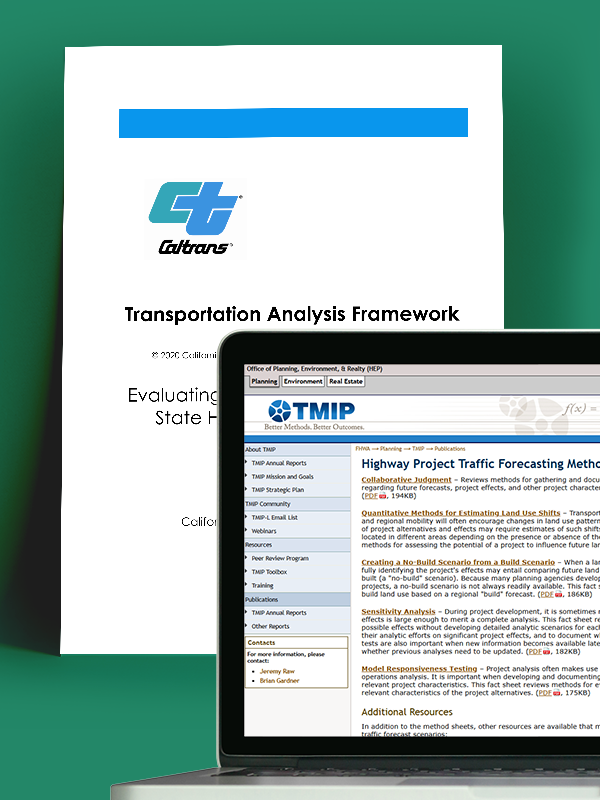
Highway Traffic Forecasting
Whether framed for sustainability, greenhouse gas reduction, safety, or land use efficiency, Vehicle Miles Traveled (VMT) is aligned with the values of many cities, counties, and even states as a critical metric to support desired transportation outcomes. Induced VMT refers to the phenomenon where building or expanding highway capacity can lead to a rise in overall vehicle travel that dampens congestion relief benefits and contributes to higher levels of air pollutant and GHG emissions. Understanding induced VMT becomes imperative for policymakers to address this complex issue while striving for balanced solutions that promote mobility without an overreliance on automobiles.
For those interested in induced VMT and how transportation projects contribute to VMT impacts, we are excited to announce a new federal resource as well as California state guidance that includes technical input from our national VMT experts listed below.
share this article
Contributors

Ron Milam
Forecasting Practice Leader
AICP, PTP
Email Me

Jerry Walters
Principal

Chris Breiland
Director of Research & Development
PE
Email Me

Bruce Griesenbeck
Transportation Analyst
Email Me


Explore More

Jason Miller Joins the Fehr & Peers Team
We’re thrilled to welcome Jason Miller to the team. With a strong background in transit and a holistic approach to projects, we’re excited to bring his local focus and expertise to the Denver and Front Range communities we serve.
Safeguarding Safety for Road Users Now While Planning for an Automated Future
Although there is much uncertainty regarding how autonomous vehicles (AVs) might transform cities and influence roadway safety, our recent ITE Journal article “Safeguarding Safety for Road Users Now While Planning for an Automated Future” published alongside the Eno Center for Transportation explores different safety strategies that are important to consider both today and in an AV future.
SB743 and VMT FAQs
A guide for agencies on implementing SB 743’s requirement to assess transportation impacts based on VMT instead of traffic delay, aligning with California’s environmental objectives.