
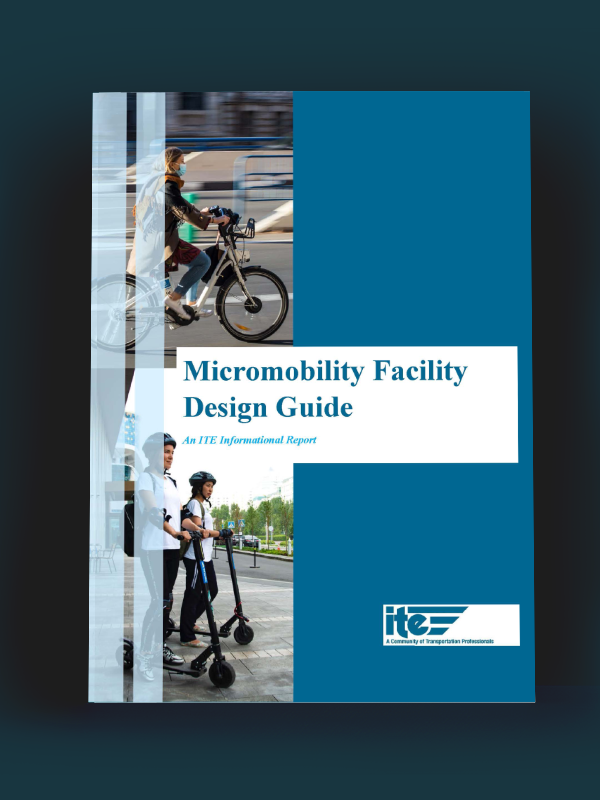
There has been widespread growth of micromobility vehicles in both large cities and small towns. However, these micromobility vehicles use existing right-of-way and transportation infrastructure that was not designed with them in mind. As a direct result of the lack of appropriate guidance on how to design roadways to accommodate the growth in micromobility vehicle use, the Institute of Transportation Engineers (ITE) Pedestrian and Bicycle Standing Committee developed the Micromobility Facility Design Guide Informational Report, which summarizes potential design challenges micromobility users experience as they travel on typical roadways. The report also identifies design solutions with real-world examples to accommodate micromobility. We invite you to explore the full report and continue the conversation with us below.
Looking for more insights?
share this article
Explore More

What Seattle’s Travel Trends Reveal About Post-Pandemic Mobility
The 2023 Puget Sound travel study revealed notable changes in how people get around. Our team identified emerging trends that may hold lessons for other regions.

The Ws of Safety: Treating the System, Not the Symptom
Our safety experts propose a Ws framework (who, what, when, where, and why) to strengthen the Safe System Approach and achieve Vision Zero 2.0.
FP Induced Vehicle Travel Analysis Technical Guidance
This guidance aids agencies in complying with California’s SB 743 by offering tools to quantify VMT impacts and evaluate mitigation strategies.