
The Ws of Safety: Treating the System, Not the Symptom
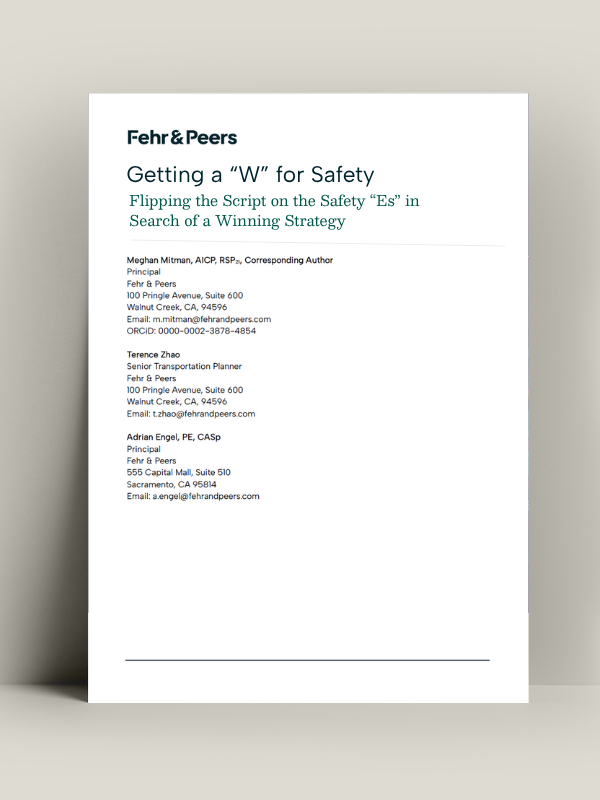
The Ws of Safety: Treating the System, Not the Symptom
The US is entering its second decade of Vision Zero, a road safety initiative designed to eliminate all traffic-related deaths and serious injuries. But the conversation has evolved.
For years, transportation professionals relied on the traditional Es of safety—engineering, education, enforcement, and emergency services. These reactive measures, while important, often operate in silos and miss the bigger picture of how transportation systems as a whole can reduce risk.
A new article in the Transportation Research Record (TRR), authored by several of our safety experts, shifts the focus from Es to the Ws—asking who, what, when, where, and why. The Ws of Safety framework can help uncover systemic risks and guide upstream interventions on the road to Vision Zero.
For transportation planners, engineers, and public agencies, the takeaway is clear: Vision Zero 2.0 requires more than refining the old tools. It calls for embedding the Safe System Approach into everyday practice and addressing systemic issues to shape roadway safety long before a crash occurs.
The Ws of Safety can help us achieve these goals.
Read Getting a “W” for Safety: Flipping the Script on the Safety “E”s in Search of a Winning Strategy:
share this article
Contributors

Meghan Mitman
Regional Principal-in-Charge
Email Me

Terence Zhao
Senior Transportation Planner
Email Me

Adrian Engel
Principal
Email Me
Explore More

A Design Win for Seattle Sidewalks
Micromobility is growing, but when scooters and bikes have nowhere obvious to park, sidewalks suffer. Seattle tackled this with quick-build corrals, using simple outlines to guide parking right away, then upgrading to durable markings and in-street designs. See how we helped screen sites, refine locations in the field, and scale for daily use and major events.

Jason Xu Joins Fehr & Peers
Meet Jason Xu and his approach to improving transportation operations, signal systems, and corridor coordination.
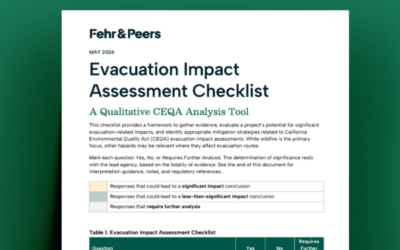
Evacuation Impact Assessment Checklist
Recent California decisions and the Attorney General’s 2022 guidance have raised expectations for how CEQA documents address evacuation. Our Evacuation Impact Assessment Checklist is a qualitative analysis tool that helps teams organize evidence, screen for potential impacts, and reach a defensible conclusion faster, so time and effort can shift from extensive quantification to identifying mitigation and evacuation improvements.