
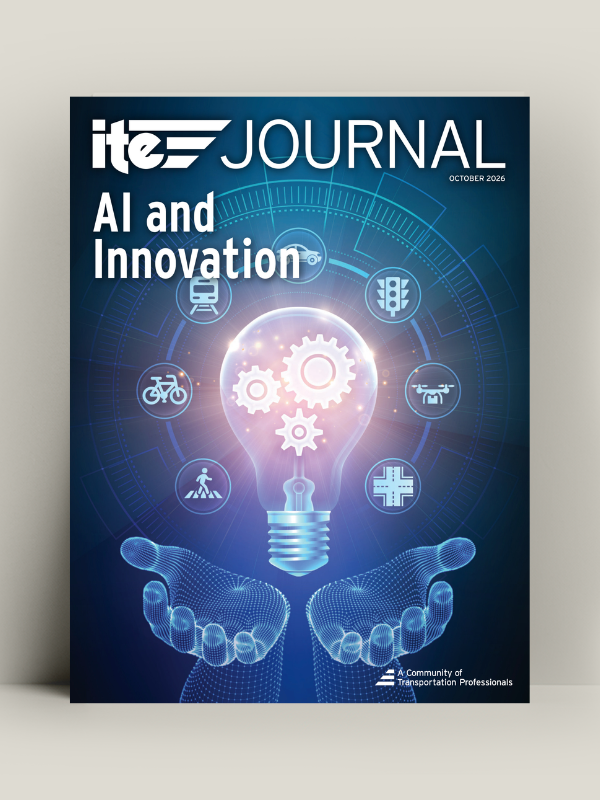
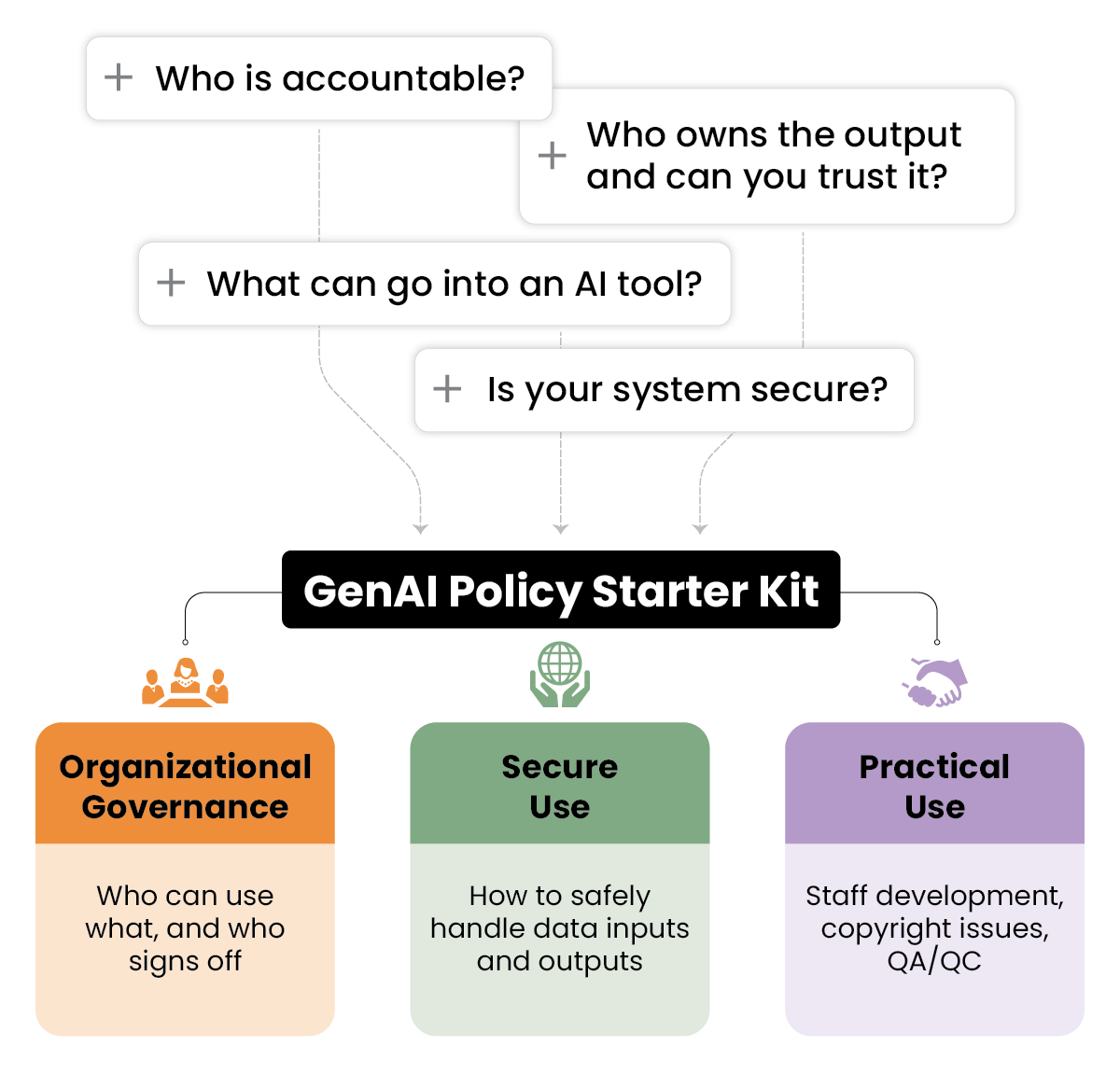
The kit gives agencies, firms, and other organizations a place to start when developing or refining their own AI guidance, along with takeaways individuals can apply in their everyday use of AI. Informed by facilitated discussions with four ITE chapters, input form members at the 2026 Joint ITE International and Great Lakes District Annual Meeting and Exhibition, and an online AI readiness survey, it includes considerations, case studies, sample policy language, and helpful checklists across three areas:
- Organizational Governance: Who can use what, who makes decisions, and who signs off.
- Secure Use: How to evaluate tools, handle data safely, and protect sensitive information.
- Practical Use: Professional responsibility, staff development, copyright and intellectual property, and QA/QC for AI-assisted work.
The goal is not simply to put a policy on paper. It is to help organizations create guidance people can understand and use in practice, while keeping professional accountability where it belongs.
We led this volunteer effort and contributed a governance case study from our own firm, sharing how we’re approaching AI governance through clear ownership, input from across the company, and leadership checkpoints as our practices continue to evolve.
Explore the kit. It’s available in two forms: an ITE Technical Brief and an interactive website version where you can move through the guidance at your own pace.
share this article
Connect with our Contributors

Krystle Li
Creative Designer
Email Me

Andy Kosinski
PE
Email Me
Explore More
Travel Forecasting Model Suitability for Environmental Impact Analysis
This guide helps transportation professionals determine if their travel forecasting models are suitable for environmental impact analyses, ensuring compliance with laws like NEPA and CEQA.

2021 Staff Certifications
Fehr & Peers recognizes the professional advancements of our talented and dedicated staff members over the past year.
SB 743 White Paper
SB 743 requires evaluating transportation impacts using VMT instead of Level of Service (LOS).