

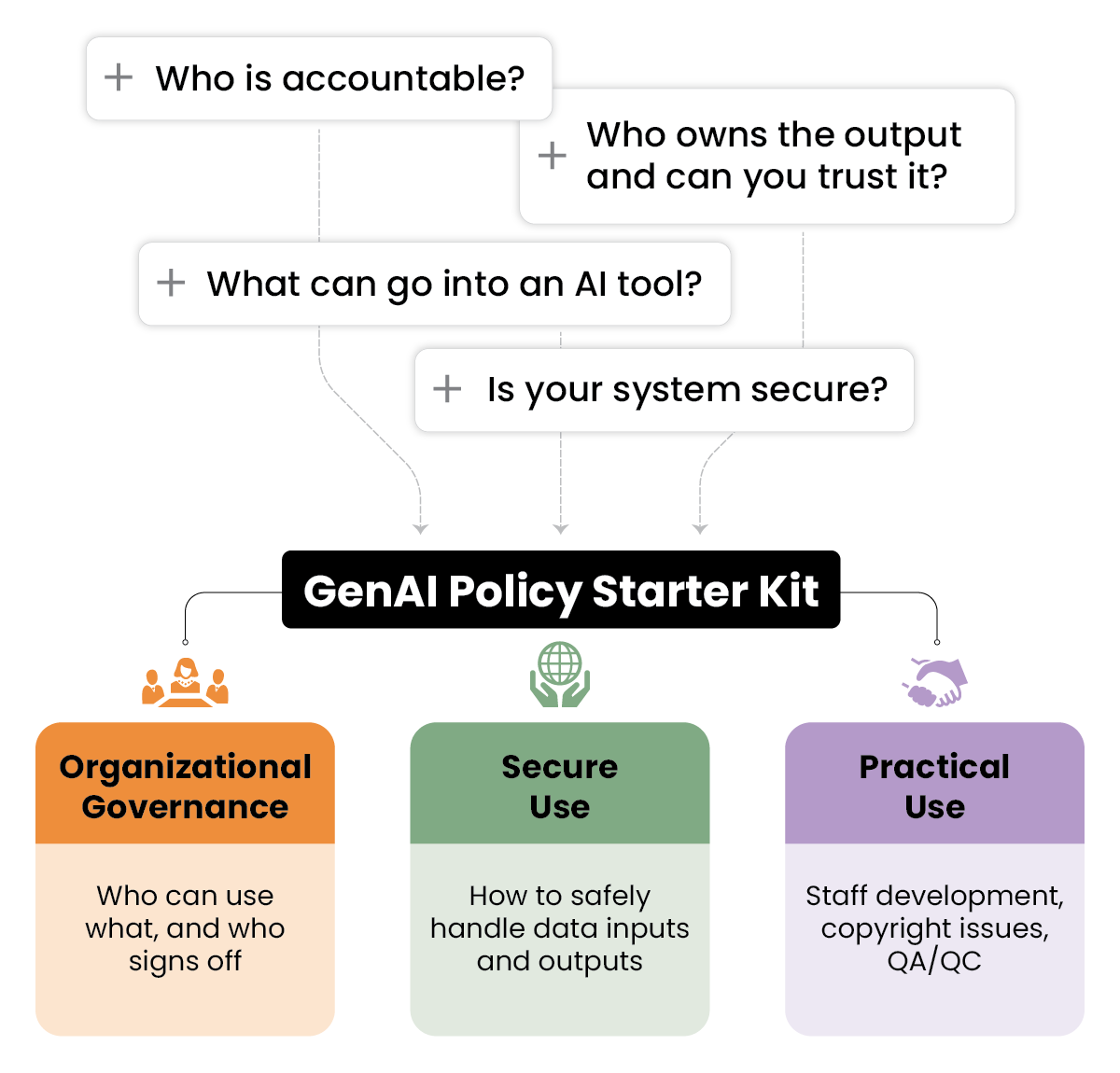
The Generative AI Policy Starter Kit will give agencies, firms, and other organizations a place to start when developing or refining their own AI guidance, along with takeaways individuals can apply in their everyday use of AI. Informed by input from transportation professionals, it will include considerations, case studies, sample policy language, and helpful checklists across three areas:
- Organizational Governance: Who can use what, who makes decisions, and who signs off.
- Secure Use: How to evaluate tools, handle data safely, and protect sensitive information.
- Practical Use: Professional responsibility, staff development, copyright and intellectual property, and QA/QC for AI-assisted work.
We led this volunteer effort and contributed a governance case study from our own firm, sharing how we’re approaching AI governance through clear ownership, input from across the company, and leadership checkpoints as our practices continue to evolve.
The full kit launches in November, alongside a launch webinar. Until then, two resources are ready to be explored now. The ITE Quick Bite overviews the kit’s contents, and the latest ITE Journal article, available to ITE members, explores two areas that continue to raise practical questions for transportation professionals: copyright and intellectual property, and QA/QC for AI-assisted work.
share this article
Connect with our Contributors

Krystle Li
Creative Designer
Email Me

Andy Kosinski
PE
Email Me
Explore More
A Unified Framework for Roadway Safety
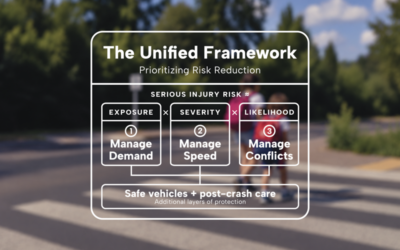
How can transportation professionals determine which safety strategies to prioritize? The Unified Framework for Safe System Implementation brings decades of safety research together to help agencies make more informed decisions. By connecting exposure, severity, and crash likelihood to different roadway contexts, the framework offers a practical way to prioritize strategies across planning, policy, design, and operations.

Meeting the Deadline Isn’t the Same as Solving the Problem
New state requirements are changing how cities approach truck route planning, but meeting a deadline doesn’t necessarily resolve conflicts between freight movement and neighborhood needs. See how Jurupa Valley used truck data, community input, and clear evaluation criteria to rethink its truck network, meet California’s AB 98 requirements, and reduce truck traffic exposure in sensitive areas.

Cathleen Sullivan Joins Fehr & Peers
Our new Principal Cathleen Sullivan brings a practical, people-centered approach to transit and multimodal planning, helping Bay Area agencies turn complex ideas into progress.