

Dockless shared bikes and scooters increase mobility choices and can reduce reliance on vehicle trips, but when riders do not have clear places to park, sidewalk accessibility can suffer. Bikes block curb ramps. Scooters drift into crosswalk zones. The barriers are real, especially for people with disabilities, and cluttered sidewalks give cities a reason to pull back on shared mobility altogether.
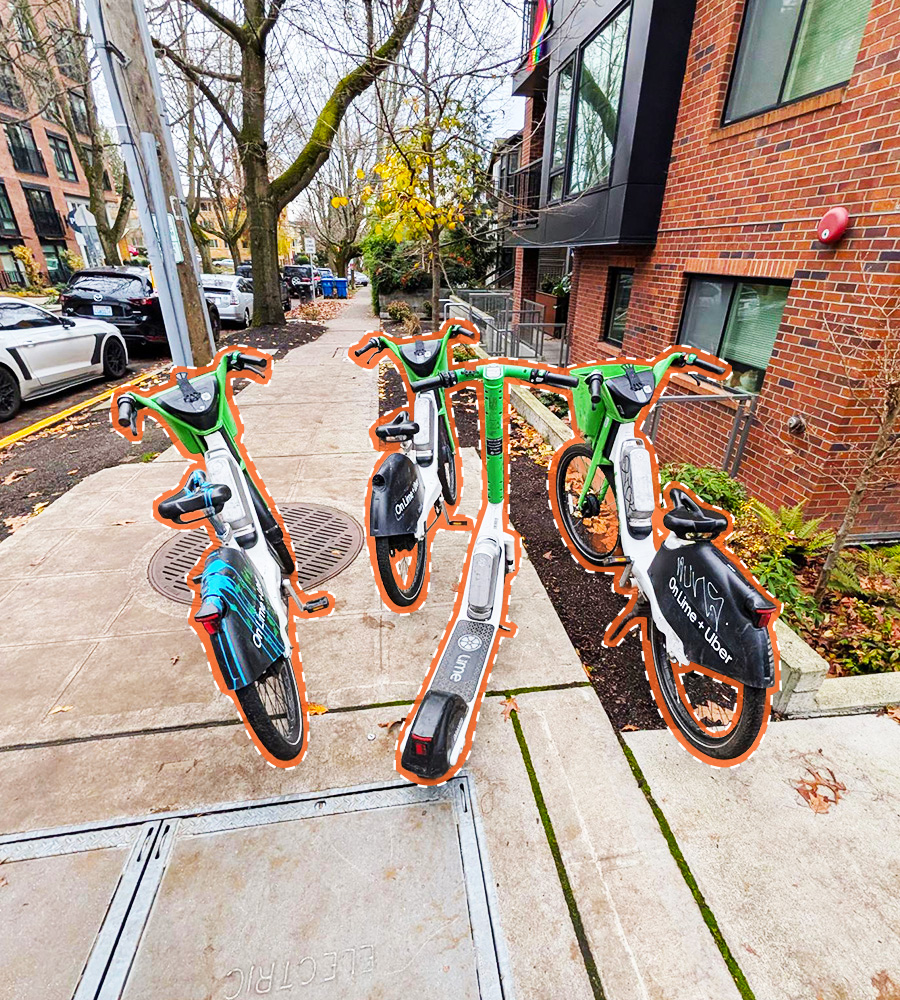

Many cities end up in the same place: waiting for complaints, dispatching crews, and moving bikes that will be back in the wrong spot by morning. Some add friction for riders through more geofencing, app warnings, or parking fees, but the sidewalk problem persists.
The Seattle Department of Transportation (SDOT) chose to do something different. Instead of managing sidewalk clutter, they solved it through design, by giving riders a clear place to park and trusting that clarity would do the work. With the 2026 FIFA World Cup on the horizon, Seattle needed a system that could scale to handle increased demand for micromobility and increased foot traffic on sidewalks in the City.
FINDING THE RIGHT CURB SPACE
500+ locations visited. About 200 made the cut.
Seattle’s busy downtown curbs already accommodate transit stops, commercial deliveries, ride-hail pickups, and vehicle parking. Any new micromobility parking zones must better manage conflicts at the curb, not create new ones.
Last summer, SDOT combined trip data, equity analysis, and GIS screening to identify more than 500 candidate locations, developed mock-ups for roughly 300, and are on track to install 200 micromobility parking corrals. Sites that conflicted with infrastructure, business access, or planned projects were set aside. (As part of the team led by GreenPlum Street LLC, we supported the field screening and verification, and proposed layouts.)
Downtown was selected for priority implementation because of its concentration of shared mobility trips and the scale of demand expected during the World Cup. The result is infrastructure that serves both daily riders and the hundreds of thousands of visitors the city is preparing to welcome.
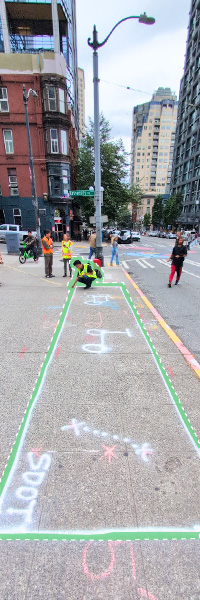
Field verification was a critical aspect of the work to avoid conflicts with other infrastructure such as businesses, loading areas, and curb ramps, and to find optimal candidate sites. In many cases, the strongest sites weren’t on the sidewalk. Placing corrals in the street near intersection corners reduced friction with businesses, preserved sidewalk space, and improved pedestrian sightlines by daylighting intersections.
FROM CHALK TO COMPLIANCE
Riders started parking in the outlines before the crew left.
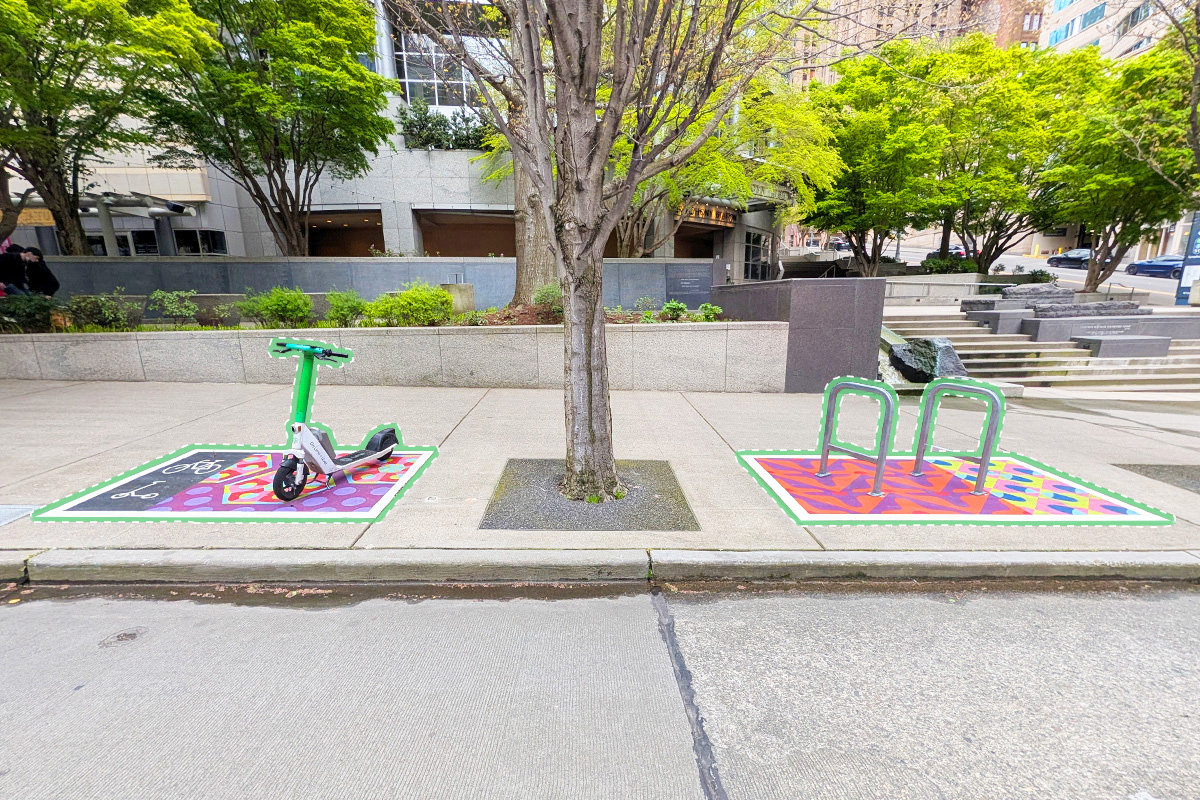
The first step was low-tech: temporary spray-paint or chalked outlines on the sidewalk for City crews to follow and install later.
This very quick-build approach let SDOT refine locations before permanent installation, and it showed riders exactly where to park in the meantime.

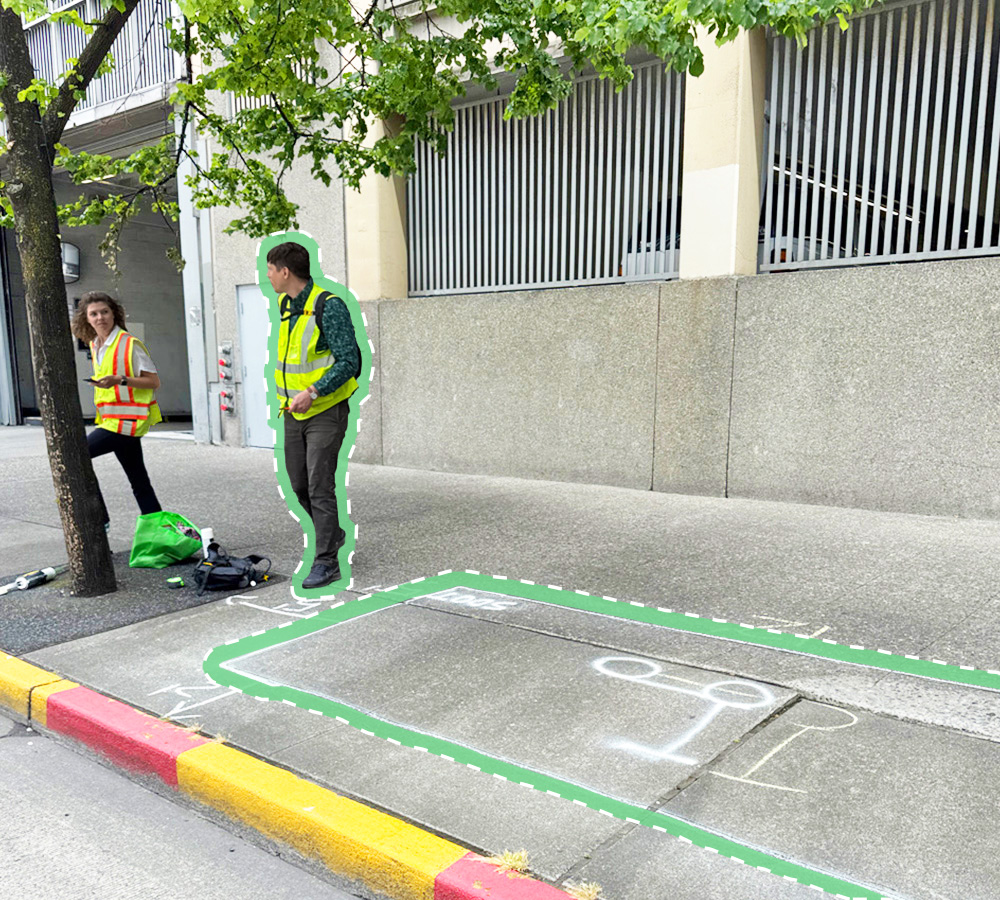

The response was immediate. In several locations, crews reported that people began parking inside the corrals while they were still onsite. Sidewalk clutter dropped. Pedestrians stopped to thank the crews. People took to social media asking for more corrals in their favorite spot, or to shift a proposed location to improve it.
A handful of nearby businesses raised concerns about access or visibility. Those conversations led to adjustments. Most became supporters once they saw the corrals organize what had been sidewalk clutter.
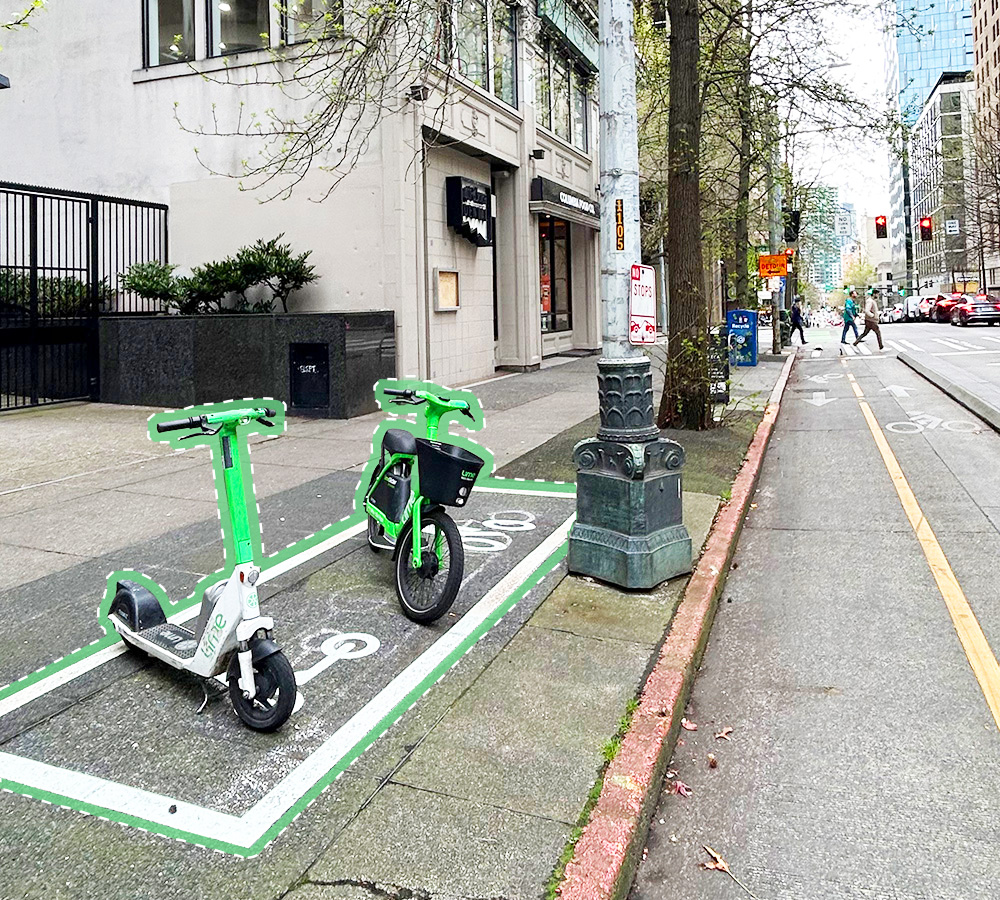

Final designs use durable pavement markings similar to bike lanes, and in-street locations use flex posts and curb stops to define the space and improve intersection visibility. Some corrals incorporate local street art, turning functional curb space into a neighborhood landmark.
BUILT FOR DAILY USE AND MAJOR EVENTS
Seattle hit 10 million shared rides in 2025. The corrals held up.
+60%
increase over the prior year
200
corral sites identified across downtown Seattle
3x
bike and scooter corrals downtown by summer 2026
SDOT’s success: no new rules, no added rider friction—just provide a visible convenient place to park, and people used it.
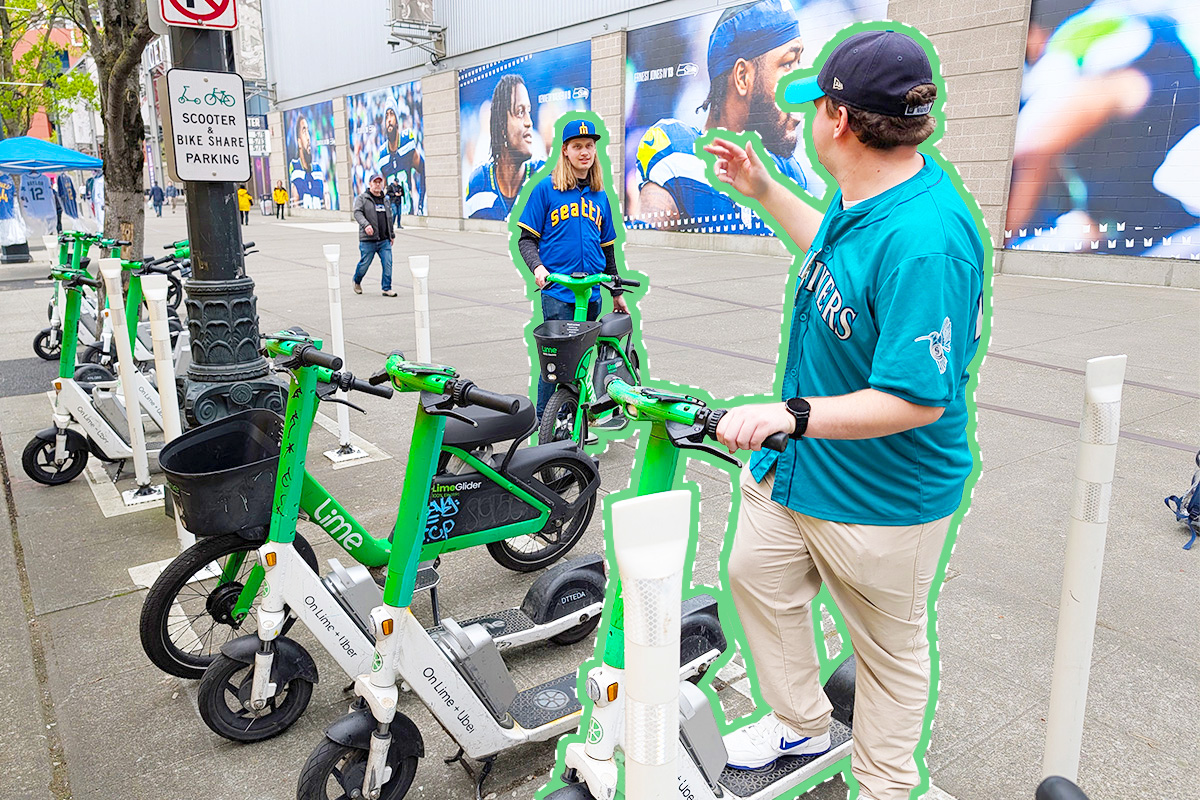
SDOT made a leadership choice to invest in design, coordinate early, and trust that when a parking corral is convenient and visible, riders will use it. SDOT’s success shows that clear and quickly implemented design can swiftly manage a lingering issue.
If your agency is preparing curb space for growing shared mobility demand or a major event, we’d welcome the conversation.
share this article
Connect with our Contributors

Chris Grgich
Senior Associate
Fehr & Peers
Email Me

Jonah Lorica
Transportation Engineer
Fehr & Peers
Email Me

Nora Daley-Peng
Principal
GreenPlum Street
Email Me
Explore More
Announcing Our CEO Transition
Fehr & Peers is pleased to announce a CEO transition. Chris Mitchell assumes the role this month, with 20 years of firm leadership. He succeeds Matt Henry, who served 15+ years as CEO. We’re grateful for our success under Matt’s leadership, and are excited for the next phase.
Partnering from Concept to Construction
With a passion for bringing transportation concepts into reality, we partner with our clients on many projects from initial plans and prioritization through to construction. Learn how we worked to integrate complete streets solutions in Honolulu, Hawaii from concept all the way through implementation.
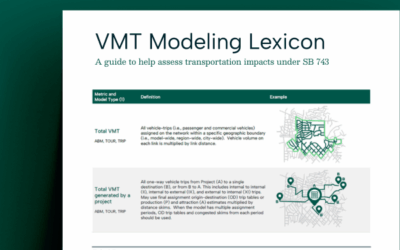
Understanding VMT Metrics: Explore Our Modeling Lexicon
CEQA’s July 1 deadline is swiftly approaching, making it increasingly important to be able to understand and navigate all types of VMT calculations. Our new quick-reference VMT lexicon makes that easier. Explore it now here.