
What Is Downtown DC For?
The decongestion pricing debate is really a question about recovery, access, and what the city wants to become.
A perspective from Eric Womeldorff, Principal and Transportation Economics Practice Leader, Fehr & Peers Washington, DC

What Is Downtown DC For?
The decongestion pricing debate is really a question about recovery, access, and what the city wants to become.
A perspective from Eric Womeldorff, Principal and Transportation Economics Practice Leader, Fehr & Peers Washington, DC
Washington, DC is debating congestion pricing at a moment when downtown is still being redefined. The recently released decongestion pricing study has added new fuel to that conversation, but it has not resolved the harder question underneath it: what problem is the city actually trying to solve?
That is the focus of Eric Womeldorff’s brief. Rather than argue for or against pricing, he examines why this debate has become so difficult to settle and why the answer depends on how the city sees downtown’s future.
A few reasons this perspective is worth reading:
The status quo is not neutral.
Even without a formal charge, access to downtown already comes with costs in delay, frustration, and unreliable travel.
The study was built for a different city.
By the time it was released, commuting patterns, office demand, and the federal footprint had all shifted in meaningful ways.
The real disagreement is bigger than traffic.
The question is not only whether pricing would reduce congestion. It is also whether this is the right moment to manage downtown access differently while recovery is still uneven.
Eric has spent his career working at the intersection of land use, travel behavior, and transportation economics in some of the country’s most complex urban environments. He welcomes the conversation.
share this article
Contributor

Eric Womeldorff
Principal
Email Me
Explore More
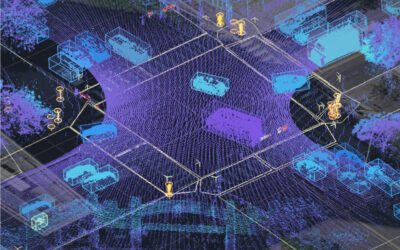
Understanding AI’s Role in Transportation Safety
AI is giving transportation safety practitioners new ways to analyze data, detect near misses, and respond to risk before crashes happen. Real-world examples from Bellevue, WA and San Bernardino, CA show where AI-supported technology is delivering value—and where human judgment remains essential for turning data into responsible safety decisions.
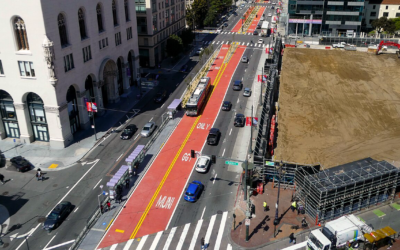
New NCHRP Toolkit Helps Agencies Build Safety Into Everyday Decisions
Making streets safer takes more than individual projects. Our new Safe System approach toolkit, developed through NCHRP Research Report 1181, helps agencies integrate safety into policies, budgets, design standards, and land use decisions. Explore practical tools, real-world case studies, and new IIHS Safe System success stories that show how agencies are turning safety into standard practice.

Announcing Safety Multipliers
What do San Francisco’s Van Ness BRT, New York’s congestion pricing, and Arlington’s intersection program have in common? Each pulls all three Safe System levers at once. We call that pattern a safety multiplier.