
A New Narrative for Decision Makers

A New Narrative for Decision Makers
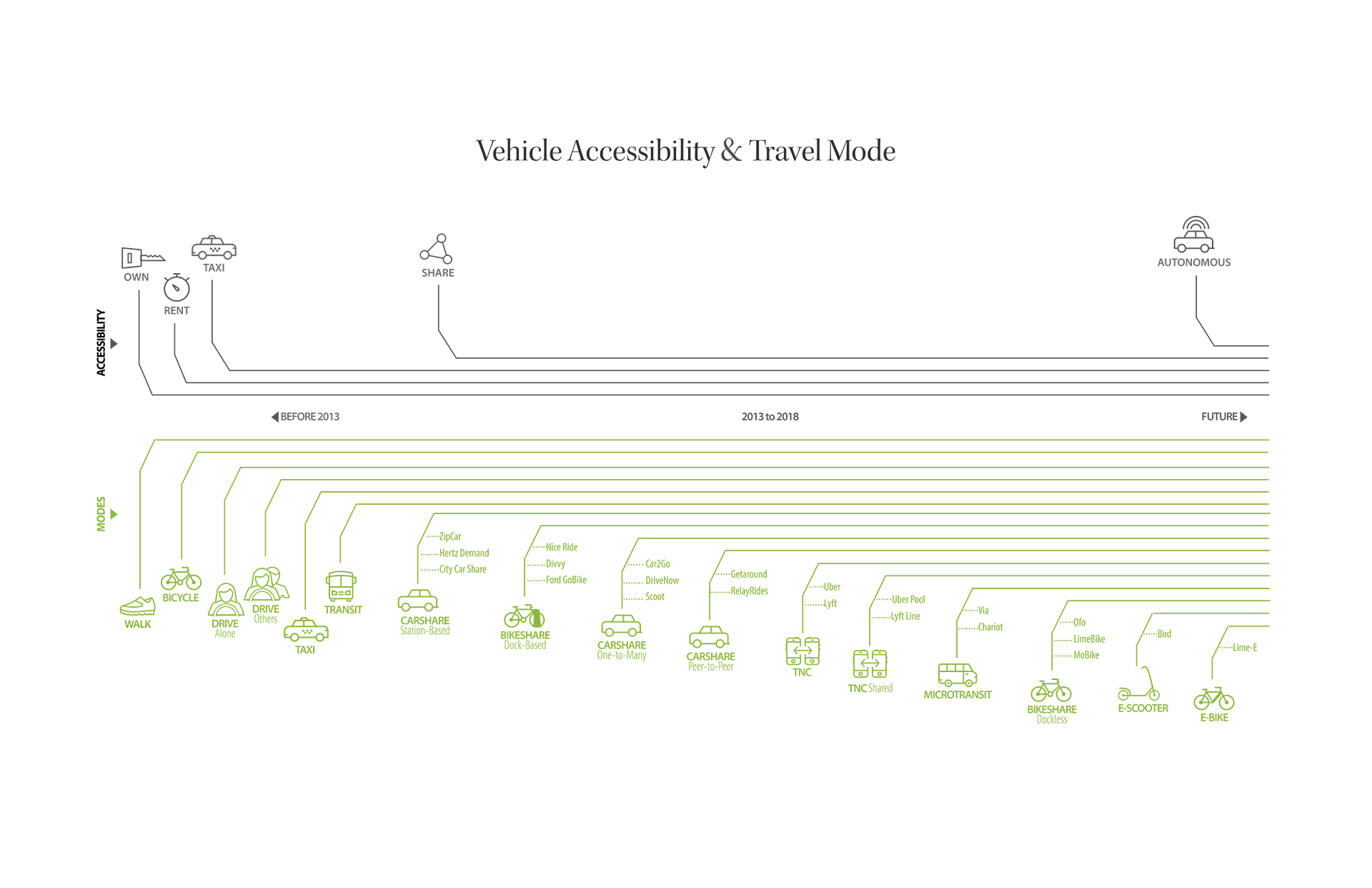
Are we using the right metrics?
Putting all of this together suggests that focusing on congestion as a problem may not provide a complete picture for transportation analysis. Evolving our metrics to more accurately define transportation problems and better account for capacity, emissions, and energy efficiency will likely be necessary for the next 100 years. While we generally understand there are greater efficiency benefits in both space and emissions for shared modes, our transportation plans rarely measure relevant metrics or display efficiency results in the most meaningful way for the public and decision makers.
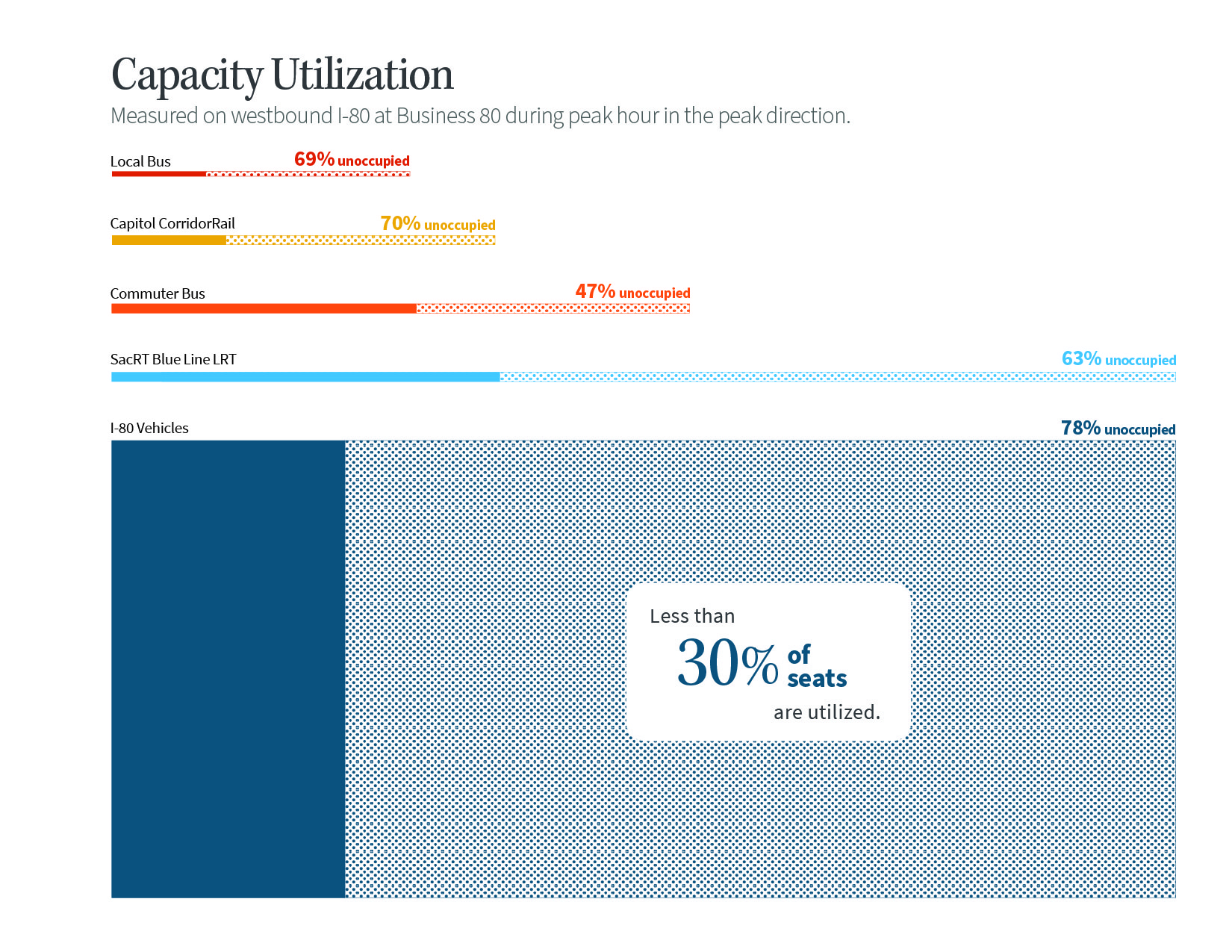
In a recent study in Sacramento, California, we compared capacity utilization (during the peak hour and peak direction) based on available seats across a screen line that included local bus, commuter bus, regional rail, light rail, and freeway lanes. While seat utilization is generally low across all the modes except for commuter bus, the available transit only has a few hundred empty seats.
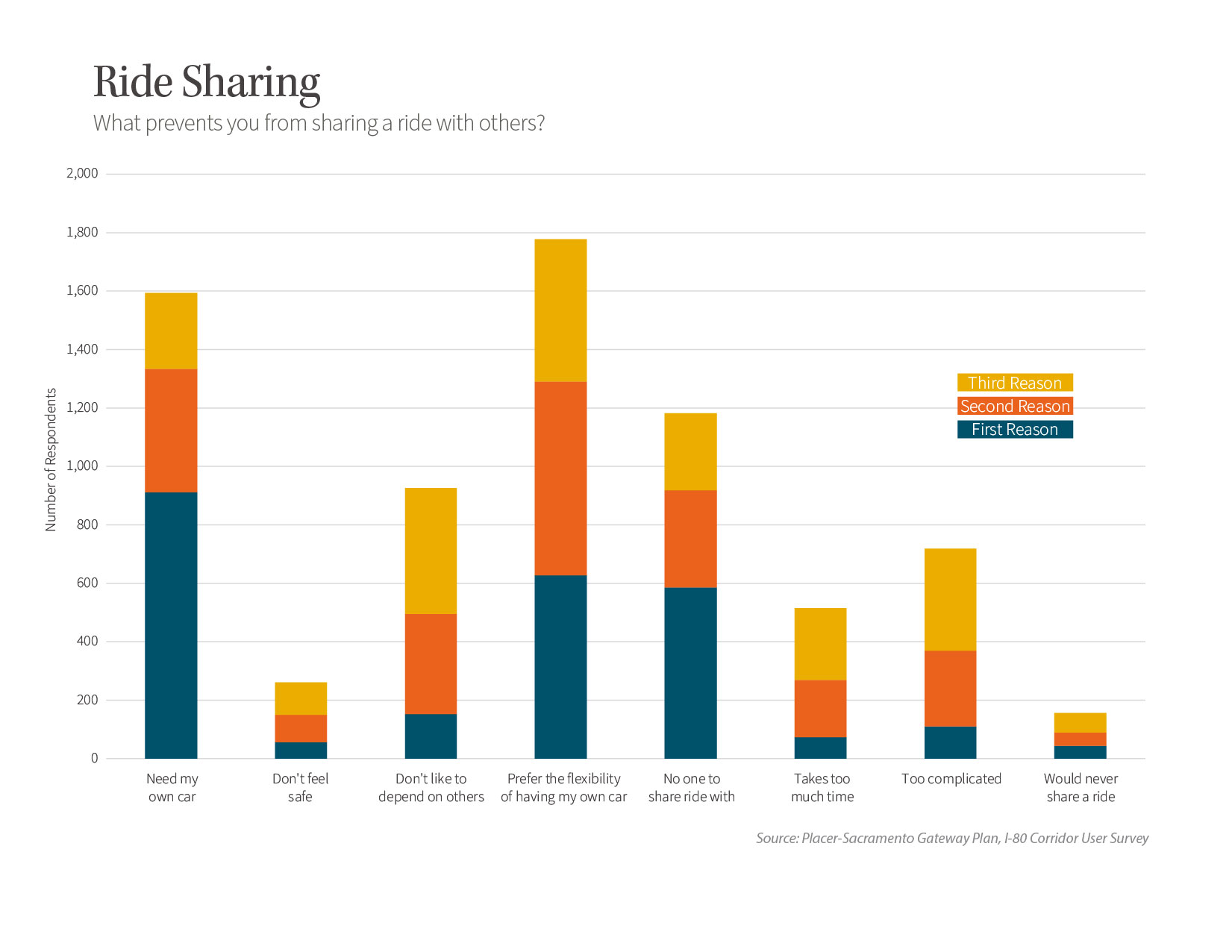
Can we fill more seats?
Exploring this new question requires the analysts to diagnose the problem – Why are users not sharing rides? What barriers or constraints exist? Can changes be made to fill some of these seats?
Please contact us if you would like more information on evolving transportation metrics and expanding the range of solutions that can effectively reduce congestion, VMT, and emissions.
Looking for more insights? Learn more by contacting one of our industry experts.
share this article
Explore More

Evolving Standard Validation Practices for Traffic Data: Part 2
In part two of a series on evolving traffic validation, we examined StreetLight as a potential source for larger samplings of turning movement volume estimates to overcome the limitations of using one- or two-day counts.

Leveraging Oregon Metro’s TSMO Strategy to Advance Regional Equity
Recipient of a “Diversity, Equity, and Inclusion Award” from the National Operations Center of Excellence, read how Oregon Metro developed a first-of-its-kind transportation systems management and operations (TSMO) strategy that focuses on the importance of evaluating the needs of an entire community.
Quantifying Greenhouse Gas (and VMT) Mitigation Measures
We are excited to share the release of an update to the CAPCOA Quantifying Greenhouse Gas Mitigation Measures. Over the past decade, practitioners have relied heavily on this key reference document for developing VMT and emissions mitigation measures.