
Celebrating Firsts at the US Vision Zero Academy
Celebrating Firsts at the US Vision Zero Academy
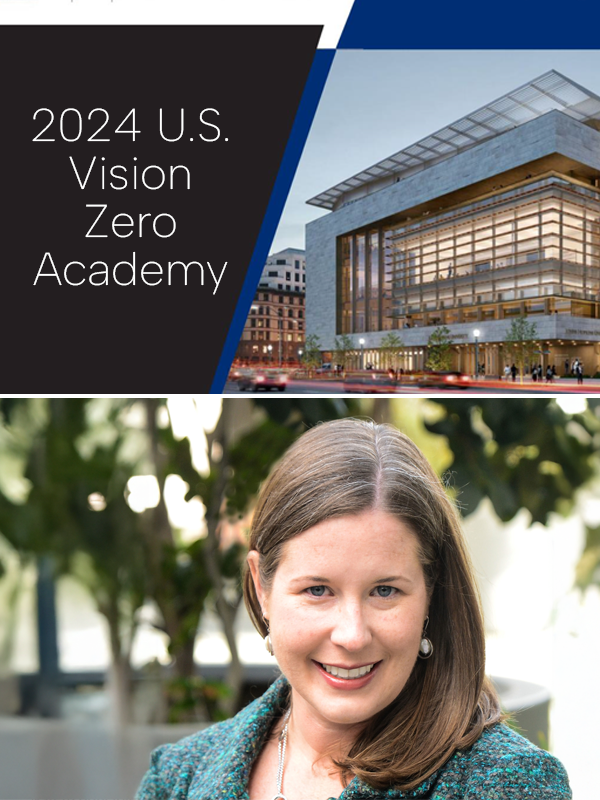
Vision Zero aims for zero deaths and severe injuries from roadway crashes. The movement is at all-time high in attracting U.S. interest and investment. The USDOT’s Safe Streets and Roads for All (SS4A) program offers grant funding to pursue this goal and aligns with the National Roadway Safety Strategy which emphasizes using a Safe System Approach — a holistic safety framework that designs forgiving road systems, accounts for human error, and reduces crash severity. These initiatives, however, reflect learning and best practice beyond our national borders. Connecting global interest and industry advancement, we are honored to be among only a handful of U.S. road safety leaders featured at the first U.S. Vision Zero Academy presented by the Johns Hopkins Bloomberg School of Public Health in Washington, DC, May 20-24, 2024.

The weeklong intensive academy is designed to provide attendees with an in-depth and practical understanding of Vision Zero and Safe System. Our Meghan Mitman, AICP, RSP2I, will join the faculty of instructors that includes the Swedish Transport Agency, who were the original founders of the global Vision Zero movement. Meghan also leads ITE’s Implementing the Safe System Certificate Course and is currently helping UC Berkeley SafeTREC and Caltrans launch a Safe System Academy in California.
Safety has long been a core practice at our firm and is one of our fastest growing technical initiatives driven by our philosophy of safe, healthy, and equitable mobility for all. Our experts work at the forefront of constantly evolving safety technology, policies, and design guidelines to push the practice forward. Our national practice features a companywide team of multimodal safety experts and over 20 certified Road Safety Professionals. We use a data-driven, equitable, cross-disciplinary approach, pairing our national safety experts with our technical leaders in local markets. Together, they view project objectives through a safety lens from the start, helping ensure objectives don’t undermine safety goals, while seeking win-win solutions.
Along with Meghan, our Safety Discipline leaders, Erin Ferguson, PE, RSP2I, and Dana Weissman, AICP, RSPI, lead internal initiatives to weave safety into the fabric of all our service lines. Erin’s training expertise includes integrating emerging research into industry practices. She has led national research projects and co-authored and contributed to volumes of the Highway Safety Manual (HSM) for the American Association of State Highway and Transportation Officials (AASHTO). Dana is a sought-after presenter at conferences across the United States and has won Institute for Transportation Engineers (ITE), American Planning Association (APA), and Transportation Research Board (TRB) awards and recognition for her Vision Zero and safety work. Our Kathrin Tellez, AICP, RSP2B, is involved in regional training most recently for two districts of the Florida Department of Transportation helping agency staff integrate and institutionalize the Safe System approach. Our Nicole Waldheim, has developed presentations, workshops, and sessions for the Federal Highway Administration (FHWA), AASHTO, and TRB, educating over 1000 practitioners nationwide.
Does your jurisdiction need assistance getting started with a roadmap or action plan to better integrate Safe System principles? Are you ready to take the next step to institutionalize safety? Can your agency or MPO benefit from instructional workshops or training on safety? Our team is ready to help you pursue your Vision Zero goals.
share this article
Contributors

Meghan Mitman
Principal-in-Charge
AICP, RSP2I
Email Me

Kathrin Tellez
Principal
AICP, RSP2B
Email Me

Nicole Waldheim
Principal
Email Me

Erin Ferguson
Principal
PE, RSP2I
Email Me

Explore More
Get a First Look at the Generative AI Policy Starter Kit
We helped develop a new Generative AI Policy Starter Kit through ITE. Explore the Quick Bite and ITE Journal article now, and stay tuned for the full kit.
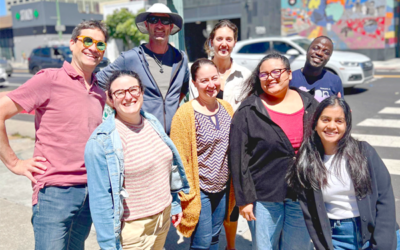
Intern Perspectives: A Summer in Transportation
What does a transportation internship actually look like? This summer, 25 interns across 14 of our offices gained hands-on experience with fieldwork, street design, GIS, data analysis, visual communication, client work, and community engagement. See what they learned, what surprised them, and how the experience shaped the way they think about careers in transportation.
Looking at Street Safety Through the Lens of Kinetic Energy
This ITE Technical brief explores how kinetic energy can add another dimension to roadway safety analysis, helping practitioners consider where conditions for serious harm may exist even before severe crash patterns emerge.