
There is rarely a lack of good ideas in transportation planning. The challenge is turning them into improvements people can actually use. Funding, right-of-way, competing priorities, and coordination among multiple agencies can all make the path forward less clear.
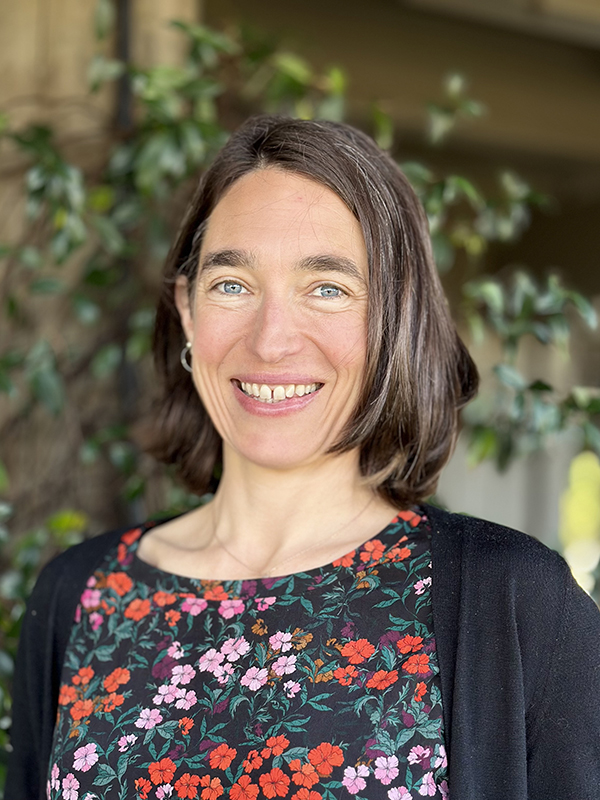
That is where Cathleen Sullivan does some of her best work, and we are excited to welcome her as a Principal in our Petaluma, California, office. Cathleen is a transportation planner with experience from both the public and consulting sides, along with deep ties to agencies across the Bay Area, especially in Marin, Sonoma, and Alameda counties. Her approach is practical: break the project into pieces, identify what can move now, and build support and expand by demonstrating success along the way. She’s also a skilled facilitator, helping agencies work through hard tradeoffs and reach agreement even when consensus doesn’t come easily. Throughout her career, that mindset has helped make walking, biking, and transit more viable for the communities she has served.
Turning Big Ideas into Progress
A strong plan is only the beginning. Cathleen knows firsthand how much work it takes for agency staff to navigate constraints, maintain momentum, and turn high-level commitments into something they can actually deliver.
At Alameda County Transportation Commission, that meant helping launch a student transit pass program as a pilot instead of waiting until it could serve every school at once. The program started with nine schools, served by three transit agencies. It expanded the following year and eventually reached hundreds of schools and thousands of students, giving the agency a track record to build on.
She brought the same mindset to the Marin-Sonoma Coordinated Transit Service Plan. Cathleen led a group of nine transit and funding agencies to streamline service and reduce redundancies, creating a more connected frequent transit network along the 101 corridor in Marin and Sonoma Counties.
In both cases, her approach turned complex efforts into something agencies could act on together. As Cathleen puts it, “Often you have to find where there’s alignment and act on that, even if it’s only part of the larger idea. Early success builds momentum, clears obstacles that once seemed insurmountable, and creates stepping stones toward the larger vision.”
We’re excited for her to bring that experience to more transit and countywide planning work across the North Bay and Bay Area.
Starting with How People Live
That same instinct reflects a broader belief about what transportation is meant to do. Cathleen came to the field through environmental advocacy and anthropology. Those experiences taught her to look beyond a single policy goal or mode and consider how transportation affects everyday experience.
To her, a transportation system succeeds when it works for the people who rely on it, helping them live better lives and access opportunity. This people-centric approach has guided much of her work in transit and multimodal planning.
Cathleen lives in Petaluma with her family and can often be seen biking to the office. “I have always loved working where I live,” she says, “because then work is basically an extension of learning more about my community and making it a better place for all of us.” Outside of work, she enjoys biking around Petaluma with her daughter on their e-cargo bike, hiking, camping, backpacking, and spending time with family.
share this article
Explore More

Understanding AI’s Role in Transportation Safety
AI is giving transportation safety practitioners new ways to analyze data, detect near misses, and respond to risk before crashes happen. Real-world examples from Bellevue, WA and San Bernardino, CA show where AI-supported technology is delivering value—and where human judgment remains essential for turning data into responsible safety decisions.
New NCHRP Toolkit Helps Agencies Build Safety Into Everyday Decisions
Making streets safer takes more than individual projects. Our new Safe System approach toolkit, developed through NCHRP Research Report 1181, helps agencies integrate safety into policies, budgets, design standards, and land use decisions. Explore practical tools, real-world case studies, and new IIHS Safe System success stories that show how agencies are turning safety into standard practice.

Announcing Safety Multipliers
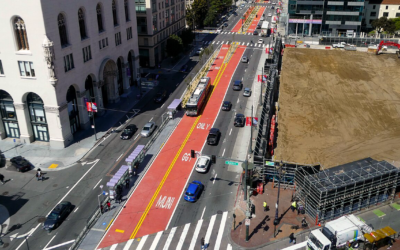
What do San Francisco’s Van Ness BRT, New York’s congestion pricing, and Arlington’s intersection program have in common? Each pulls all three Safe System levers at once. We call that pattern a safety multiplier.