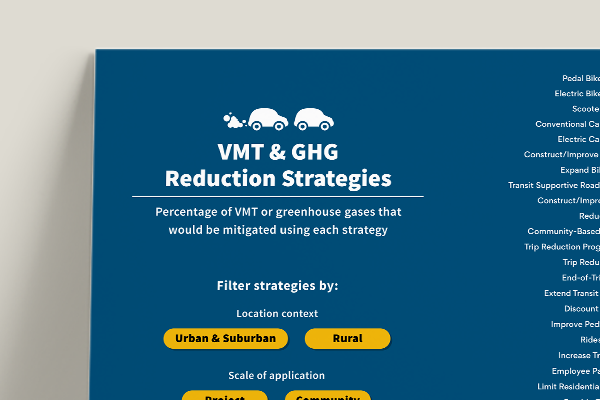
VMT & GHG Reduction Strategies
Strategies like transit-oriented development, increasing residential density, and improving street connectivity can significantly reduce VMT and GHG emissions, with some measures achieving reductions of up to 31%.

Strategies like transit-oriented development, increasing residential density, and improving street connectivity can significantly reduce VMT and GHG emissions, with some measures achieving reductions of up to 31%.

Analyzing travel accessibility measures how well current transportation networks connect us to destinations and exposes potential modal or equity limitations that may be causing difficulties for some users or geographic areas. Learn more and explore our travel access video.
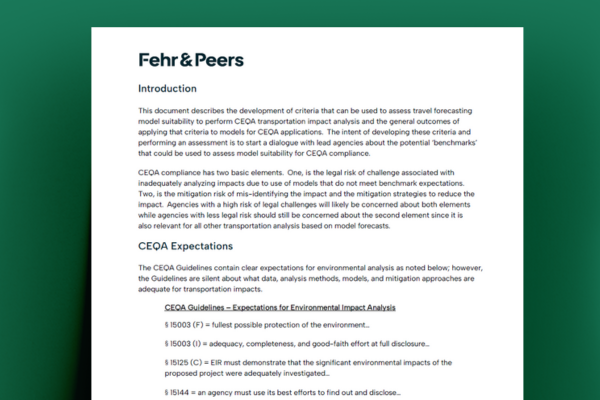
Agencies should evaluate their models to ensure they provide reliable forecasts and meet CEQA standards for environmental impact analyses.
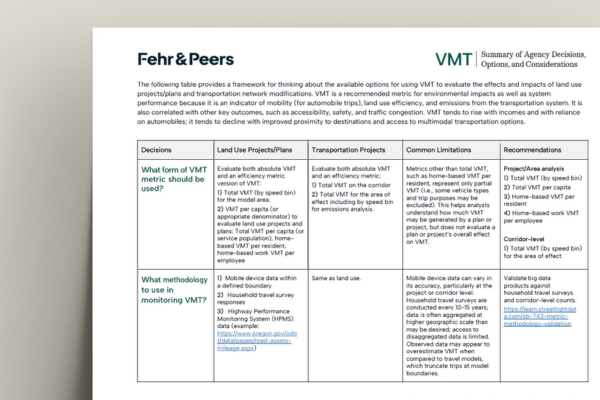
This guide helps agencies choose the right methods and tools to measure Vehicle Miles Traveled (VMT) for land use and transportation projects, supporting compliance with California’s SB 743.
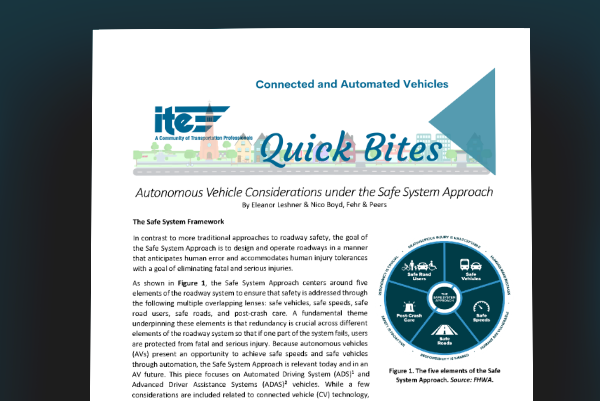
Autonomous vehicles may have the potential to support core elements of the Safe System approach, which strives to eliminate fatal and serious transportation injuries. Fehr & Peers partnered with ITE to publish “Autonomous Vehicle Considerations under a Safe System Framework,” which explores potential AV benefits, risks, and considerations within the Safe System framework.