

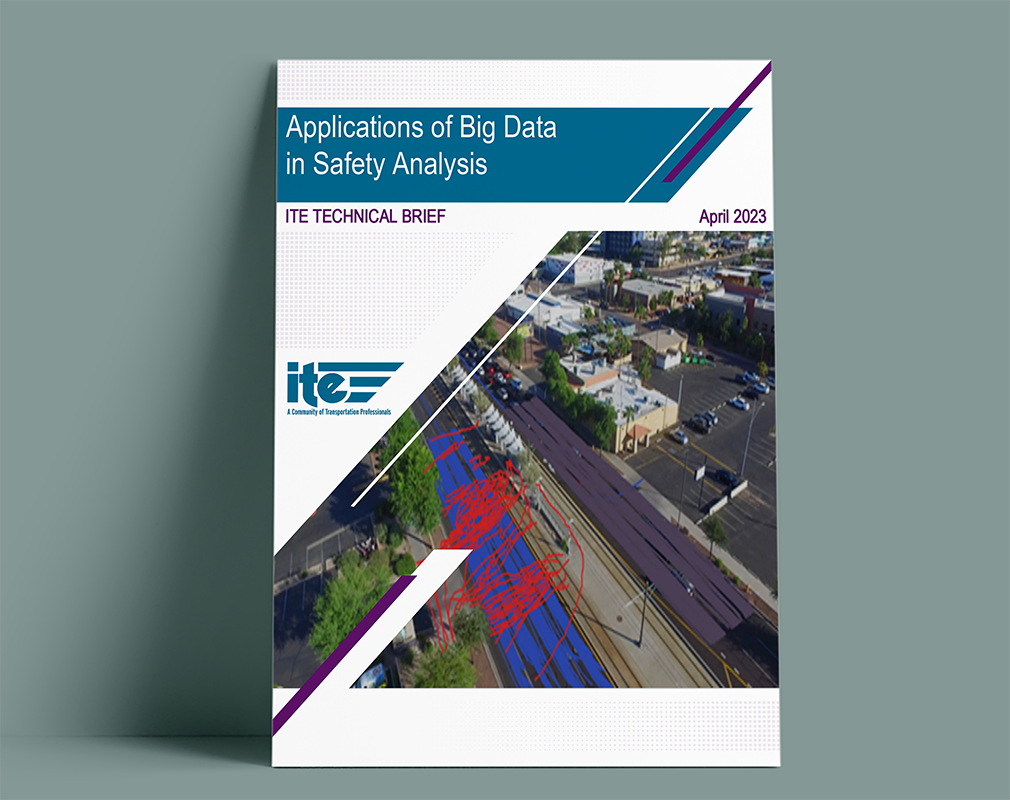
Big Data allows experts to look beyond traditional crash data. Traditional methods are useful in identifying high crash frequency locations; however, the downside is that they are reactive meaning a crash must occur for the data to be collected. Instead, Big Data is allowing practitioners to study a larger number of potential traffic incidents and trouble spots by evaluating specific contributing factors (i.e., driver behavior) to find out what might cause accidents before they happen. As technology improves and the industry shifts towards the use of even more advanced tools like real-time sensors and automated data collection systems, (i.e., Smart Cities), agencies will be able to proactively explore options for using Big Data as they upgrade and expand their existing systems.
To learn more about applying the right data sets to your safety projects, access the brief here. Be sure to tune in to the upcoming ITE webinar featuring ITE Brief co-author, Diwu Zhou, on May 23, 2023.
Contributors

Diwu Zhou
Senior Transportation Engineer
PE, RSP1

Meghan Mitman
RSP2I
Explore More

A Design Win for Seattle Sidewalks
Micromobility is growing, but when scooters and bikes have nowhere obvious to park, sidewalks suffer. Seattle tackled this with quick-build corrals, using simple outlines to guide parking right away, then upgrading to durable markings and in-street designs. See how we helped screen sites, refine locations in the field, and scale for daily use and major events.

Jason Xu Joins Fehr & Peers
Meet Jason Xu and his approach to improving transportation operations, signal systems, and corridor coordination.
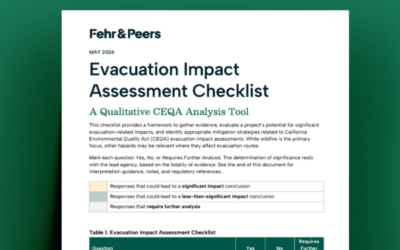
Evacuation Impact Assessment Checklist
Recent California decisions and the Attorney General’s 2022 guidance have raised expectations for how CEQA documents address evacuation. Our Evacuation Impact Assessment Checklist is a qualitative analysis tool that helps teams organize evidence, screen for potential impacts, and reach a defensible conclusion faster, so time and effort can shift from extensive quantification to identifying mitigation and evacuation improvements.