

Principal

Ian Barnes
Walnut Creek Office

Jason Miller
Denver Office

Hallet Modi
Oakland Office

Chelsea Richer
Los Angeles Office

Claude Strayer
San Diego Office

Dana Weissman
San Francisco Office
Senior Associate

Andy Kosinksi
Oakland Office
Associate

Tim Baird
Salt Lake City Office

Meara Breuker
Walnut Creek Office

Natalie Chyba
Los Angeles Office

Taylor McAdam
San Francisco Office

Patrick Picard
Denver Office

Judy Schaefer
Walnut Creek Office

Magali Sourbes
Corporate Office

Diwu Zhou
Long Beach Office
Senior Engineer/Planner

Michael Adamson
Tacoma Office

Alidad Ahmadi
San Diego Office

Sonia Anthoine
Sacramento Office

Emily Chen
San Francisco Office

Tino Jonga
Seattle Office

Jasper Lee
San Jose Office

Dongyang Lin
Los Angeles Office

Sydney Provan
Denver Office

Shane Russell
San Diego Office

Kathrine Skollingsberg
Salt Lake City Office

Mark Soendjojo
San Jose Office

Zoey Zhang
San Francisco Office
Senior Technician

Shawn Levy
Corporate Office
Senior Business Services Positions

Becca Hittner
Orlando Office

Maria Nguyen
Long Beach Office
share this article
Explore More

The Generative AI Policy Starter Kit is Here
We helped develop a new Generative AI Policy Starter Kit for agencies, firms, and other organizations developing or refining their own AI guidance. Explore it through a Quick Bite, ITE Journal article, and online resource.
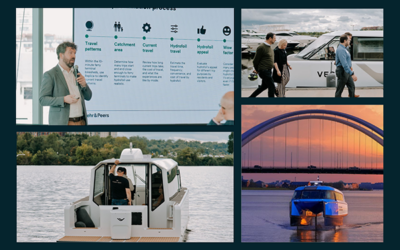
What Hydrofoil Service Could Look Like in Washington, DC
Could electric hydrofoils offer a faster way to travel between waterfront neighborhoods in Washington, DC? Our feasibility study found potential ridership demand and tested how routes, fares, and service frequency could shape a future pilot. The approach also offers a way for other communities to evaluate emerging transportation ideas before committing significant resources.
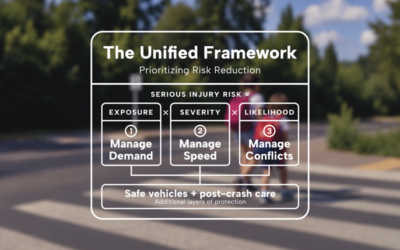
A Unified Framework for Roadway Safety
How can transportation professionals determine which safety strategies to prioritize? The Unified Framework for Safe System Implementation brings decades of safety research together to help agencies make more informed decisions. By connecting exposure, severity, and crash likelihood to different roadway contexts, the framework offers a practical way to prioritize strategies across planning, policy, design, and operations.