
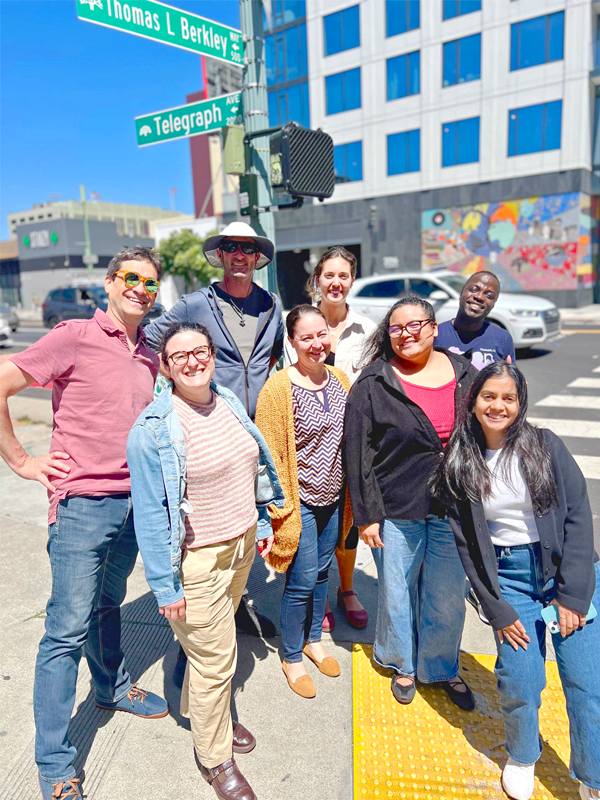
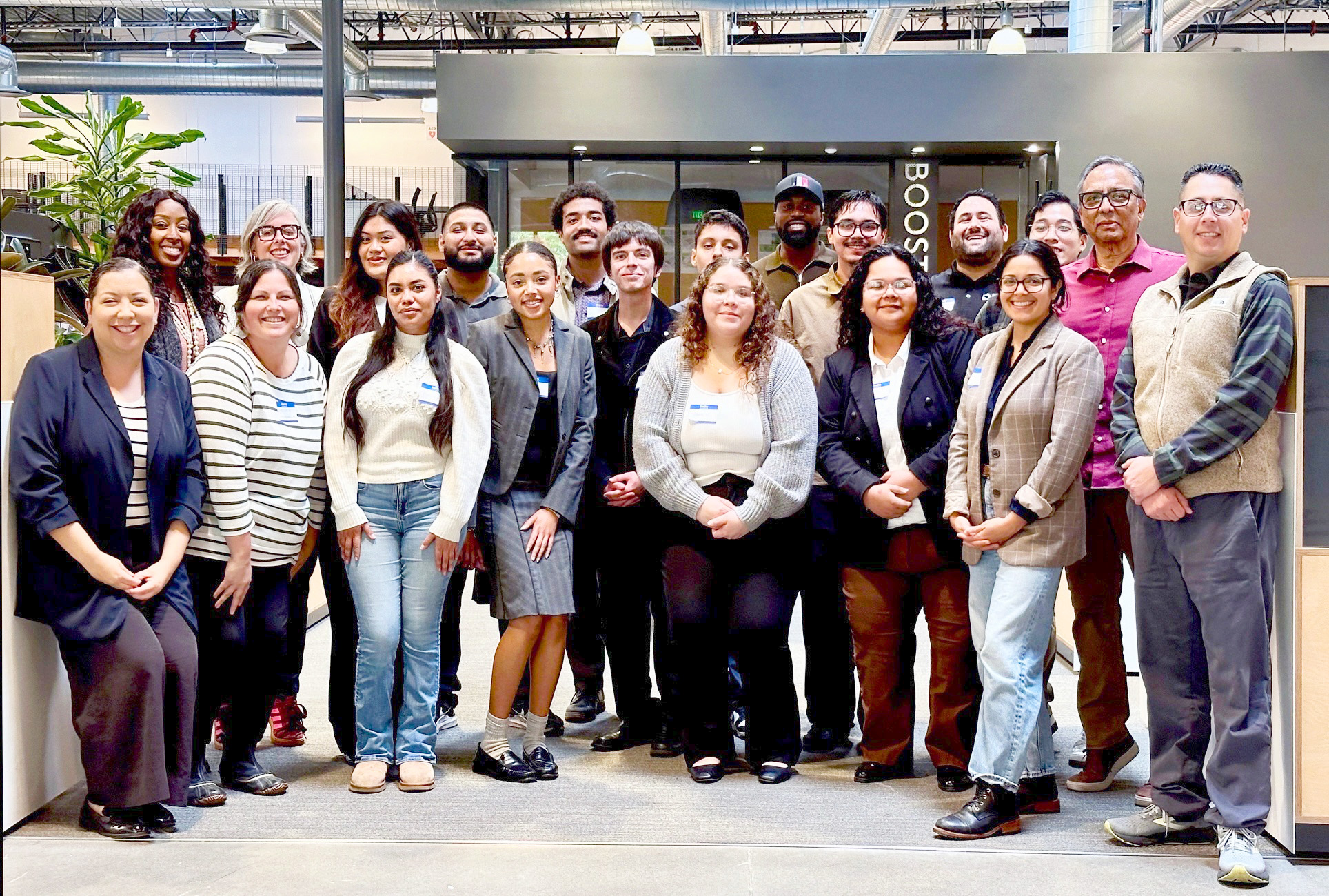
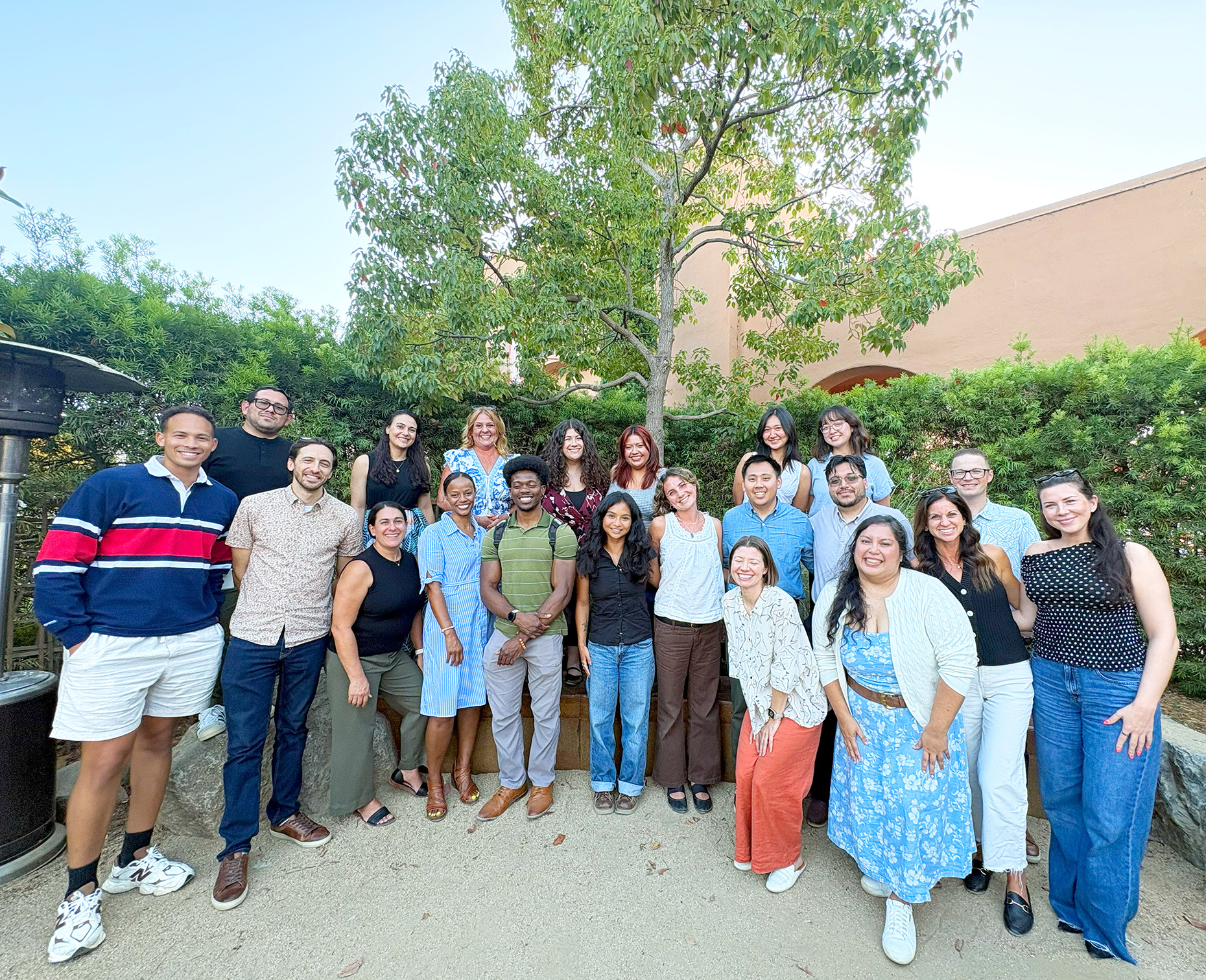
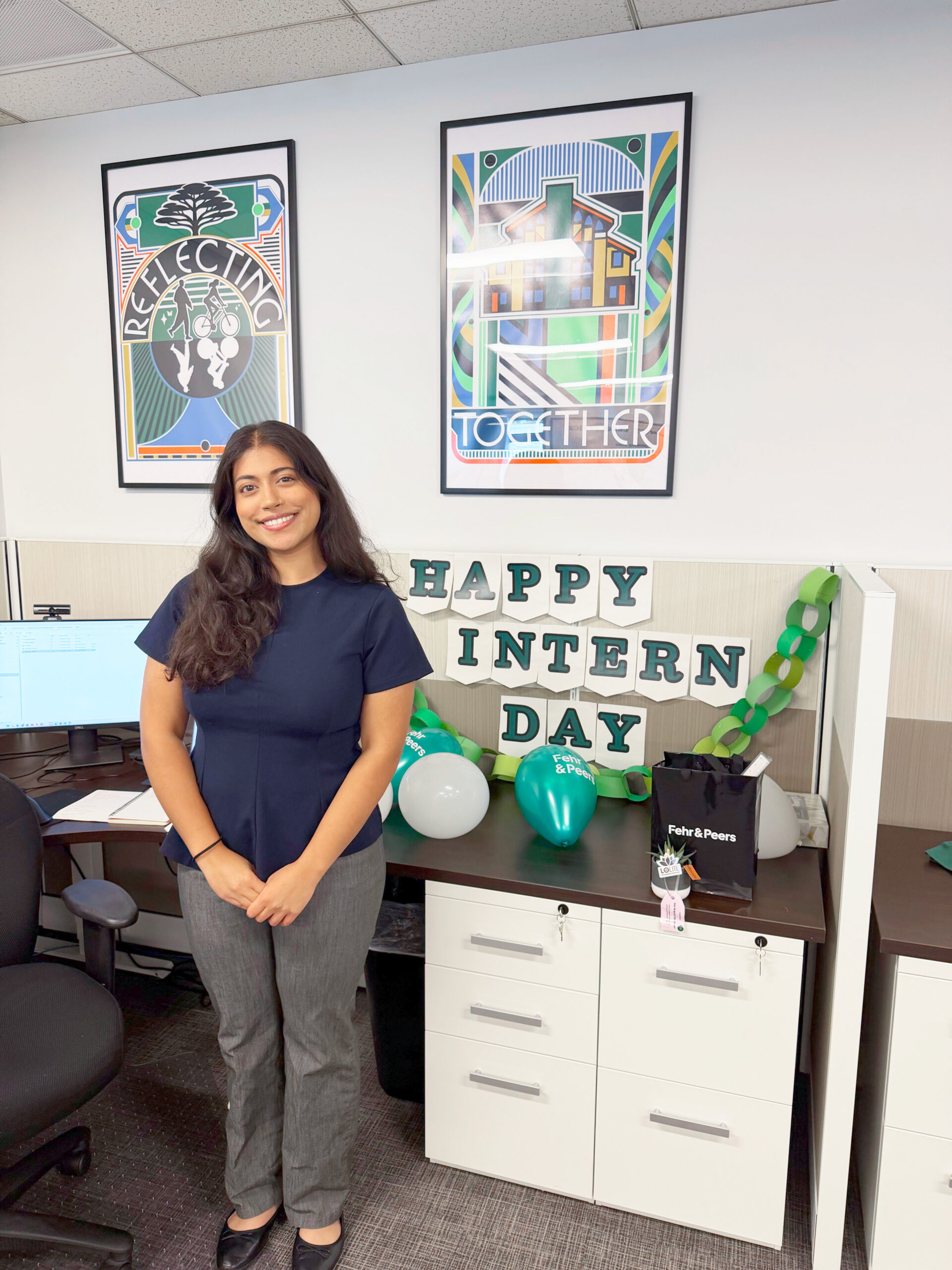
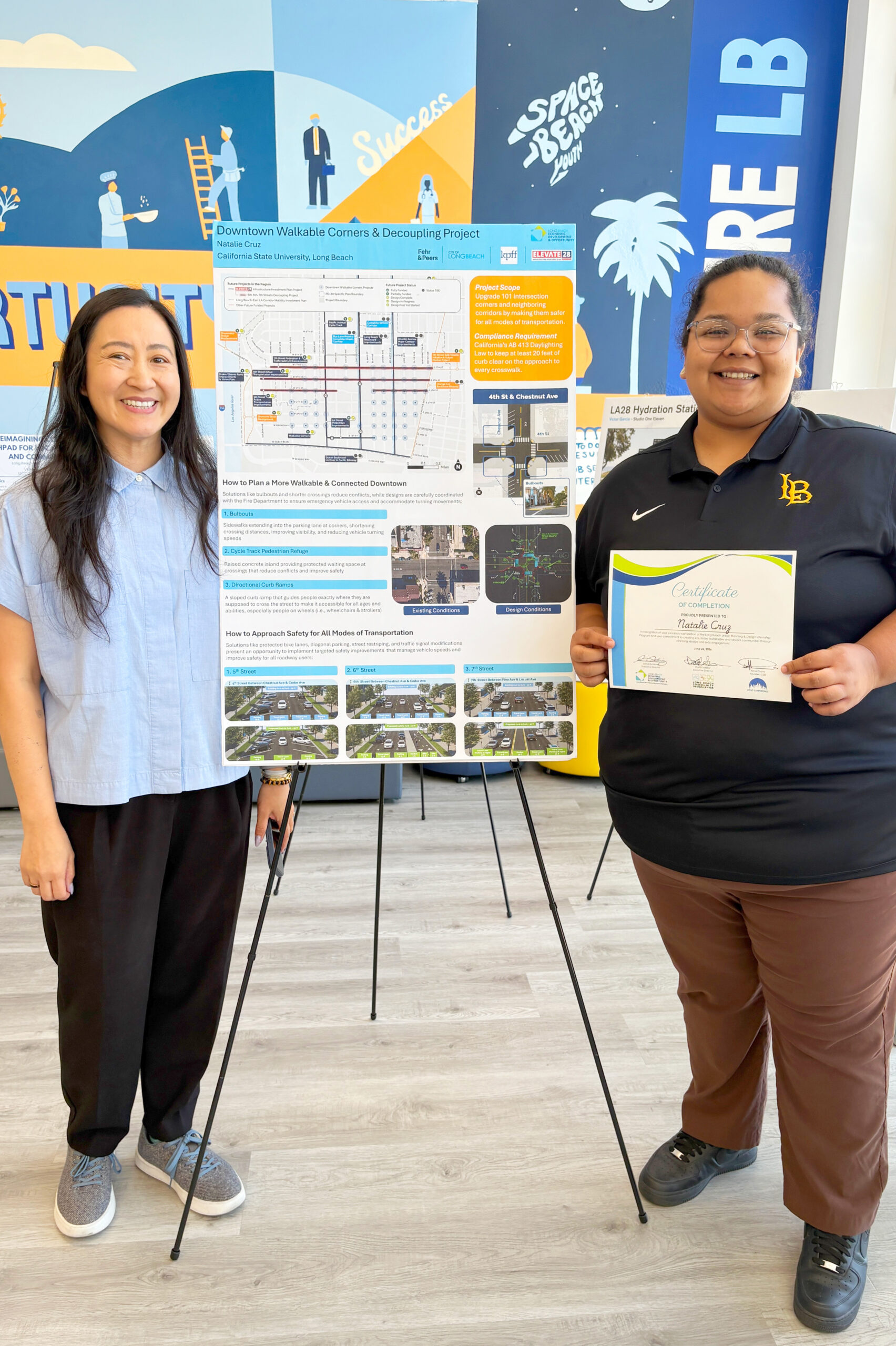
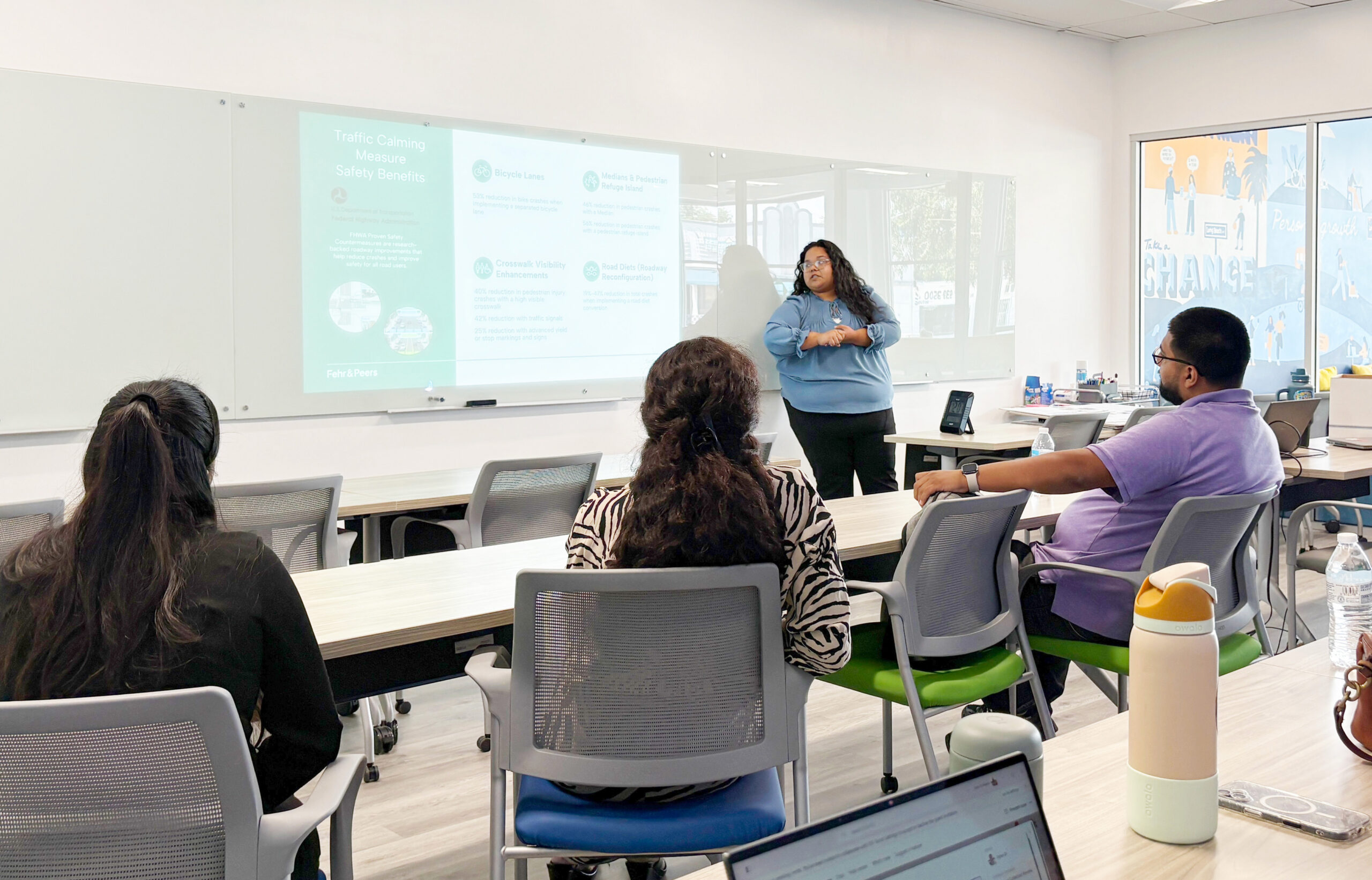
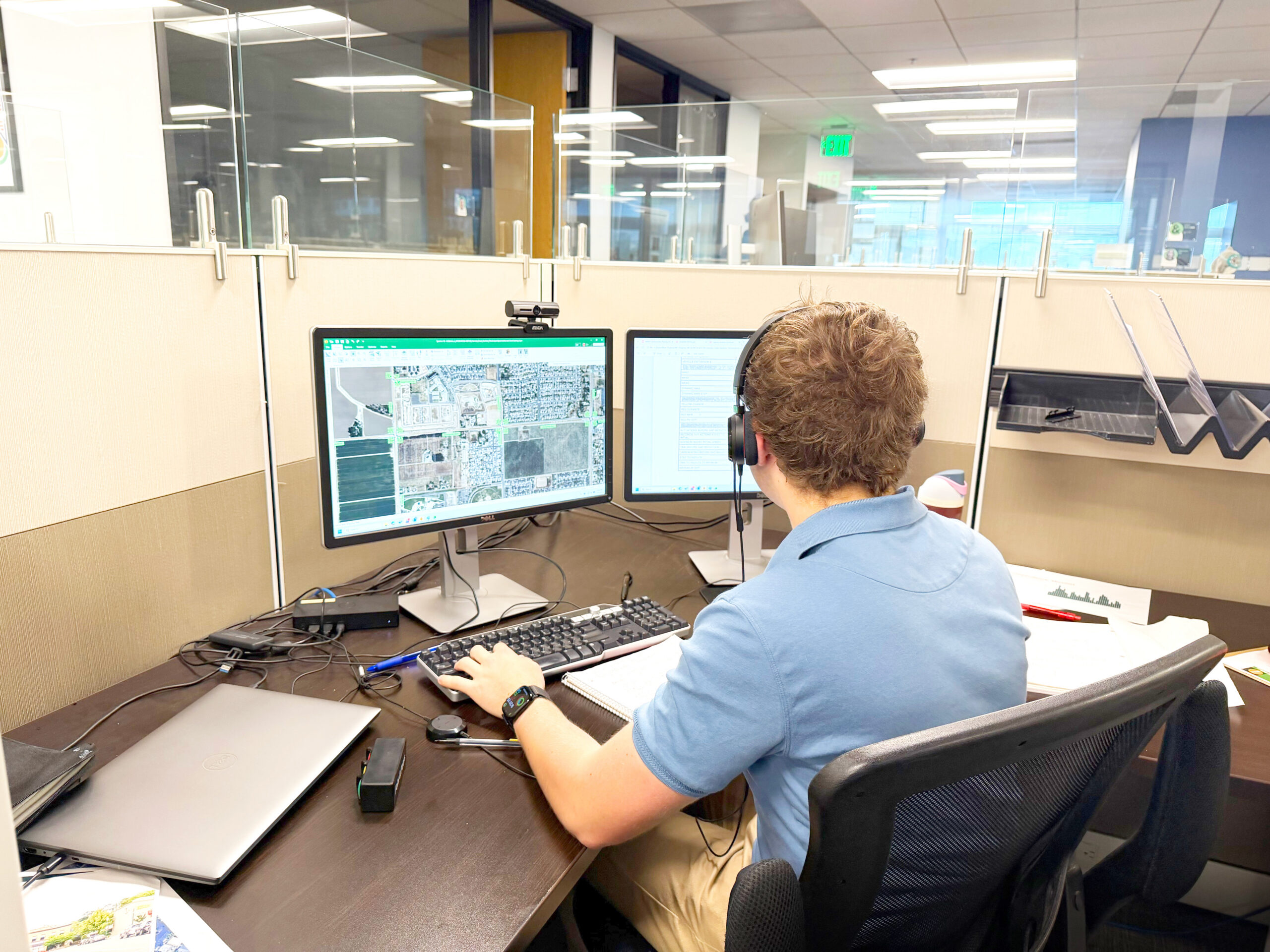
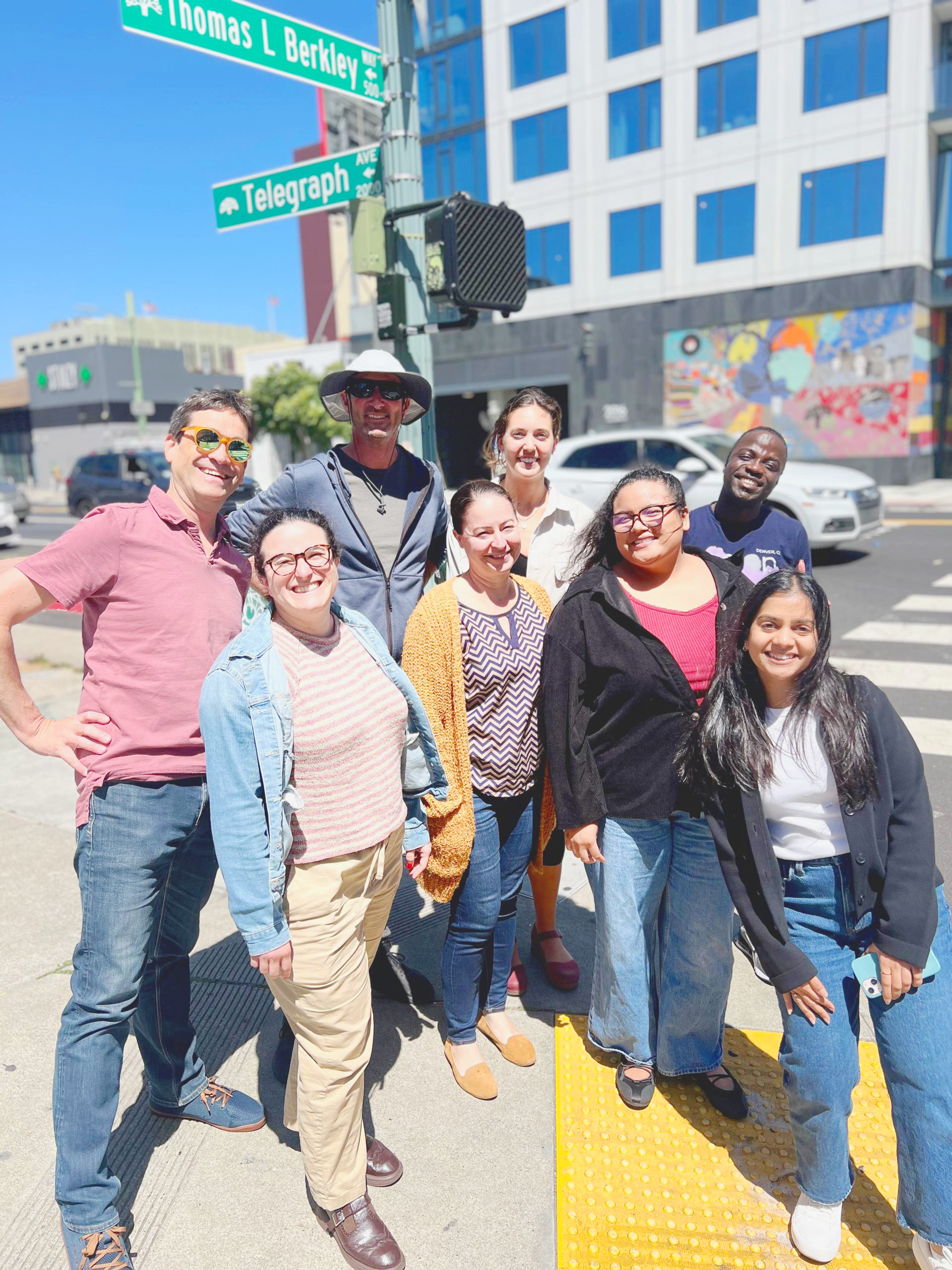
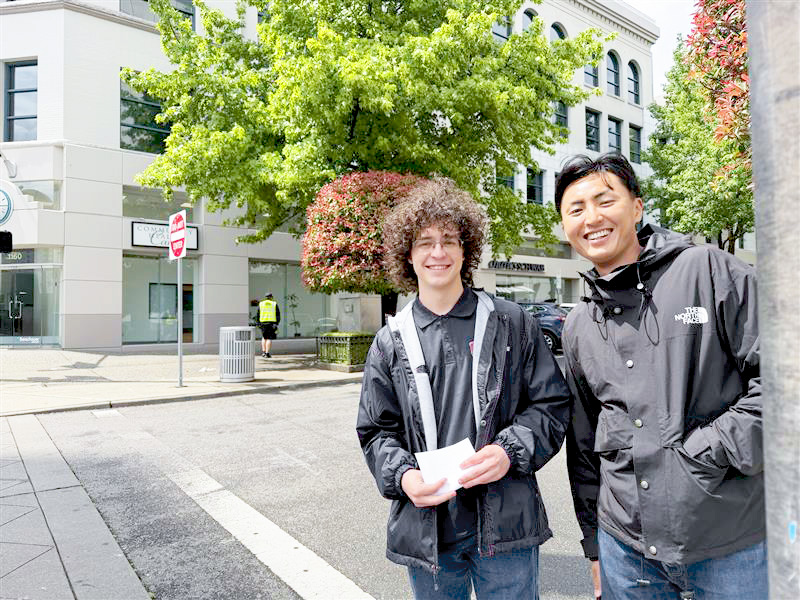
Their days included fieldwork, street design, GIS, data analysis, visual communication, client work, and conversations with community members. Along the way, they also got a closer look at how the pieces fit together: how a question becomes an analysis, how an idea changes with feedback, and how project teams work through decisions that affect real places.
Here are a few things that stood out to them.
Getting Into The Work
For some interns, the connection between the project and the place made the work especially meaningful.
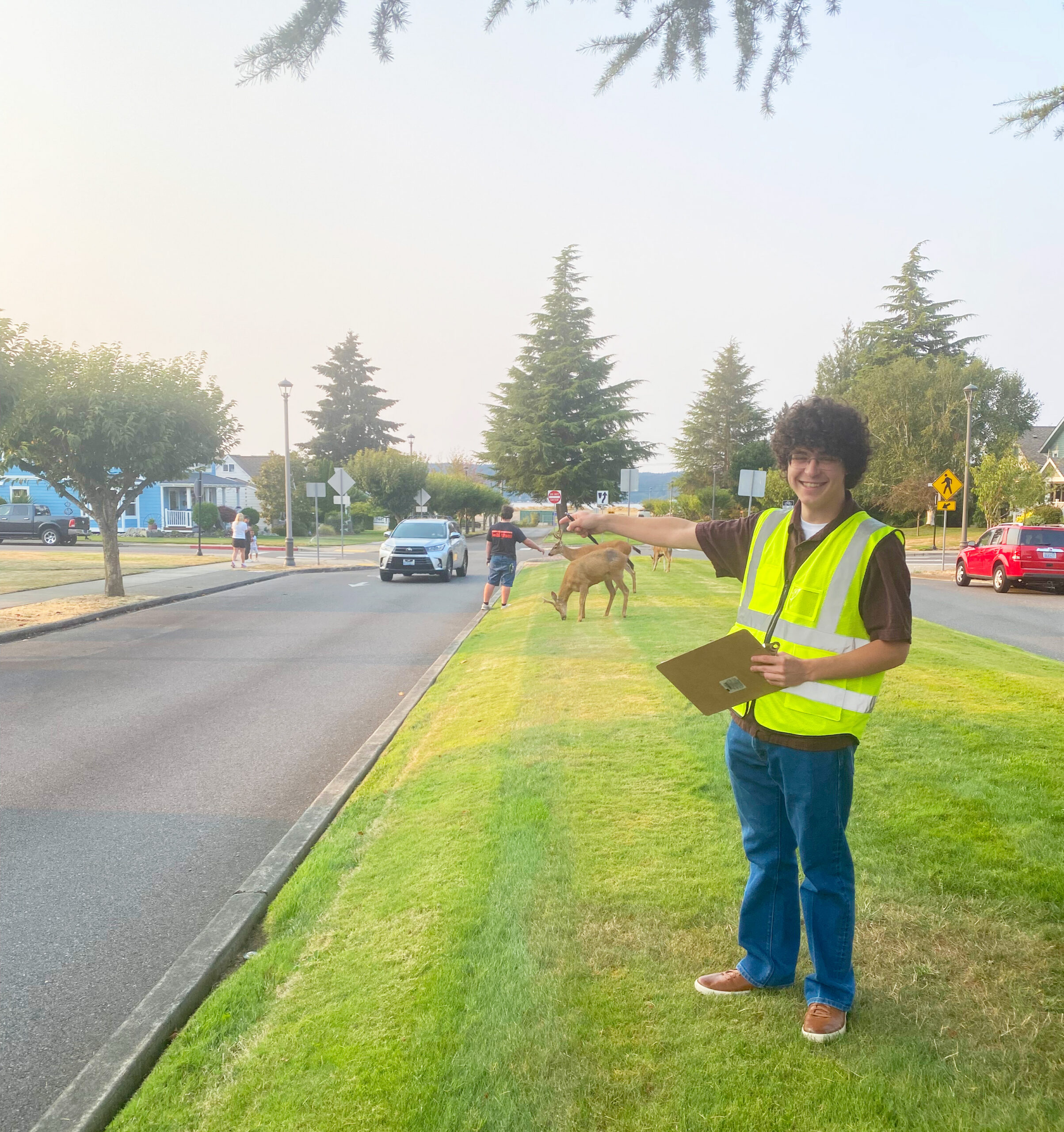
Working on the signing and striping for the Westwood Safety & Mobility project was really engaging for me. As a UCLA student, being able to do fieldwork for a project so close to home was very rewarding.”
Robert Belli, Los Angeles Office
In San Jose, Milan Brito reviewed 10 years of plans, built a database of recommendations, and mapped them in GIS to help identify where projects had received attention and where gaps might remain.
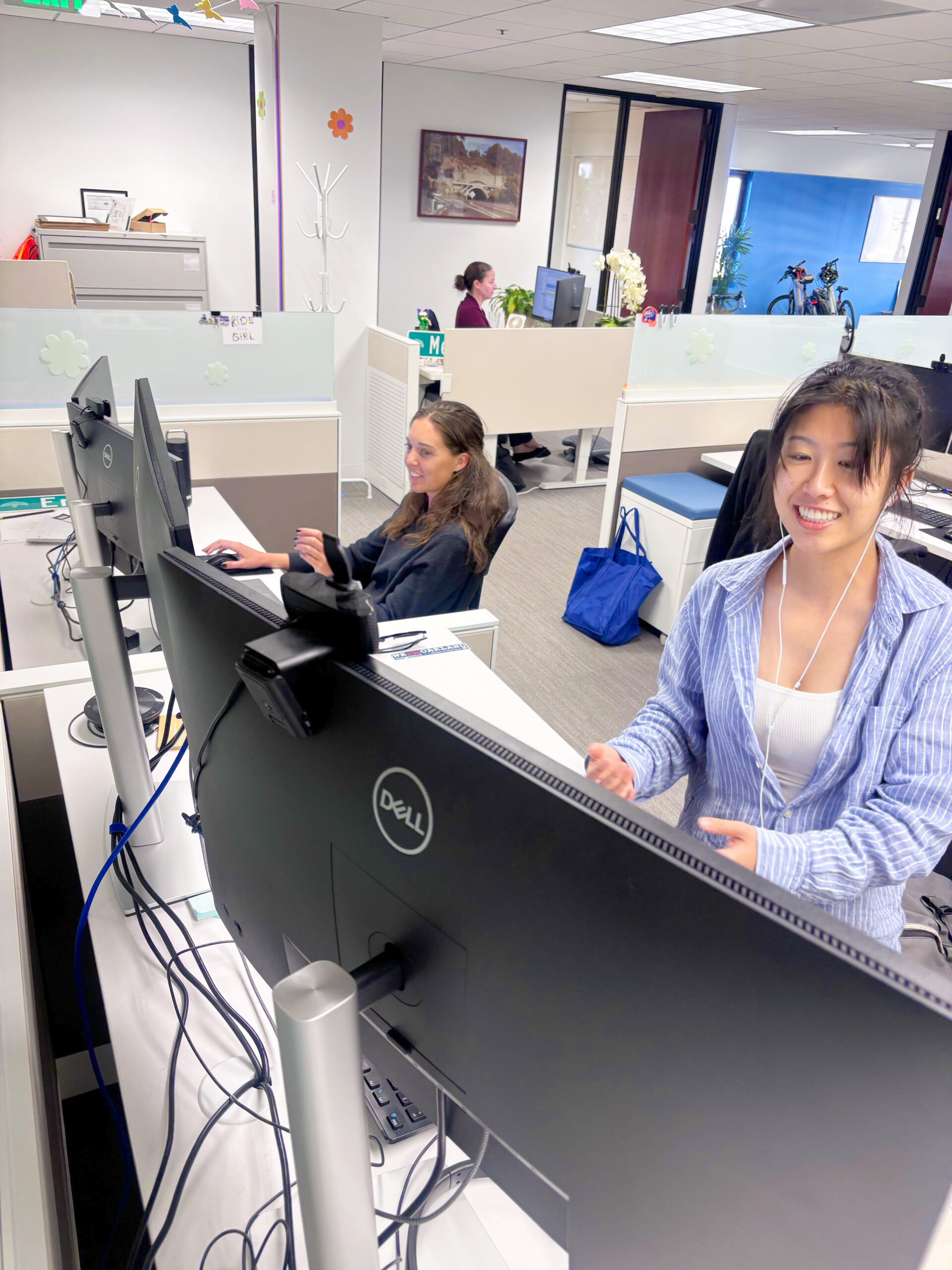
Gabriella Han, in Oakland, spent part of her summer building interactive websites and dashboards that help communities understand transportation projects. For the Caltrans I-580 Truck Access Study, she created a tool showing how a proposed change could affect the health of nearby neighborhoods.
Graham brought another skill set to the work in Sacramento.
I enjoyed using my graphic design skills to create a transportation plan layout and communicate planning concepts clearly. I appreciated the responsibility and creative freedom to develop visuals and help shape the final product.”
Graham Deleon, Sacramento Office
Two interns, Dan Callender and Mariana Yamamoto, worked on design recommendations for a site in San Diego’s Otay Mesa-Nestor Community Plan. Their efforts were part of the Environmental, Engineering, and Planning Internship and Charrette (EEPIC), a two-week collaborative program with interns from six other firms.
The charrette gave me a better understanding of planning and consulting behind the scenes, especially communicating with the client and adapting our deliverable to meet their needs.”
Dan Callender, Denver Office
Learning from the People Around Them
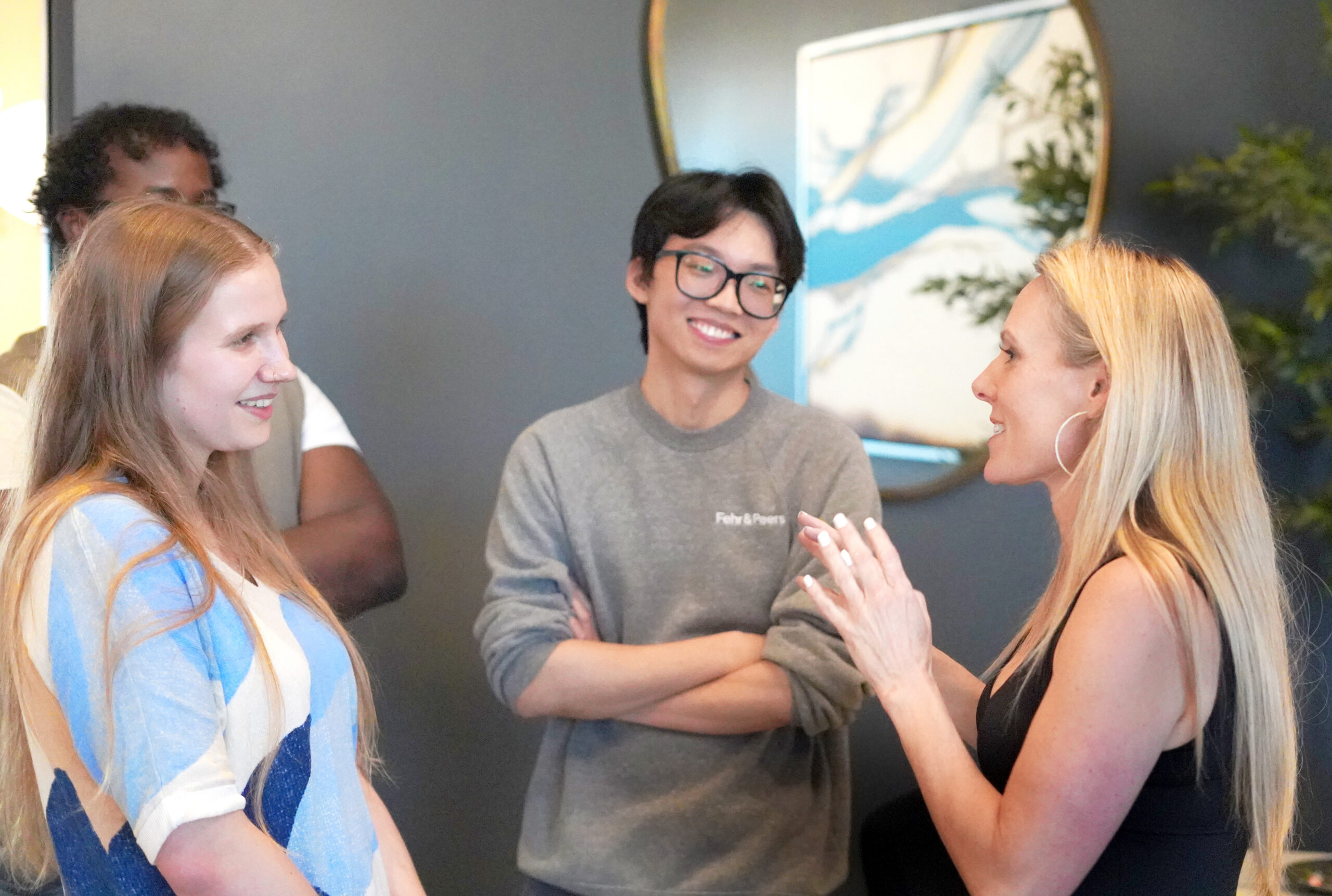
A lot of the summer happened in the spaces around the work too: asking someone how they approached a problem, getting comments back on a draft, sitting in on a conversation, or hearing how a colleague found their way into the profession.
Sophie DeRosa used coffee chats to learn about her Seattle teammates’ careers and hear how they think about the city’s transportation challenges and strengths.
Anisha Bardalai, in Walnut Creek, said the mentor relationships she developed helped her better understand both the industry and what it means to work as a consultant.
For Adam, also in Walnut Creek, that learning happened while taking a client memo from beginning to end.
I had the opportunity to work on a memo for a client from start to finish, with guidance and editing support. Being trusted with that responsibility made me feel like an important part of the team.”
Adam Aldo Azevedo, Walnut Creek Office
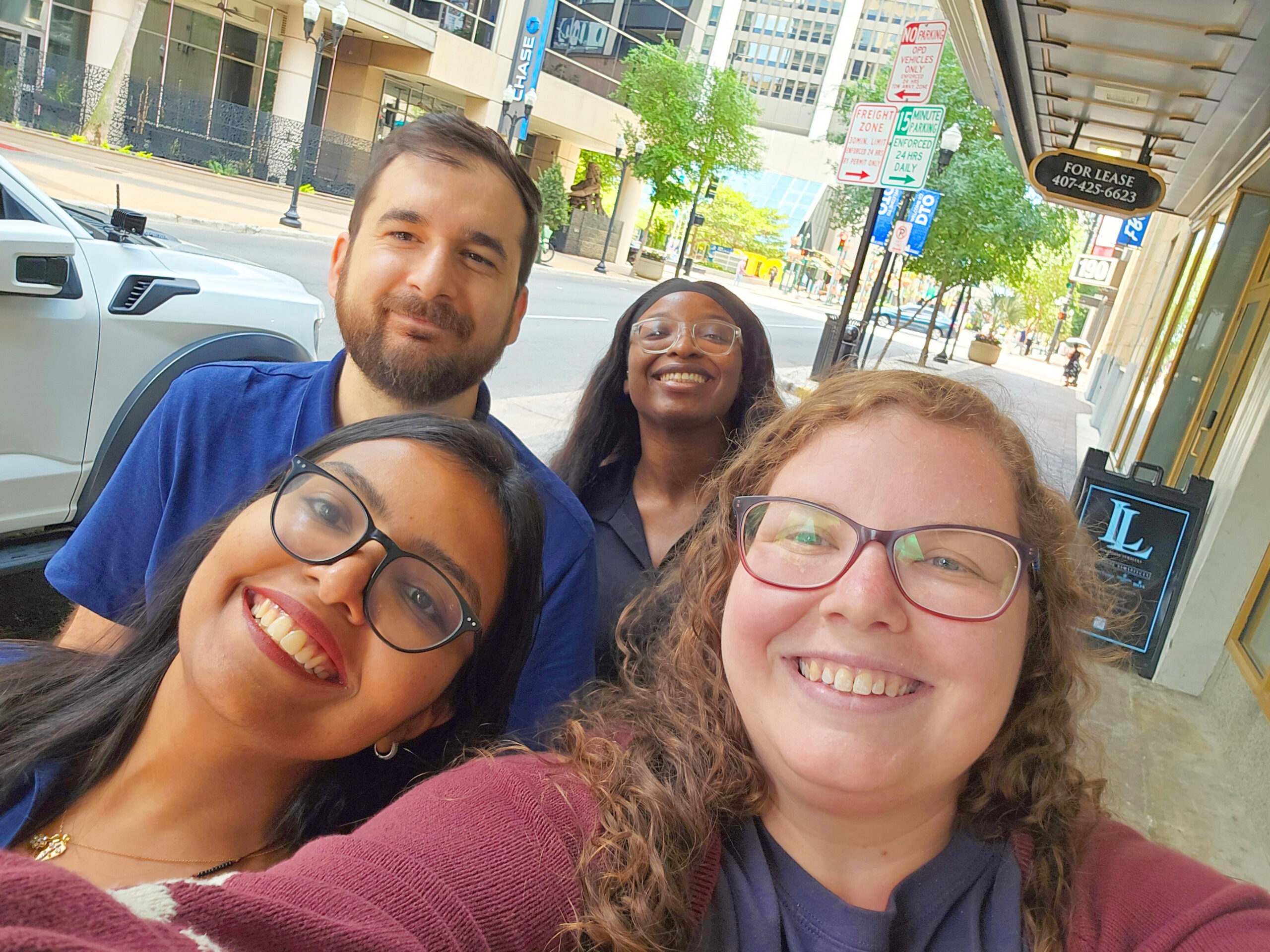
Dana had a similar experience in Orlando when colleagues brought her into a project to brainstorm and discuss the team’s approach.
Being trusted with that responsibility showed me that my team respected my input and viewed me as a true contributor.”
Dana Smith, Orlando Office
And for Gabriella, the willingness of colleagues to offer both technical and broader guidance helped her learn a lot in a short amount of time.
What Stuck with Them
Some of the lessons interns carried away were technical. Others were about how to work, when to ask for help, or how to keep the larger purpose in mind.
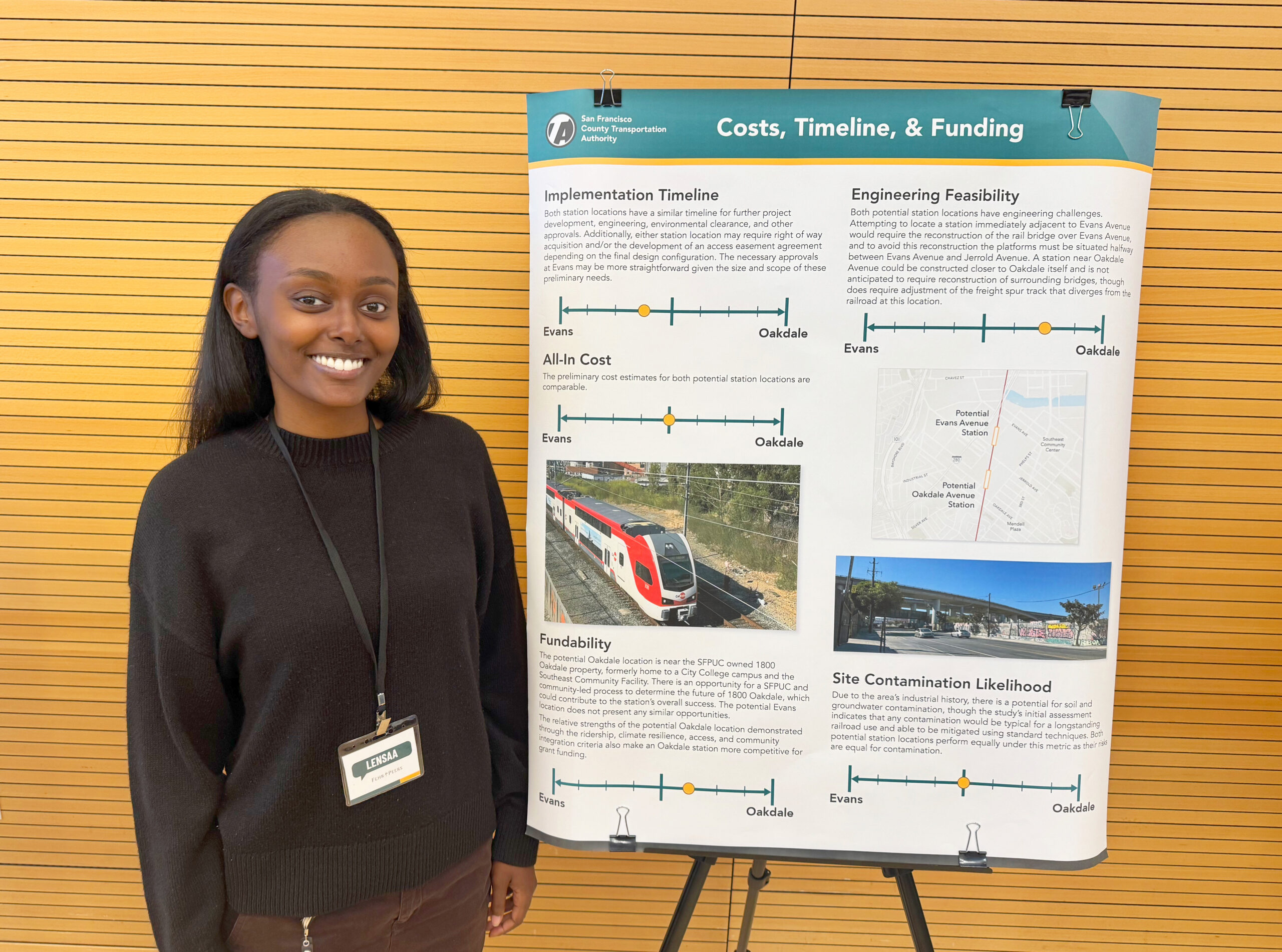
Lensaa Temesgen, in San Francisco, said one lesson she will carry forward is remembering the big picture, especially when working through an individual task: why the work matters and how it helps the team reach its goal.
For Alex, the summer helped clarify something equally practical.
The most important thing I learned was how to communicate and operate as part of an engineering team. I learned when I should spend time solving a problem on my own and when to reach out for help.”
Alex MacGregor, Tacoma Office
Milan came away thinking differently about feedback too. Detailed reviews helped her become more comfortable receiving comments and see how they could make her a better transportation planner.
And Sophie may never look at a curb quite the same way again.
I will be thinking a lot more about street design after I leave here. I realize now how much planning and detail goes into every curb and sidewalk!”
Sophie DeRosa, Seattle Office
For Daniel in Riverside, the summer helped answer an even bigger question.
One thing I’ve learned here is quite simple: this is the work I want to do, the problems I want to solve, the people and clients I want to work with, and the career I’ve wanted my whole life.”
Daniel Knott, Riverside Office
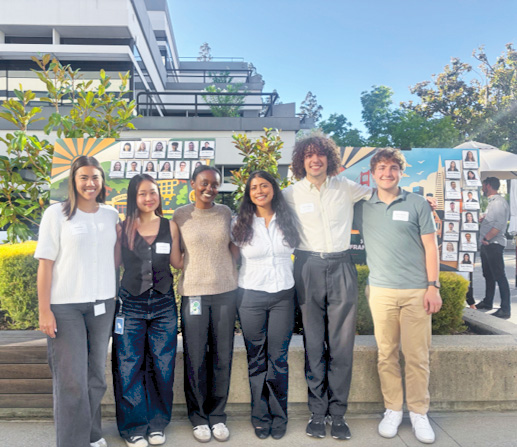
Our interns represented schools across the country:
- California State Polytechnic University, Pomona
- California State University, Long Beach
- Cornell University
- Florida Atlantic University
- Harvard University
- Northeastern University
- Oregon State University
- Texas Southern University
- University of Alabama
- University of California, Berkeley
- University of California, Davis
- University of California, Irvine
- University of California, Santa Barbara
- University of California, Los Angeles
- University of Colorado, Denver
- University of Florida
- University of Pennsylvania
- University of Washington
- Washington University, St. Louis
Interested in exploring a career in transportation?
We’d love to hear from you.
share this article
Explore More
Looking at Street Safety Through the Lens of Kinetic Energy
This ITE Technical brief explores how kinetic energy can add another dimension to roadway safety analysis, helping practitioners consider where conditions for serious harm may exist even before severe crash patterns emerge.

Understanding AI’s Role in Transportation Safety
AI is giving transportation safety practitioners new ways to analyze data, detect near misses, and respond to risk before crashes happen. Real-world examples from Bellevue, WA and San Bernardino, CA show where AI-supported technology is delivering value—and where human judgment remains essential for turning data into responsible safety decisions.
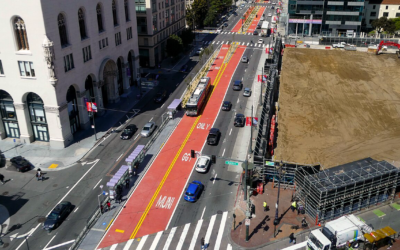
New NCHRP Toolkit Helps Agencies Build Safety Into Everyday Decisions
Making streets safer takes more than individual projects. Our new Safe System approach toolkit, developed through NCHRP Research Report 1181, helps agencies integrate safety into policies, budgets, design standards, and land use decisions. Explore practical tools, real-world case studies, and new IIHS Safe System success stories that show how agencies are turning safety into standard practice.


© 2026 Fehr & Peers. All rights reserved.