

As cities become more crowded, space utilization and efficiency for transportation become critical to the quality and effectiveness of the transportation network. Improving travel efficiency is also essential for achieving other goals, such as reducing greenhouse gas (GHG) emissions and managing delay or travel time reliability.
Traditional measures of transportation network performance do not provide a complete picture of travel efficiency and have contributed to the land use and transportation decisions in the U.S. that have caused substantial reliance on private automobiles with low levels of vehicle occupancy, better described as seat utilization. This reliance is difficult to change even in California, where state goals for GHG reduction have not translated to lower levels of driving or emissions.
California CO2 and VMT per Capita Trends Compared to Anticipated Performance of Regional Plans (RTP/SCSs)

Source: 2018 Progress Report California’s Sustainable Communities and Climate Protection Act, California Air Resources Board, November 2018
Part of the explanation for today’s outcomes is largely due to the transportation analysis focus on congestion and metrics, such as auto delay and vehicle level of service (LOS). According to these metrics, our problem is that cars are moving too slowly, and physical expansion of the network is necessary to improve network performance. But is this really the case?
While congestion is a problem, slow moving cars are more of a symptom of network performance caused by the ‘root’ problems of poor seat utilization and the mispricing of travel. Solutions aimed at the symptom rarely achieve the goal of eliminating congestion, and in the worst case, exacerbate the long-term problem of congestion due to induced travel effects.
A Better way to Measure Travel Efficiency

To more accurately identify and communicate transportation problems, analysis can focus on new metrics that better describe root problems: metrics measuring travel efficiency and space utilization directly and dynamically enough to account for today’s rapid changes in travel markets caused by disruptive trends. In partnership with Uber, we’ve tested new metrics that meet these specifications including a new travel efficiency metric: person miles traveled (PMT) / vehicle miles traveled (VMT).
PMT/VMT measures how efficiently a mode of travel moves people. It can be applied to all passenger vehicle modes and even adapted for freight travel, offering a more comprehensive review of transportation networks. Its connection to carbon intensity (carbon emissions/PMT) offers similar benefits. Adding these metrics to the planning process will offer better insights as to whether land use and transportation network decisions are creating more travel-efficient and climate-sensitive outcomes.
share this article
Explore More
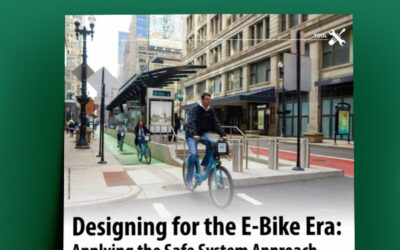
E-Bike Safety Takes More Than Regulation
E-bikes can replace longer car trips and reduce vehicle miles traveled, but regulating devices alone won’t make riding safer. A September 2026 ITE Journal article applies the Safe System Approach to show why communities need both connected, low-stress networks and effective policies.

The Generative AI Policy Starter Kit is Here
We helped develop a new Generative AI Policy Starter Kit for agencies, firms, and other organizations developing or refining their own AI guidance. Explore it through a Quick Bite, ITE Journal article, and online resource.
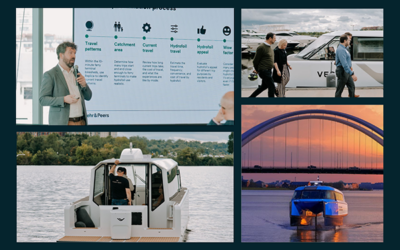
What Hydrofoil Service Could Look Like in Washington, DC
Could electric hydrofoils offer a faster way to travel between waterfront neighborhoods in Washington, DC? Our feasibility study found potential ridership demand and tested how routes, fares, and service frequency could shape a future pilot. The approach also offers a way for other communities to evaluate emerging transportation ideas before committing significant resources.