
Pushing the Envelope on Parking Studies
Pushing the Envelope on Parking Studies
Set on finding a better way, the City of Denton looked to us for guidance. Tasked with conducting a comprehensive parking management study for their downtown, we set out to support the city in better understanding the intricacies of their community’s parking dynamics.
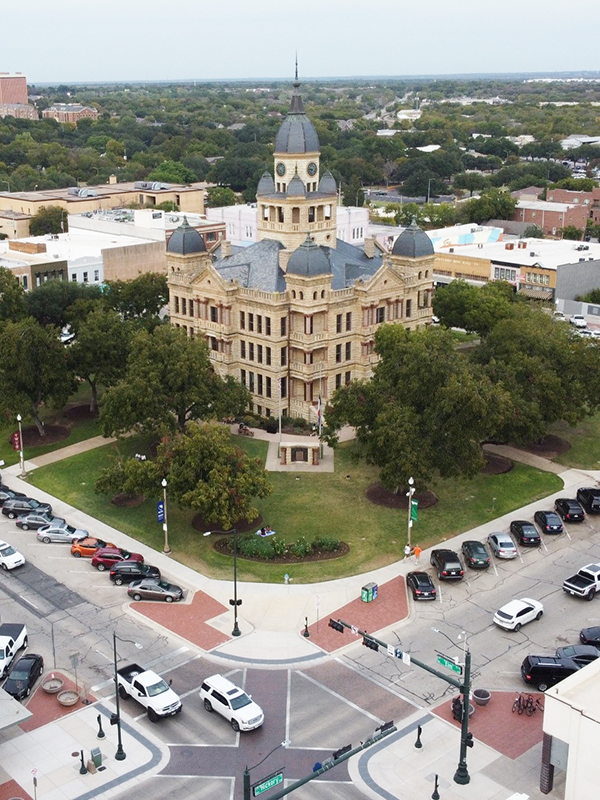
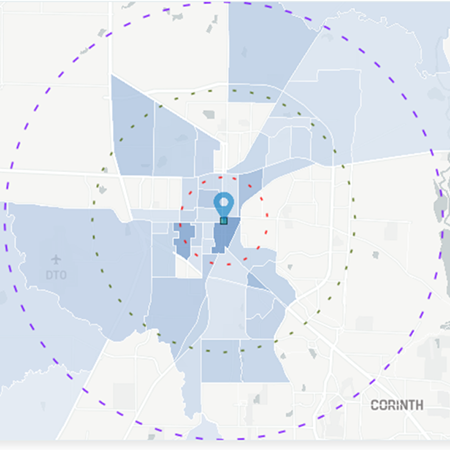
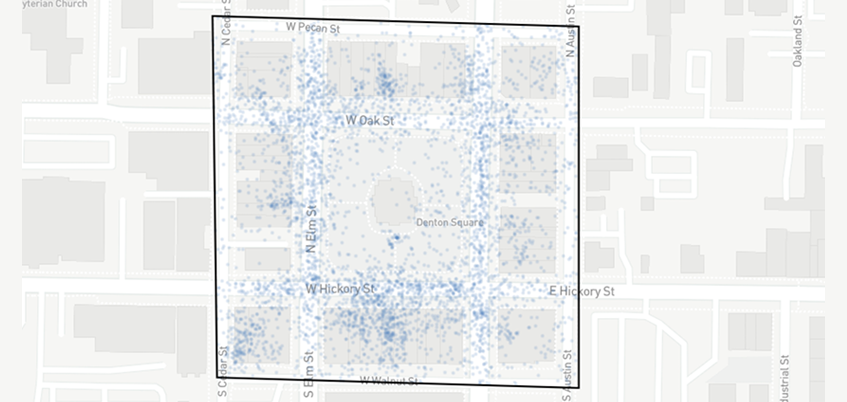
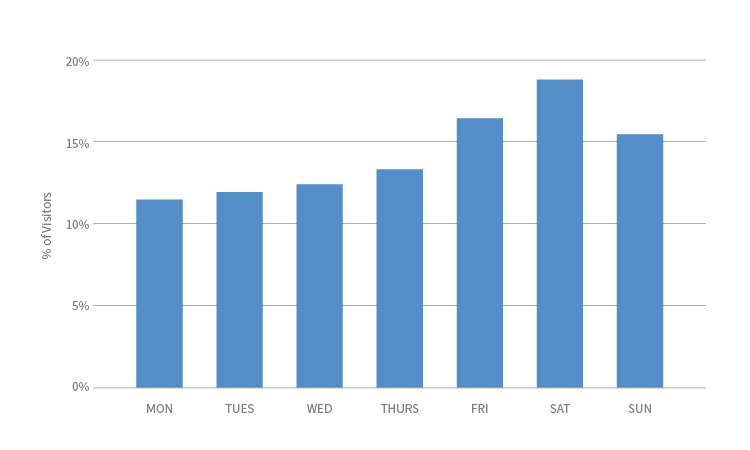
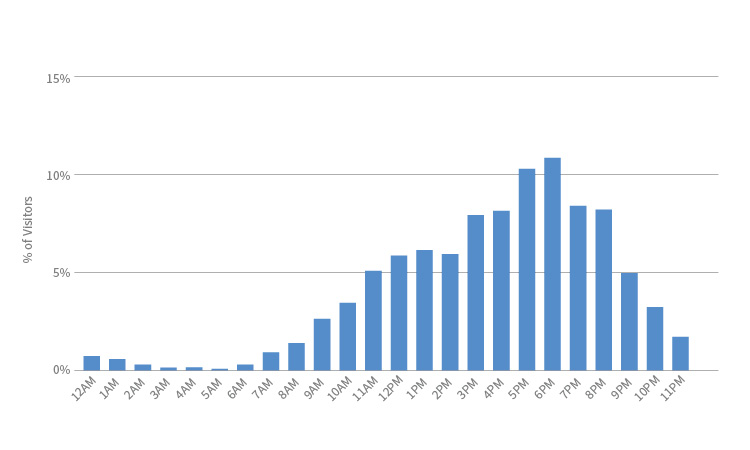
Using big data, we investigated the travel routes people frequented to get downtown, traveler demographics, and when downtown activity was at its busiest. Aerial footage of the entire study area was also gathered to pinpoint prime locations for traffic counts and provide a bird’s-eye view of the supply and demand for parking spaces. Offering a view of more than just the facilities we had counts for, this footage also showed risks like dark side streets and other hazards, which explained some unbalanced parking across facilities.
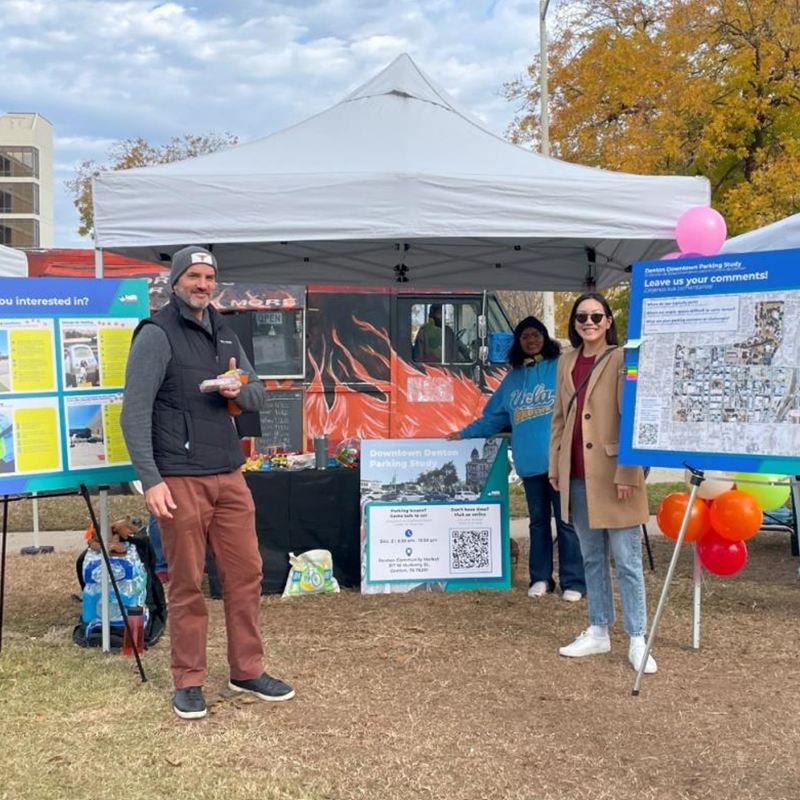
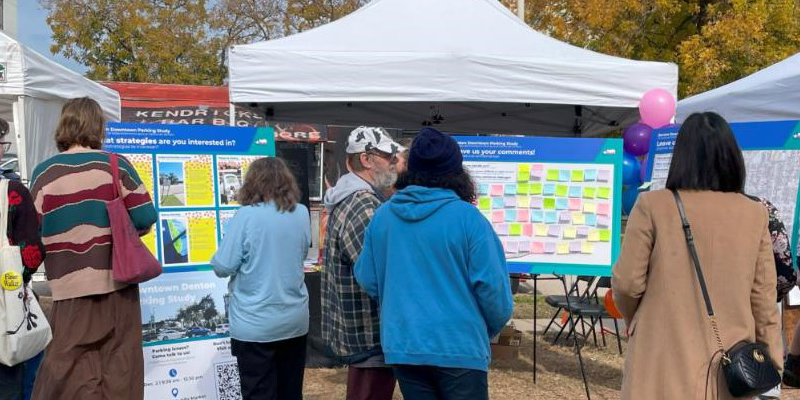
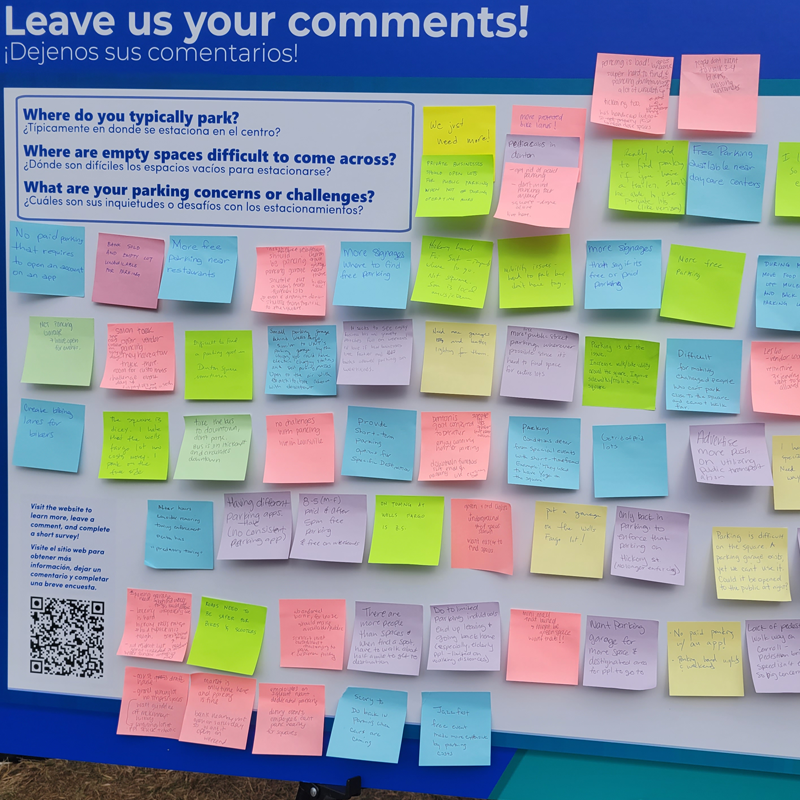
After studying the data, we took to the streets to learn more. Our team, alongside the J Williams Group, organized a public outreach pop-up at a local community event. With bilingual staff on hand to bridge any language barriers, we engaged directly with residents and visitors to uncover first-hand knowledge of common parking struggles and desires and received input on parking strategies being considered.
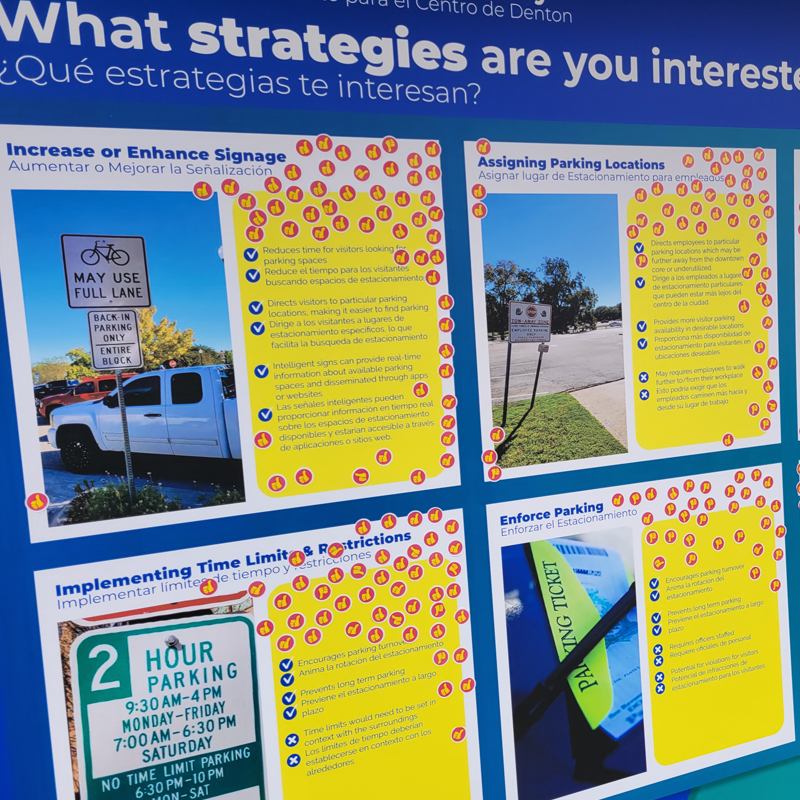
What emerged from this integrated approach was more than just a typical parking study. It has been a full exploration of community dynamics and travel behavior. By integrating data analysis with local insights and safety considerations, the city will have actionable near- and long-term recommendations that can serve as a blueprint for broader initiatives. Better accessibility and safety are possible, and it has been a pleasure to partner in the city’s efforts to ensure that people experiencing Denton spend more time savoring their activities and less time circling for parking.
True progress in parking requires a multifaceted understanding of communities and their needs. For a holistic view of your community’s travel behavior and opportunities to improve accessibility, contact us!
share this article
Contributors

Josh Peterman
Principal
Email Me

Natalie Dougherty
Planner/Engineer
Email Me

Spencer Reed
Senior Associate
Email Me

Anjum Bawa
Principal
Email Me

Explore More
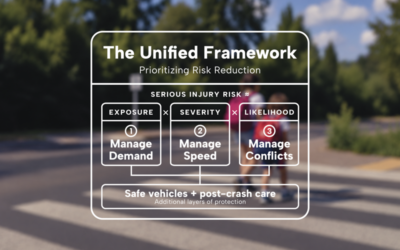
A Unified Framework for Roadway Safety
How can transportation professionals determine which safety strategies to prioritize? The Unified Framework for Safe System Implementation brings decades of safety research together to help agencies make more informed decisions. By connecting exposure, severity, and crash likelihood to different roadway contexts, the framework offers a practical way to prioritize strategies across planning, policy, design, and operations.

Meeting the Deadline Isn’t the Same as Solving the Problem
New state requirements are changing how cities approach truck route planning, but meeting a deadline doesn’t necessarily resolve conflicts between freight movement and neighborhood needs. See how Jurupa Valley used truck data, community input, and clear evaluation criteria to rethink its truck network, meet California’s AB 98 requirements, and reduce truck traffic exposure in sensitive areas.

Cathleen Sullivan Joins Fehr & Peers
Our new Principal Cathleen Sullivan brings a practical, people-centered approach to transit and multimodal planning, helping Bay Area agencies turn complex ideas into progress.