
VMT Mitigation Program Implementation Flowcharts
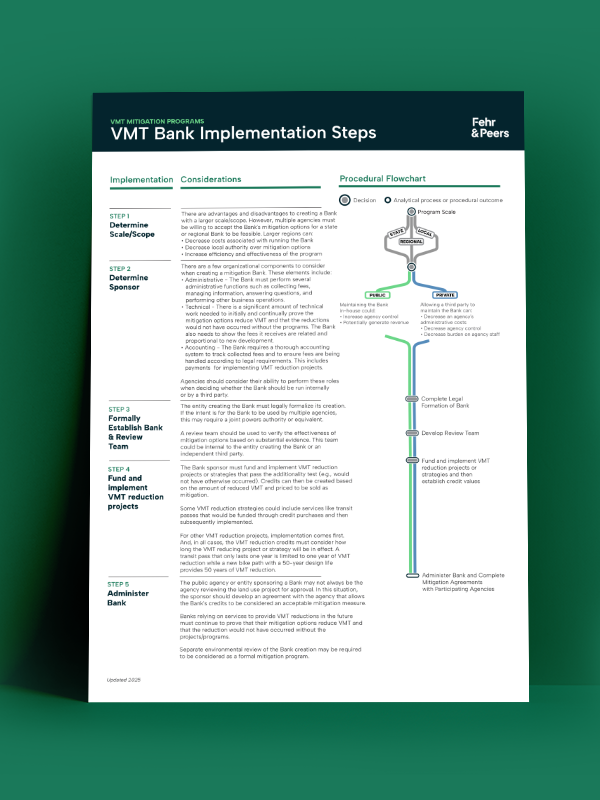
VMT Mitigation Program Implementation Flowcharts
This resource package helps public agencies, regional partners, and development teams compare three common VMT mitigation approaches: VMT Banks, VMT Exchanges, and VMT Impact Fee Programs.
Each flowchart breaks down key steps and considerations, including program scale, sponsorship, mitigation effectiveness, legal formation, nexus requirements, interagency agreements, environmental review, and long-term monitoring. Together, they offer a practical starting point for understanding which approach may fit a community’s needs and what it can take to move from concept to implementation.
These resources may be especially useful when agencies and development teams are exploring clearer, more consistent ways to address VMT impacts while balancing technical, legal, and administrative considerations.
share this article
Explore More

A New Travel Efficiency Metric, Seat Utilization: Part 2 of 3
Transportation analysis practice would benefit from new metrics measuring efficiency and space utilization. Learn about the travel efficiency metric proposed by Uber.

A New Focus on Climate & Congestion, Seat Utilization: Part 1 of 3
Demand management includes a range of strategies from how roadways are operated to behavioral incentives that influence when and how much people travel by mode.
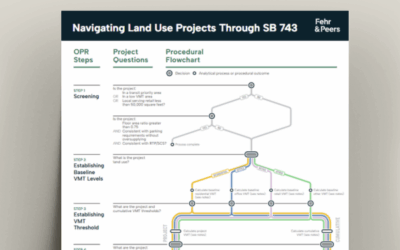
Navigating Land Use Projects Through SB 743
This document offers a step-by-step framework for evaluating and mitigating VMT impacts of land use projects under California’s SB 743 guidelines.