
VMT Mitigation Program Implementation Flowcharts
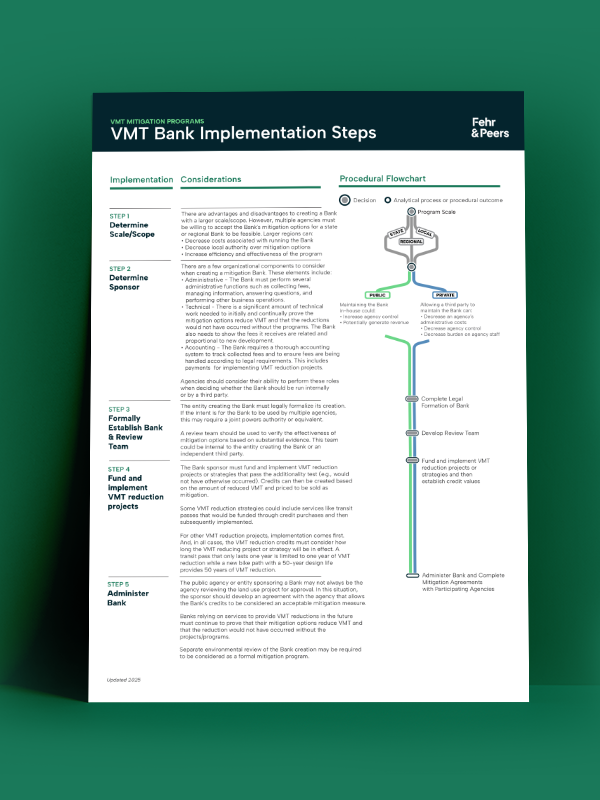
VMT Mitigation Program Implementation Flowcharts
This resource package helps public agencies, regional partners, and development teams compare three common VMT mitigation approaches: VMT Banks, VMT Exchanges, and VMT Impact Fee Programs.
Each flowchart breaks down key steps and considerations, including program scale, sponsorship, mitigation effectiveness, legal formation, nexus requirements, interagency agreements, environmental review, and long-term monitoring. Together, they offer a practical starting point for understanding which approach may fit a community’s needs and what it can take to move from concept to implementation.
These resources may be especially useful when agencies and development teams are exploring clearer, more consistent ways to address VMT impacts while balancing technical, legal, and administrative considerations.
share this article
Explore More
Safeguarding Safety for Road Users Now While Planning for an Automated Future
Although there is much uncertainty regarding how autonomous vehicles (AVs) might transform cities and influence roadway safety, our recent ITE Journal article “Safeguarding Safety for Road Users Now While Planning for an Automated Future” published alongside the Eno Center for Transportation explores different safety strategies that are important to consider both today and in an AV future.
SB 743 and VMT FAQs
A guide for agencies on implementing SB 743’s requirement to assess transportation impacts based on VMT instead of traffic delay, aligning with California’s environmental objectives.
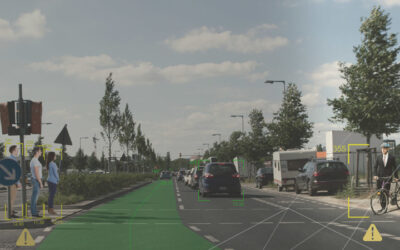
Readiness Planning for Autonomous & Connected Vehicles
Traditional automakers and technology companies continue to test and roll out vehicles that are increasingly capable of “driving themselves” without the aid of a human operator.