
VMT Mitigation Program Implementation Flowcharts
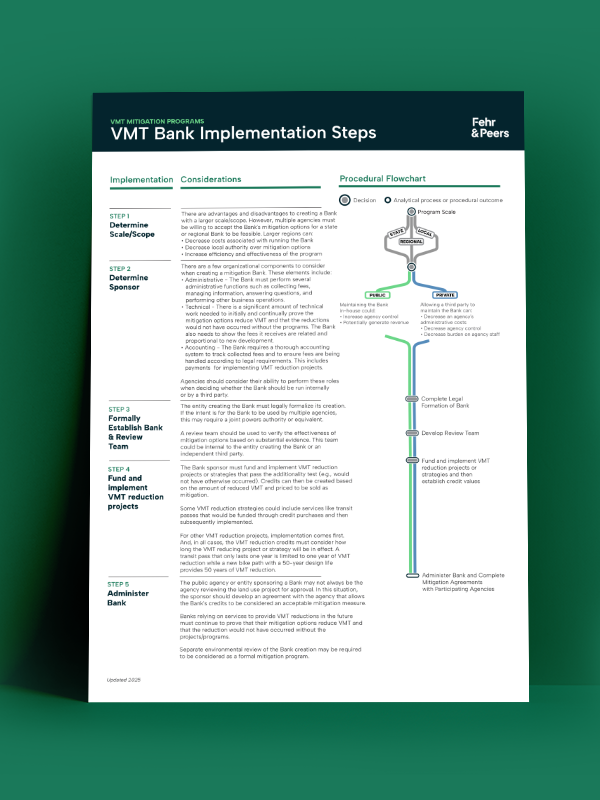
VMT Mitigation Program Implementation Flowcharts
This resource package helps public agencies, regional partners, and development teams compare three common VMT mitigation approaches: VMT Banks, VMT Exchanges, and VMT Impact Fee Programs.
Each flowchart breaks down key steps and considerations, including program scale, sponsorship, mitigation effectiveness, legal formation, nexus requirements, interagency agreements, environmental review, and long-term monitoring. Together, they offer a practical starting point for understanding which approach may fit a community’s needs and what it can take to move from concept to implementation.
These resources may be especially useful when agencies and development teams are exploring clearer, more consistent ways to address VMT impacts while balancing technical, legal, and administrative considerations.
share this article
Explore More
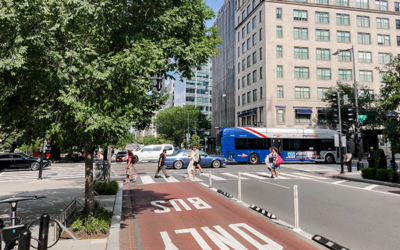
The City That Knows How to Say Yes
What does it take for a city to say “yes” without giving up control? This perspective argues for a conditional, public-minded yes, one grounded in clear standards, evidence, and measurable outcomes, with AVs as one example of a much broader governance challenge.

Dan Andersen Joins Fehr & Peers
Meet Dan Andersen and learn how he helps communities navigate freight challenges through practical, people-focused transportation solutions.

New NCHRP Guide Helps Planners Get Ahead of Truck Parking
Truck parking shortages create safety, operational, and community challenges near freight facilities. A new NCHRP guide offers planning strategies, model regulations, case studies, and implementation tools to help communities address truck parking before issues spill onto local streets.